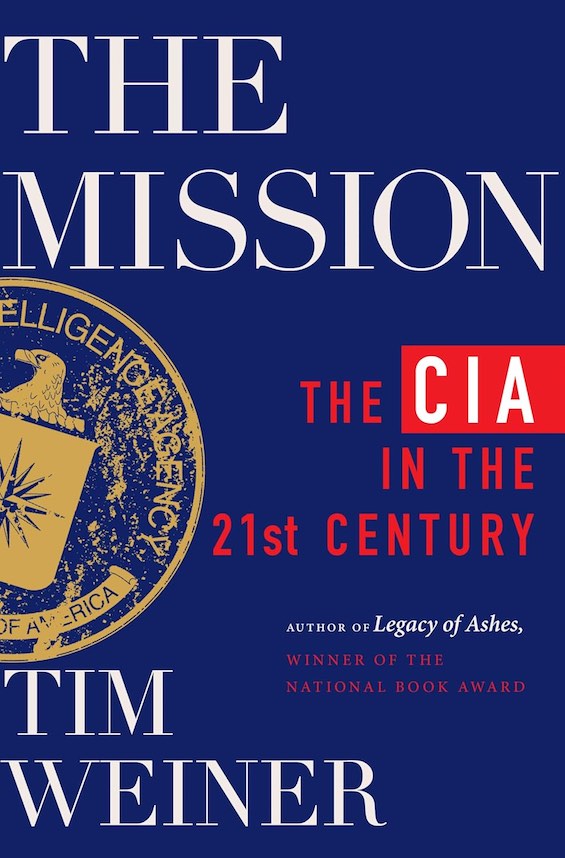
Perhaps you’re the sort of person, as I am, whose eye fastens on any story in print or on a screen about the CIA. If so, you’ve probably gotten the impression that, until Donald Trump took office again on January 20, 2025, the Agency’s record had been mixed since 9/11. The deplorable record of torture balanced a few years later by the killing of Osama bin Laden, and the catastrophic loss of the war in Afghanistan measured against the collapse of Bashar al-Assad’s regime in Syria. Well, perhaps. But of course the headlines only scratch the surface. And the reality is considerably darker. That’s the grim picture that emerges in veteran CIA-watcher Tim Weiner’s startling new CIA exposé, The Mission: The CIA in the 21t Century.
Things were bad before 2025. Now they’re far, far worse.
Whatever successful operations the CIA has mounted since 2001—and Weiner makes clear there have been some—the Agency’s record on balance over the past two decades has been poor. However, any good will the CIA had earned before January 20, 2025 has been far overshadowed by the damage inflicted by the sycophants and right-wing fanatics President Trump has placed in charge at Langley.
If morale in the Agency was bad after the revelations of torture at Abu Ghraib and the black sites, it’s far worse now after the White House toady, Director John Ratcliffe, has cleaned house to ensure blind loyalty to Donald Trump. What’s left is a mere shadow of what had been for long one of the world’s most effective intelligence agencies. The CIA has become a mere cog in the emerging autocratic state engineered by Trump and the cunning and manipulative zealots who surround him..
The Mission: The CIA in the 21st Century by Tim Weiner (2025) 460 pages ★★★★★
The major takeaways
What follows, lightly edited, is the chatbot Claude-AI’s take on the major takeaways in Weiner’s book. It’s a far more succinct summary that I could have managed.
- Post-Cold War Crisis and 9/11. The CIA was in crisis at the turn of the century after the Cold War ended. Numerous overseas stations had shut down and essential intelligence gone uncollected. The agency struggled to find its purpose until September 11, 2001 changed everything. Because the Agency had mightily struggled to warn George W. Bush, Dick Cheney, and Condoleezza Rice, that an attack was coming. They ignored every warning. And then overreacted after the event.
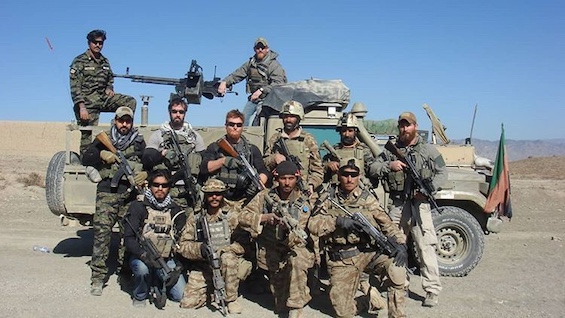
- Transformation into a Paramilitary Force. After 9/11, the CIA transformed into a lethal paramilitary operation. It ran secret prisons, conducted “enhanced interrogations” (torture), and mounted drone strikes. Meanwhile, the Agency largely abandoned its core espionage mission. This shift continued even under Obama, who expanded drone operations.
- Severe Consequences. The agency’s post-9/11 focus had devastating effects. Scores of recruited foreign agents died. Chinese spies stole personnel files. Russian intelligence penetrated computer networks. And the wars in Afghanistan and Iraq ended in tragedy.
- Political Pressures. Pressure from the Executive branch increasingly politicized the CIA. And the pressure culminated in Trump’s open hostility toward the Agency over Russian election interference.
- Rebuilding Espionage Capabilities. A new generation of CIA officers has worked to rebuild the espionage capabilities lost during the war on terror. And they ultimately succeeded in penetrating the Kremlin. But their efforts ultimately collapsed due to mismanagement at Langley and the publication of to-secret files on Wikileaks.
- Central Message. The book’s key argument is that the CIA must return to its original mission: knowing its enemies, particularly Russia, China, and Iran—a challenge made more difficult in an age of advanced surveillance technology and political attacks on intelligence work.
About the author
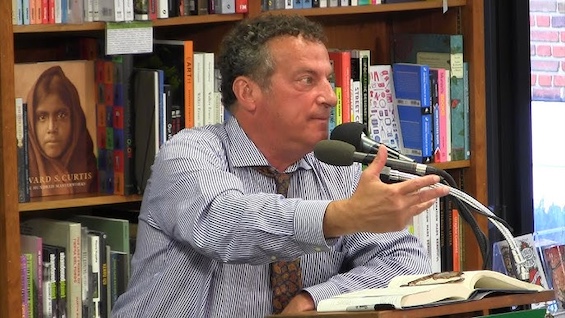
Tim Weiner won the National Book Award in Nonfiction in 2007 for Legacy of Ashes: The History of the CIA. As he notes in an introduction to this book, The Mission is his effort to update that earlier history. Weiner was a Washington correspondent for The Philadelphia Inquirer from 1982 to 1992. He won the 1988 Pulitzer Prize for National Reporting as an investigative reporter there. He then worked for The New York Times from 1993 to 2009 as a foreign correspondent. The Mission is his seventh book.
Weiner was born in White Plains, New York, in 1956. He earned both a BA in History from Columbia University and an MA from Columbia’s Graduate School of Journalism. Weiner is now the Director of the Carey Institute’s nonfiction residency program and an Anschutz Distinguished Fellow in American Studies at Princeton.
For related reading
I’ve also reviewed another book by the author, One Man Against the World: The Tragedy of Richard Nixon (An eye-opening book about the Nixon White House).
You’ll find great books on related subjects at:
- Good nonfiction books about espionage
- Best books about the CIA
- Top 20 popular books for understanding American history
- Top 10 nonfiction books about politics
And you can always find the most popular of my 2,400 reviews, and the most recent ones, on the Home Page.