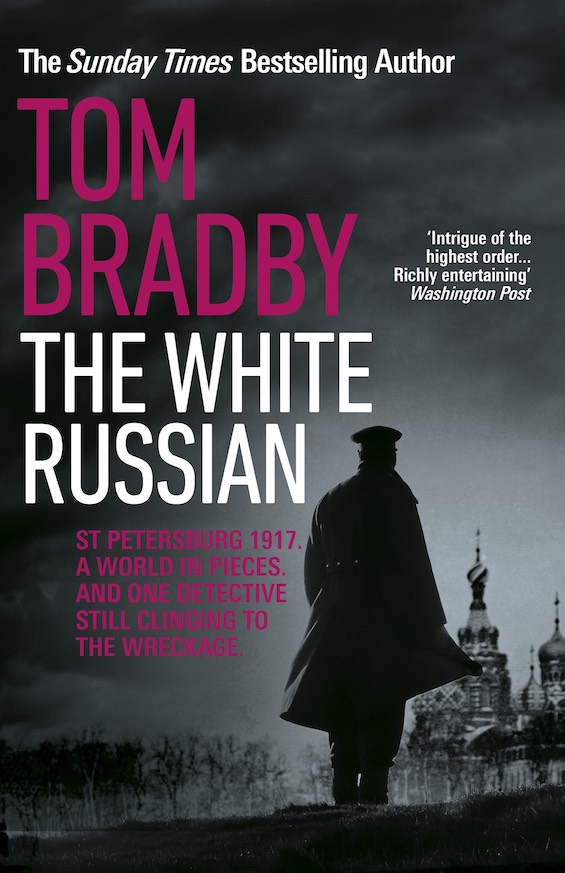
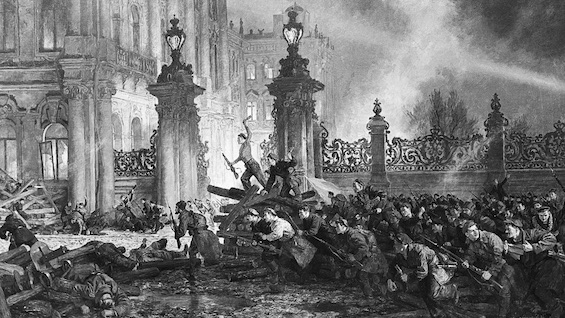
Nineteen seventeen was a watershed year in world history. It marked the arrival of the first American troops on the Western Front in World War I, laying the groundwork for victory the following year. The dissolution of the German, Austro-Hungarian, Turkish, and Russian Empires would soon follow. And in Russia the cracks in the Tsarist regime yawned wide open, as hordes of wounded soldiers flooded back from the war. They entered a society wracked by food shortages, labor unrest, and official violence. The rush of events was particularly intense in the Russian capital of St. Petersburg. There, mutinying soldiers and sailors began teaming up with striking factory workers. They faced off against the dreaded Okhrana secret police and the dwindling number of regiments loyal to the regime. This is the background to Tom Bradby’s superb historical novel about detectives and secret police, The White Russian.
Two bodies on a frozen river and a revolutionary conspiracy
It’s a bitterly cold New Year’s Day 1917. Two bodies turn up on the frozen Neva River facing the Tsar’s sprawling Winter Palace. The woman died of a single knife wound to her chest, the man from multiple thrusts of the weapon. But Chief Investigator of the St. Petersburg’ City Police Alexander “Sandro” Ruzsky and his deputy, whom we know only as Pavel, are baffled. They can find no identifying documents or marks on or with the bodies save a small tattoo on the man’s shoulder. The investigation Ruzsky undertakes will bring him and Pavel into conflict with a dangerous revolutionary cell, the Okhrana, and the royal family, and threaten their lives again and again.
The White Russian by Tom Bradby (2003) 464 pages ★★★★★
The principal characters span Imperial Russia’s elite
In The White Russian, Bradby tells a complex tale with a lengthy cast of characters. The principals are as follows.
The Ruszkys
- Sandro Ruzsky—officially, Prince Alexander Ruszky—is the son of the Tsar’s Assistant Minister of Finance. Theirs is an aristocratic family distantly related to the ruling Romanovs, with a history stretching back centuries. But don’t be fooled by the title. There are literally hundreds, perhaps thousands, of Russian princes in pre-revolutionary Russia. And Sandro has disgraced the family by taking a job, and with the police to boot.His father has disowned him.
- Dmitri Ruzsky, Sandro’s feckless younger brother. Like Sandro, he is married and has a son. But his marriage hangs on despite his philandering, while Sandro’s is in tatters because his wife has retreated to his father’s home with the boy. And Sandro’s father doesn’t allow him to enter the house.
- Viktor Ruzsky, Sandro and Dmitri’s father and Russia’s assistant minister of finance, is close to the royal family.
Other major figures
- Maria Popova is a glamorous prima ballerina with the company that performs at the fabled Mariinisky Theater. Sandro is deeply in love with her. But Maria’s early life in Yalta holds many secrets, which Sandro will come to learn only much too late.
- Sergei Vasilyev, the cruel and untrustworthy chief of the Okhrana. Sandro has tackled with him in the past. And he will find him an unavoidable presence as his investigation into the deaths on the Neva proceeds.
- Ivan Prokopiev, a former Cossack officer, is head of the Okhrana’s Internal Division and Vasilyev’s enforcer.
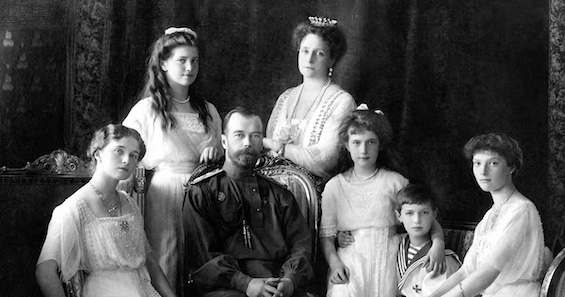
- Tsarina Aleksandra Fyodorovna, Empress of Russia, is a granddaughter of Queen Victoria and daughter of a German grand duke. She has turned to mysticism and brought the scheming peasant priest Rasputin into the court. The tsarina, who dominates her marriage with Tsar Nicholas II, is widely distrusted and reviled by the people, who blame her for many of the shortages.
The historical background
The Russian Revolution of 1917 was not a single violent event. It unfolded in stages, having really started in 1905 in the wake of the disastrous Russo-Japanese War. Then, revolutionaries mounted a serious challenge to the Romanov Dynasty. But the government under Tsar Nicholas II savagely crushed it.
First, a reformist government seized power
By 1917, many of the veterans of the abortive 1905 Revolution were gathering in St. Petersburg, the capital, to try again. But they were far from united. Several revolutionary parties jockeyed for power, and at first the most moderate of them, the so-called Mensheviks, gained the ascendancy in partnership with liberal, non-revolutionary parties. Meanwhile, Russia was desperately fighting (and badly losing) a two-front war against the Central Powers of the German and Austro-Hungarian Empires. Disastrously, the inept Tsar Nicholas insisted on taking command personally, leaving Tsarina Alexandra behind to run the empire. Bad went to worse.
The reformist government under Alexander Karensky stumbled badly. It proved incapable of gaining the respect of the army or of addressing the shortage of bread that threatened the people of the cities with starvation. And the empress’ own mismanagement increased unrest in the countryside as well as the cities.
Later, radical revolutionaries staged a coup
Eventually, with help secretly provided by the Germans, the Bolshevik leader Vladimir Ilyich Lenin and his colleagues, made their way to St. Petersburg. Lenin’s stirring oratory and ruthless tactics aroused support on the streets of the capital. With support from mutinous soldiers and sailors and striking workers in the city’s factories, Lenin’s clique engineered a coup. It came to be called the October Revolution (although it really took place in November, as Russia used an old calendar).
About the author
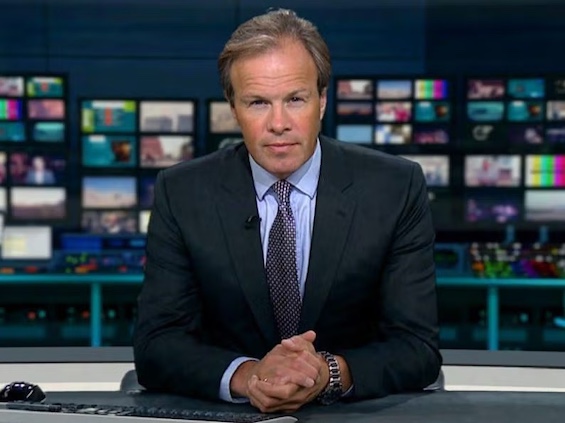
Tom Bradby is best known in Britain as the presenter of the ITV News at Ten since 2015. But he has worked for the ITN network since 1990. He is the author of 10 novels, published over the years 1998 to 2022. Bradby attended private schools before studying history at the University of Edinburgh. He was born in Malta in 1967 and raised there and in Ireland before moving with his parents to Berkshire in England.
For related reading
I’ve also reviewed the author’s later novels:
- Yesterday’s Spy—A gripping spy novel set amid an Iranian coup
- Secret Service (Kate Henderson #1)—Is Britain about to elect a Russian spy as its new Prime Minister?
- Double Agent (Kate Henderson #2)—Upheaval in MI6—and a prime minister who may be a traitor
You’ll find other great reading at:
- 20 excellent standalone mysteries and thrillers
- Top 10 historical mysteries and thrillers
- The best police procedurals
- The 8 best historical mystery series
And you can always find the most popular of my 2,400 reviews, and the most recent ones, on the Home Page.