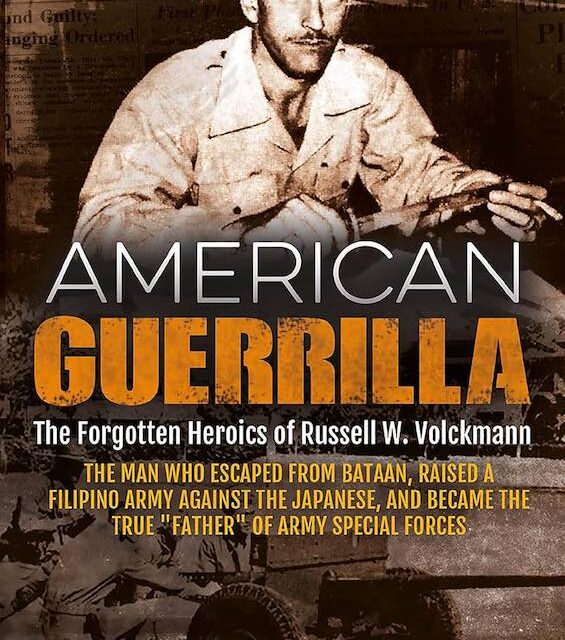
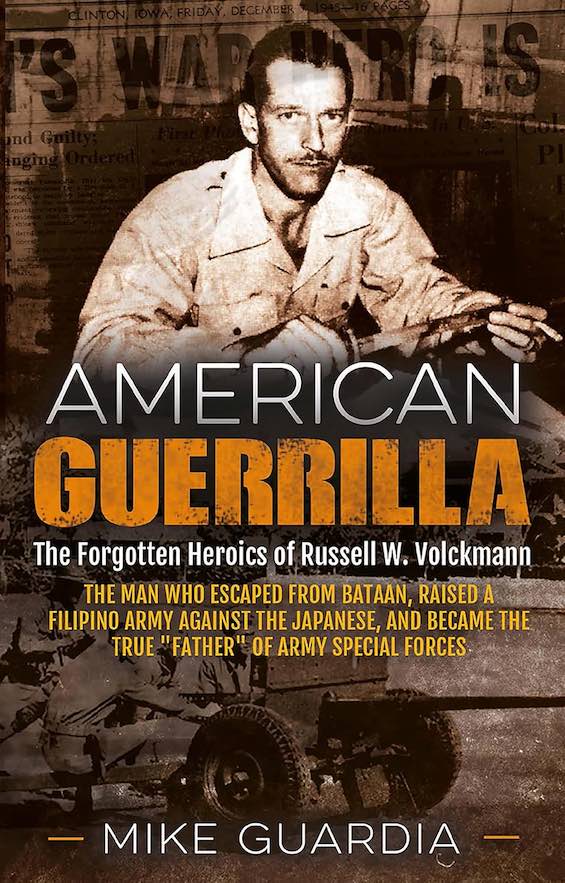
For most Americans, the enduring image of World War II in the Philippines is the iconic shot of General Douglas MacArthur wading onto the shore of Leyte Island on October 20, 1944. The photo was posed, part of the general’s public relations campaign to grab headlines at home. But MacArthur was anything but the hero of the Philippines. In fact, he was responsible for the devastating loss of the Far East Air Force on the ground at Clark Air Base. MacArthur had refused to believe reports that Japanese forces would attack so soon. And he had ordered his forces to retreat to the Bataan Peninsula. The Japanese easily captured them there and sent them on the infamous Bataan Death March. But one man did make a decisive difference in the Allied victory in the islands. And former Army officer Mike Guardia tells his story in American Guerrilla.
Russell Volckmann was one of many who set out to resist the Japanese
The long, ungainly subtitle of American Guerrilla tells the story in a nutshell. Russell W. Volckmann (1911-82), a West Point graduate and then a US Army captain, defied orders to surrender at Bataan. Instead, he followed the lead of another officer and escaped into the jungle. There, as he made his way inland, he encountered other American soldiers, expatriates, and much larger numbers of former soldiers of the Philippine army as well as former police officers. Many of them had mounted guerrilla efforts of their own to resist the Japanese occupation. But Volckmann set out to build a guerrilla force that might make a strategic difference. He headed for the rugged mountains of north Luzon. It took him months to reach the strategically central region, where the nation’s rich mines were located. And Volckmann resolved to recapture those mines from the Japanese—and destroy a Japanese army in the process.
American Guerrilla: The Forgotten Heroics of Russell W. Volckmann—the Man Who Escaped from Bataan, Raised a Filipino Army against the Japanese, and Became the True “Father” of Army Special Forces by Mike Guardia (2010) 187 pages ★★★☆☆
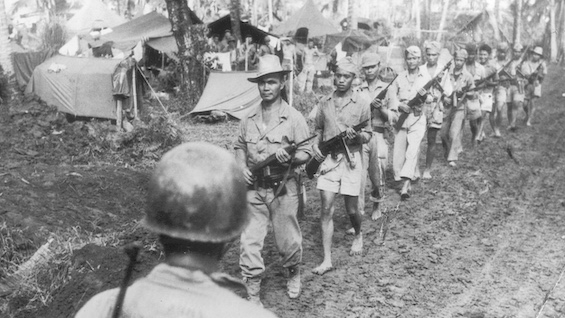
Teaming up with Philippine soldiers, police officers, fierce tribesman, and Communist guerrillas
After months of trekking through the jungle, and near-death experiences with dysentery, beriberi, and malaria, Volckmann reached his destination in the north. There he set out to negotiate with other officers, both American and Philippine, to join him in a concerted effort to prepare the ground for MacArthur’s return to the islands. And, rejecting warnings to avoid contact with the fierce mountain tribes, he enlisted large numbers of them as well as the support of the Hukbalahap Communist guerrillas. It took two years, but eventually Volckmann, now a major, recruited and trained a formidable guerrilla force. They numbered 22,000 at war’s end.
When MacArthur did at length return, as promised, Volckmann orchestrated the effort to dismantle the Japanese 14th Army that occupied northern Luzon. The general, and many other senior officers, credited him with the decisive leadership that enabled an easy landing for the 100,000 troops who returned with MacArthur.
Meanwhile, most of the other Americans engaged in guerrilla efforts in Luzon had done poorly. Most had been captured and executed by the Japanese. The few who persisted in the fight claimed minor victories on the whole—the argumentative books and articles that surface online today notwithstanding. They were brave men, many of them good soldiers. But whatever they accomplished was peripheral to the Allied victory.
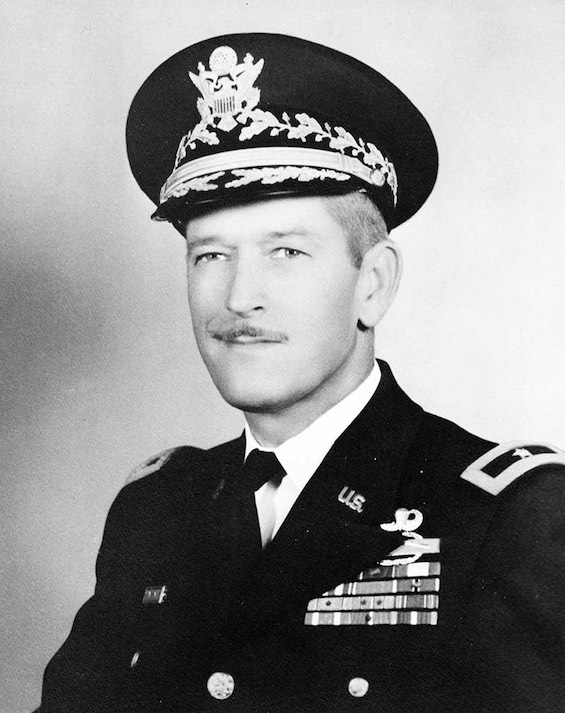
Was Russell Volckmann really the “father” of Army Special Forces?
Guardia’s subtitle describes Russell Volckmann as “the True ‘Father’ of Army Special Forces.” The reference is confusing to anyone familiar with the history of the US Army Rangers, who had come into existence in 1942 and played a critical role on D-Day. After all, Rangers are special forces, aren’t they? But it turns out that the Army distinguishes between two categories of special forces. Google’s AI summary offers the best explanation I’ve found:
Army Rangers and Army Special Forces (Green Berets) are distinct elite units within the U.S. Army with different primary missions: Rangers are a high-intensity light infantry force specializing in direct action raids and rapid deployment, while Green Berets are unconventional warfare specialists focused on training indigenous forces, foreign internal defense, and complex, long-duration missions. Rangers provide a fast and decisive “shock troop” capability, while Green Berets offer a more strategic and culturally-oriented approach, often operating behind enemy lines for extended periods.
Both Rangers and Green Berets are housed within the Army’s Special Operations Command (founded 1987), which further confuses the issue. But Guardia’s claim is technically valid. He goes to great lengths to substantiate it in the closing chapters of American Guerrilla. In significant ways, Russell Volckmann’s operations in World War II, and the two official US Army field manuals he wrote after the war, provided the basis for the Green Berets that came into existence in 1952.
A useful source for World War II buffs but poorly written
If you love to read books about World War II and want to dig down among the weeds, then you might enjoy American Guerrilla. But if you’re looking for a book about an American hero, or an introduction into the war in the Philippines, forget it. Guardia’s book is deeply flawed. He commits repeated grammatical errors which any well educated person will likely find intrusive. Often, his word choice is awkward, even embarrassingly so. And he has the boneheaded habit of attempting to disguise his all-too-frequent use of clichés by enclosing them within quotation marks (“to-to-toe,” “ace in the hole,” “eyes on the ground”). If you’re a casual reader, stay away from American Guerrilla.
About the author
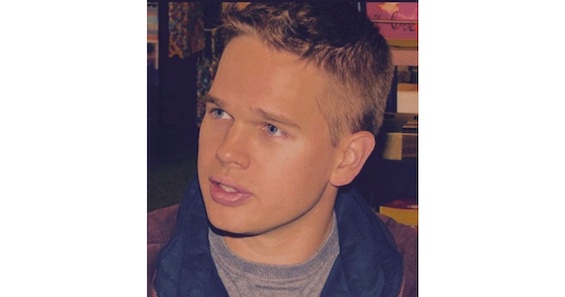
Mike Guardia is also the author of the book popularized by the film We Were Soldiers, starring Mel Gibson. He is a veteran of the United States Army who served six years on active duty as an armor officer. According to his bio on Amazon, “He has twice been nominated for the Army Historical Foundation’s Distinguished Book Award and was named Author of the Year in 2021 by the Military Writers Society of America. . . He holds a BA and MA in American History from the University of Houston. He currently lives in Minnesota.”
For related reading
You’ll find a wealth of information about World War II at:
- 10 top nonfiction books about World War II
- Books about World War II in the Pacific
- The 10 best novels about World War II
- 10 top WWII books about espionage
And you can always find the most popular of my 2,400 reviews, and the most recent ones, on the Home Page.