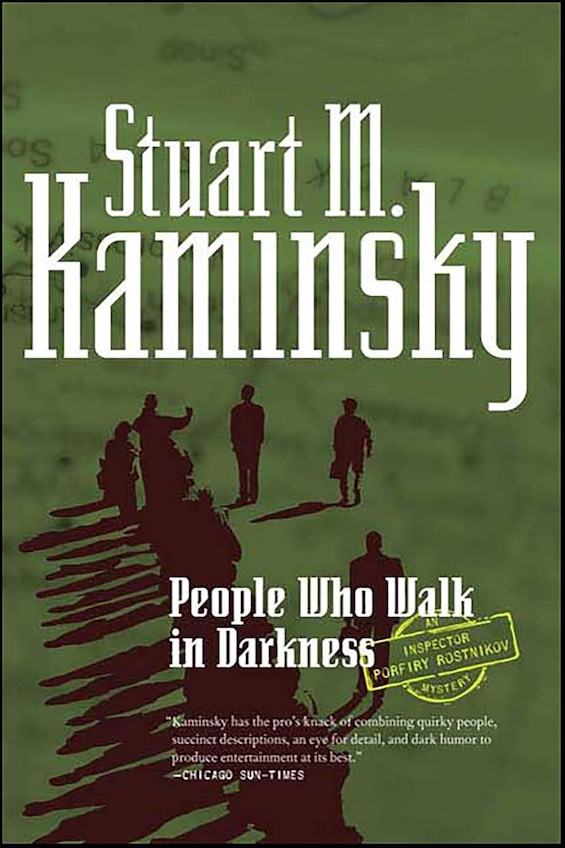
The independence of Chief Inspector Rostnikov’s cozy little squad is on the line. “The Office of Special Investigations was at the very bottom of the Moscow police force. The Office had been created solely as a receptacle in which to dump unsolvable and politically sensitive cases filled with a high likelihood of failure.” Now, despite—more likely, because of—the squad’s remarkable success a senior politician threatens to absorb the office into his own sprawling empire. General Mihail Frankovich, Director of the Division of Murder, has informed Rostnikov’s boss, Igor Yakovlev (“the Yak”), that he will take over command in nine days if his office doesn’t solve the case of an impossibly complex diamond smuggling operation. Naturally, then, the Yak assigns the case to Rostnikov. And thus begins the inspector and his colleagues’ venture into the world of the “People Who Walk in Darkness” in the worldwide diamond trade.
A complex case set in Siberia, Botswana, Kiev, Moscow, and London
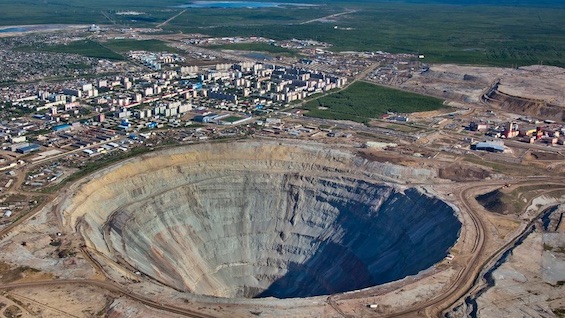
The Yak commands Rostnikov to travel immediately to investigate a murder at Devochka, one of the oldest diamond mines in Siberia. There a Canadian mining engineer had been brutally knifed to death deep underground. The inspector will travel there with Emil Karpo (“the Vampire”). But Rostnikov must also detail the rest of his squad to take up other aspects of the case in Kiev and Moscow, where the same network of smugglers has been active. Together, the six members of the squad will collide with a half-dozen Botswanans, a gorgeous Russian supermodel, a corrupt Kiev police detective, two assassins in the pay of a Russian master criminal masquerading as a British aristocrat, a Siberian bodybuilder on the way to the Olympics, and Inspector Rostnikov’s long-lost brother.
People Who Walk in Darkness (Porfiry Rostnikov #15 of 16) by Stuart M. Kaminsky (2008) 300 pages ★★★★☆
A cast of familiar characters
Readers of Stuart Kaminsky’s Porfiry Rostnikov novels will enjoy seeing how the Chief Inspector and the members of his squad tackle the daunting investigations that the Yak has now assigned to them. They’re all here. Emil Karpo, the cadaverous and humorless obsessive who pines for the days of Communist rule. Sasha Tkach, the handsome young philanderer whose wife has fled to Kiev with their children. Elena Timofeyeva, daughter of the chief Moscow prosecutor who was once Rostnikov’s boss. Elena is now engaged to Iosef Rostnikov, the inspector’s former playwright son. Zelach, the hulking, uneducated police officer who works with Iosef and continues to surprise with new, hidden abilities. And Paulinin, the mad but brilliant pathologist who runs the squad’s morgue and talks to corpses—and gets answers. After Rostnikov divides them into three teams to pursue different aspects of the case, we feel them growing even closer.
You’d be hard-pressed to find a more colorful cast of characters than Stuart Kaminsky offers up in People Who Walk in Darkness.

The truth about diamonds
For more than 3,000 years, humans have valued diamonds for their brilliance and peerless hardness. While the stones are found in small quantities all over the globe, the greatest sources are Russia, Botswana, Canada, Angola, and the Democratic Republic of Congo. But Russia is the world’s top producer by volume, supplying roughly 35% of global rough stones. Botswana is the second-largest producer. It’s known for high-value and large diamonds. And both countries dominate the story in this novel.
However, the value the market assigns to diamonds is artificial. A single company, DeBeers, effectively sets the world’s price. De Beers Group is a British multinational diamond company that specializes in the mining, trading and marketing of diamonds. The company is active in 35 countries. It’s effectively a monopoly, controlling 90 percent of the market. And it creates artificial scarcity by stockpiling rough stones its vaults, thus maintaining high prices by limiting the supply.
About the author
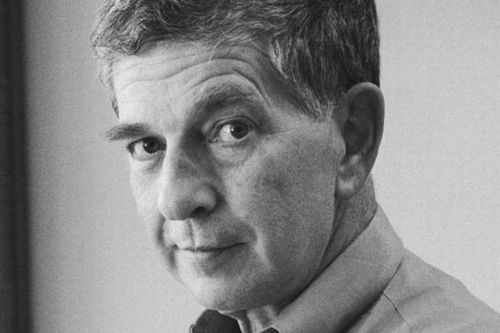
During his long career, the late Stuart M. Kaminsky (1934-2009) wrote sixty-three novels and eleven nonfiction books. In addition to the Porfiry Rastnikov series, he wrote three other widely read detective series. Kaminsky won the 1989 Edgar Award for Best Novel for the Porfiry Rostnikov novel A Cold Read Sunrise. And the Mystery Writers of America awarded him the Grand Master Award from before his death.
For related reading
All the novels in this series appear at Police procedurals spanning modern Russian history.
For more great reading, see:
- The six best police procedurals
- Top 20 suspenseful detective novels
- Top 10 historical mysteries and thrillers
- The 8 best historical mystery series
- 25 most enlightening historical novels
And you can always find the most popular of my 2,400 reviews, and the most recent ones, on the Home Page.