
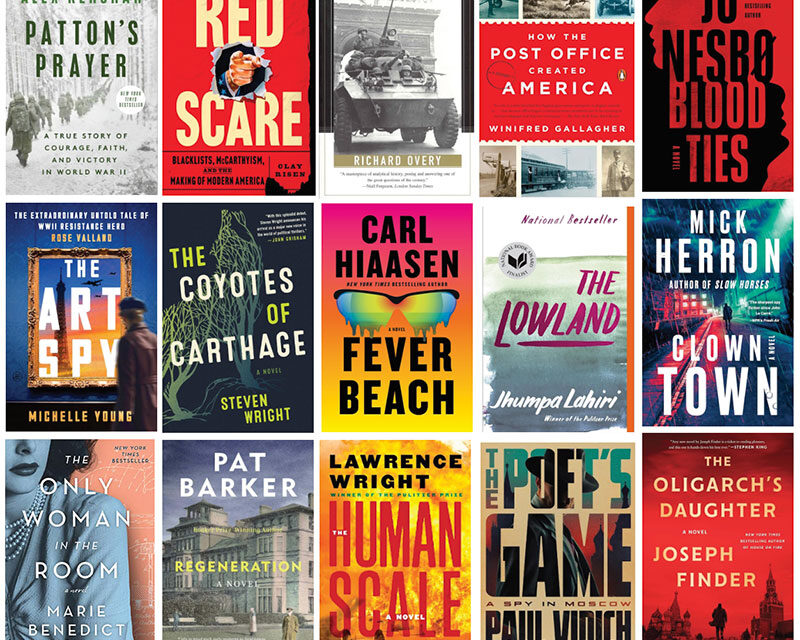

Truth to tell, I don’t know whether the 26 books I’ve listed below are, in fact, the “best” books of the year 2025. All I know is that they’re the best books I’ve read and reviewed during the past 12 months. In fact, a few of them were published in earlier years. I just didn’t discover them until recently. But in my defense I would like you to consider whether the New York Times or the Washington Post could possibly select the “best” books of the year, either. Both, of course, publish such lists. So do other reviewers. But the reality is that some three to four million new books are published every year now. Nobody, and no team of reviewers, could possibly read (or even glance at) them all. So what you get with every list of “bests” is actually a shot in the dark.
Not necessarily the bestselling books of the year
Below you’ll find three lists of unequal size: 10 nonfiction titles, 11 mysteries and thrillers, and five books I’ve called popular fiction (including historical fiction, humor, and what others may call “literary fiction”). What you’re not likely to find are the names of the authors who most reliably show up on the bestseller lists. I figure that the likes of James Patterson, Stephen King, and Colleen Hoover can find their own audience. What I seek to offer here are my often idiosyncratic choices of excellent books that may not rise to the top of the sales figures. Many are, in fact, bestsellers. But that term of art is widely abused and means little more than that the author probably made a few bucks. (Most authors don’t nowadays.) However, regardless of how many copies these books sold, I have no hesitation in describing them as the “best” of the year. Because I enjoyed them all immensely.
The best nonfiction of 2025?

King of Kings: The Iranian Revolution: A Story of Hubris, Delusion and Catastrophic Miscalculation by Scott Anderson (2025) 746 pages ★★★★★— How Iran came to be America’s bitterest enemy
One of the CIA’s greatest triumphs became over time what may have been its most catastrophic error. In 1953, American and British intelligence agents worked with reactionary Iranian forces to overthrow the country’s democratically elected government and return to power Iran’s monarch, Shah Reza Pahlevi. (It was all about oil, of course.) The shah’s brutal authoritarian regime, enthusiastically supported by the United States, led inexorably to the Iranian Islamic Revolution—and Iran has been one of America’s bitterest enemies ever since.

Deadwood: Gold, Guns, and Greed in the American West by Peter Cozzens (2025) 613 pages ★★★★★—Debunking the myths of the Wild West
Here, in a deeply researched historical account, are the true stories of the legendary personalities of Wild Bill Hickok, Calamity Jane, Wyatt Earp, Sitting Bull, Crazy Horse, and other iconic figures of the Old West. The truth that emerges in this brilliantly written account adds depth and credibility to the tall tales about them created by contemporary newspaper reporters and publicity agents. And, for a change, the author pays due attention to the courageous efforts of Native Americans to hold onto their land and their culture. And the book is full of surprises.

How the Post Office Created America: A History by Winifred Gallagher (2016) 330 pages ★★★★★—How would the states have become united without the post office?
Most of the world’s countries grew organically, defined by natural geographical borders or linguistic or religious boundaries. But some, most notably the United States, encompass such great diversity and sprawling geography that there was nothing natural about their growth into single nations. The UNITED States of America got to be that way only because conscious action by far-sighted national leaders made it happen. The post office was the agency at the center of this effort. You can’t really understand American history without an appreciation of the pivotal role of the postal service in our country’s growth.

Empire of AI: Dreams and Nightmares in Sam Altman’s OpenAI by Karen Hao (2025) 496 pages ★★★★★—Will artificial intelligence help us or hurt us?
Most people identify artificial intelligence with ChatGPT, which commands 80 percent of its market. Although this may well change as new developments emerge both here and in China, it makes sense today to dive down into the history and operations of ChatGPT’s creator, the company OpenAI. Karen Hao tells this story in fast-moving prose that helps us understand the phenomenon of AI and its impact on our ives today. And the story she tells is no dry recitation of boardroom battles. It’s illuminating and readable from start to finish.
Patton’s Prayer: A True Story of Courage, Faith, and Victory in World War II by Alex Kershaw (2024) 362 pages ★★★★★—The amazing story of how George S. Patton won the Battle of the Bulge
World War II brought to worldwide fame a handful of American military commanders, but none more famously than General George S. Patton. Controversial to a fault in the eyes of his peers, the enemy commanders who faced him on the battlefield were in awe of his ability to inspire his troops and drive them to superhuman performance. This engrossing book brings those qualities to light in the defining Battle of the Bulge in the final months of the war. Other accounts of that battle dwell on the front-line troops caught in the Belgian town of Bastogne. Kershaw explains the context of their courageous resistance.
Apple in China: The Capture of the World’s Greatest Company by Patrick McGee (2025) 448 pages ★★★★★—How Apple made China great—and became a $3 trillion company
The little company fathered a half century ago by Steve Jobs and Steve Wozniak passed $3 trillion in market capitalization in 2023. It was the world’s first private enterprise to do so. Two others (Nvidia and Microsoft) have since surpassed it. But many observers continue to regard Apple as the world’s greatest company, as the title of this revealing account asserts. The story of how the firm grew so large and so quickly revolves around its partnerships in China—and an amazing story it is. Other corporate histories of Apple tend to focus on Steve Jobs’ role. But McGee carries the story forward into the term of Jobs’ successor, Tim Cook.

Why the Allies Won by Richard Overy (1995) 406 pages ★★★★★—A British historian questions why the Allies won World War II
Historians ascribe a host of factors in explaining why the USA, the UK, and the Soviet Union collectively won World War II. The two reasons they tend to focus on are that the Allies’ manpower and resources were far greater and that both major Axis powers, Imperial Japan and Nazi Germany, made the tragic error of engaging in two-front wars. But historian Richard Overy offers an alternative account, questioning the validity of both of these conclusions. His argument is thought-provoking. No one who reads widely about World War II should overlook this book.

Red Scare: Blacklists, McCarthyism, and the Making of Modern America by Clay Risen (2025) 471 pages ★★★★★—The roots of today’s reactionary politics?
Today’s so-called “conservatives” typically trace their roots to the 1960s and the political upheaval launched by Senator Barry Goldwater of Arizona when he ran for President in 1964. But New York Times editor Clay Risen shifts our focus back by a decade to the anti-Communist hysteria of the Red Scare. The argument isn’t entirely convincing, but Risen’s account of the history is eye-opening. The book is well worth reading for its fresh account of the McCarthy years and the impact of the Senator’s self-aggrandizing antics on so many thousands of people who never set foot in Washington, DC.
Private Revolutions: Four Women Face China’s New Social Order by Yuan Yang (2024) 304 pages ★★★★★—How wrenching change in China affects the lives of its average citizens
No major country, with the possible exception of Russia, has undergone such tumultuous change over the past century as has China. So much change, and so far-reaching, that we can become lost in the statistics that seek to encompass it all. All those big numbers can obscure what it all means for individual Chinese citizens. British journalist and economist Yuan Yang brings the reality down to earth with this sparkling account of the impact of all these changes on four exceptional women.
The Art Spy: The Extraordinary Untold Tale of WWII Resistance Hero Rose Valland by Michelle Young (2025) 400 pages ★★★★★—She defied the Nazis to save the world’s greatest art treasures
The massive theft of the West’s art treasures by Nazi officials, Hermann Goering chief among them, is well known. What’s less well understood is how so many of the objects in those massive trainloads of paintings and sculptures managed to make their way back into the hands of their owners—or never left in the first place. This fascinating account of one courageous Frenchwoman helps us understand what happened—and what a huge difference a single determined individual can make.
Mysteries and thrillers
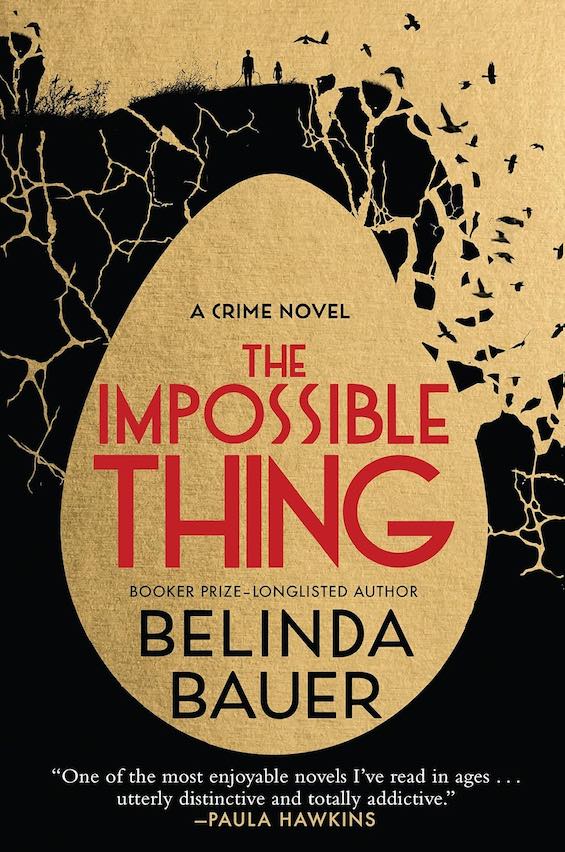
The Impossible Thing by Belinda Bauer (2025) 336 pages ★★★★★—The most unusual crime novel you’ve ever read
You might not think that a story about wild bird eggs could possibly qualify as a crime novel. But Belinda Bauer proves the case in this fascinating historical account of that arcane field of interest, which loomed large in the lives of so many British aristocrats in the 20th century. It’s an extraordinary story you’re unlikely ever to forget. Bauer takes us into a world few of us could even imagine, peopled by unique characters who seem to walk off the page before our eyes.
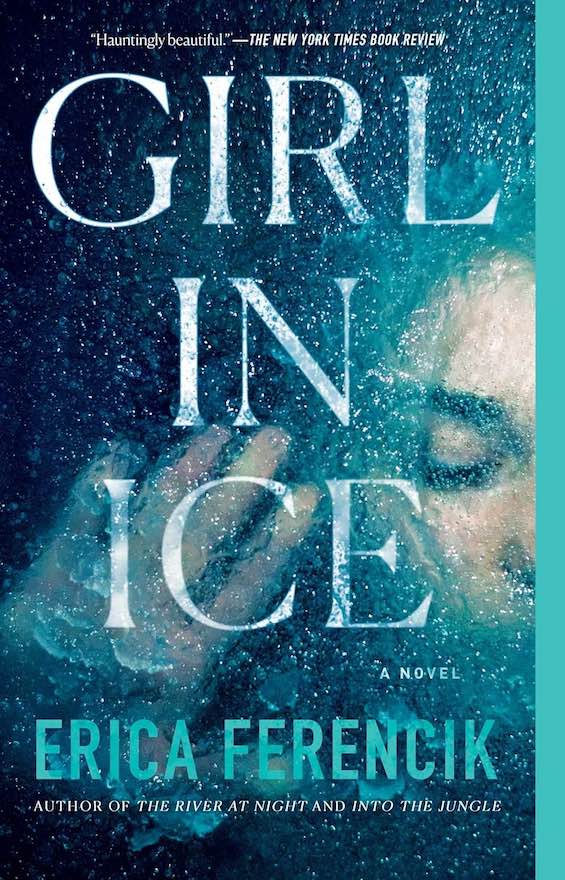
Girl in Ice by Erica Ferencik (2022) 300 pages ★★★★★—A refreshingly original thriller set in Greenland
This science fiction – mystery mashup conjures up the frozen wastes of Greenland in a compelling story. It’s one of the most original novels of suspense I’ve come across in many years. The book reeks of intrigue and suspense. Even if you shun science fiction, you’re likely to marvel at the twists and turns in this entirely original story and the author’s ability to make us feel the cold seeping into our bones as she spins out her tale.

The Oligarch’s Daughter by Joseph Finder (2025) 447 pages ★★★★★— A Russian oligarch is the central figure in this espionage thriller
The novelist Joseph Finder is on familiar ground in this gripping tale about the high-stakes game pitting Russian intelligence against the CIA. But he ventures into the less familiar world populated by expatriate Russian oligarchs living the high life in London and the United States. Mystery piles on mystery as we only slowly untangle the threads of the story. It’s a tour de force of the novelist’s craft. And it’s suspenseful to a fault, with surprise piling on surprise as the story approaches its startling conclusion.
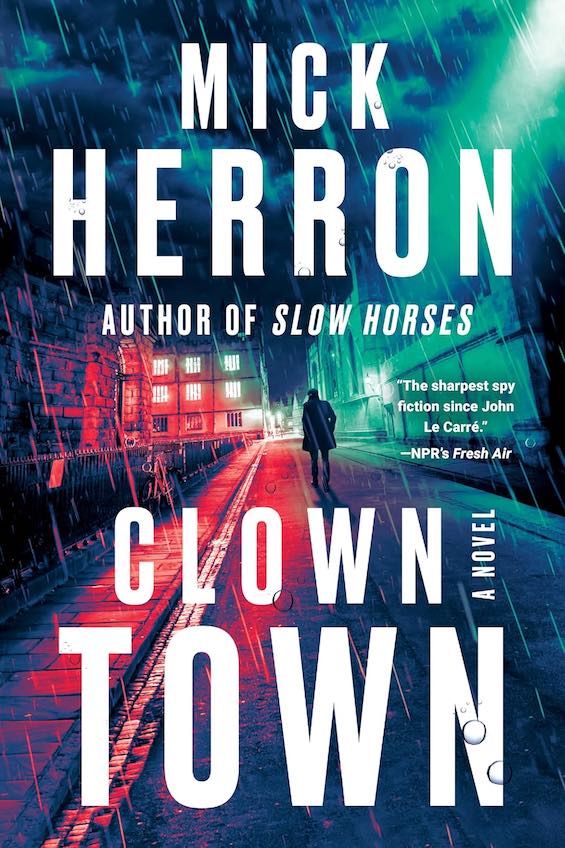
Clown Town (Slough House #14) by Mick Herron (2025) 352 pages ★★★★★— The best Slough House book to date?
This tale about the losers in Slough House is suspenseful, insightful about human nature, and endlessly enjoyable. Mick Herron has a lot of fun exploring the foibles of Britain’s Security Service (MI5) through the comings and goings of Jackson Lamb, River Cartrwight, Diana Taverner, and the other familiar characters in this bestselling series and television production. But, fun aside, Clown Town is a thrilling tale of espionage as it’s practiced today.

Blood Ties by Jo Nesbø (2025 423 pages ★★★★★— A clever and twisty new thriller from Nordic Noir master Jo Nesbo
More often than not, the Norwegian phenomenon Jo Nesbø writes stories about serial killers. But there’s nothing formulaic about the brothers Carl and Roy Opgard, who reign as the dominant businessmen in the rural village of Os. And their business dealings are central to the story, which make for an entirely original tale. Nesbø outdoes himself in this masterful new Nordic thriller.

The Doorman by Chris Pavone (2025) 402 pages ★★★★★— Murder and intrigue at New York’s most famous apartment building
Among New York City”s thousands of apartment buildings one stands out for having grabbed headlines again and again. It’s an Upper West Side structure known as The Dakota. Billionaires live there. And, in Chris Pavone’s murder mystery set in a lookalike building, one of the ultra-rich who lives there is the target of a clever heist that upends the lives of many of the inhabitants. This is the best of Pavone’s five thrillers—and the others are all good.

Black River by Nilanjana Roy (2024) 320 pages ★★★★★—A murder in rural India seizes nationwide attention
Nearly two-thirds of India’s 1.4 billion people still live in rural villages despite continuing migration to its cities. This riveting murder mystery is set in a small village in India’s rural north and in the slums where migrants crowd the center of teeming Delhi. What begins as the simple story of a young village girl’s murder metastasizes into a major event that exposes the gaping cracks in Indian society today.

Tombland (Matthew Shardlake #7 of 7) by C. J. Sansom (2018) 882 pages ★★★★★— Tudor England comes to life in this brilliant historical novel
Tombland is the concluding volume in C. J. Sansom’s extraordinary series of historical murder mysteries. It’s set during the brief regency of King Edward IV, Henry VIII’s young son, in the interregnum between Henry and his daughters, Mary and Elizabeth. Sansom’s protagonist, the hunchback lawyer Matthew Shardlake, undertakes a mission for the teenage Lady Elizabeth that involves him in one of England’s greatest social upheavals, the peasant uprising in 1549. Sansom is a masterful researcher, and this book, like its predecessors, can be read for its historically accurate account of life in Tudor England as well as for the unrelenting suspense of the story.

The Map Thief by Heather Terrell (2025) 336 pages ★★★★★— Did the Chinese discover America before Columbus?
A Chinese admiral in the 15th century led a massive armada across the sea to explore South and Southeast Asia and the east coast of Africa. Lately, a widely disputed theory has surfaced that he also landed on the west coast of North America. But this historical page-turner builds on that theory in an elaborate dual-timeline tale that will hold your attention from beginning to end. It’s a triumph of the storyteller’s art.

The Poet’s Game: A Spy in Moscow (Alex Matthews #1) by Paul Vidich (2025) 336 pages ★★★★★—Paul Vidich launches a new series of compelling spy novels
Paul Vidich quickly gained a reputation as a top-flight author of spy novels with a series of books set against iconic events in the history of the CIA. With this novel he shifts his perspective to the present day, crafting a compelling story about a retired former CIA Moscow Station Chief who becomes embroiled in a high-stakes game that points to a mole high in the Agency’s ranks. Be prepared to be surprised as The Poet’s Game rushes toward its shocking end.

The Human Scale by Lawrence Wright (2025) 510 pages ★★★★★—Who murdered the liberal Israeli police chief in Hebron?
Few places on the planet receive more attention in American news media than the Israeli-occupied West Bank. And most accounts dwell on the clash between the historic inhabitants of the region and the Israeli newcomers in settlements built by the country’s right-wing governments in recent decades. But Pulitzer Prize-winning author Lawrence Wright spins a convincing story grounded in the nuances and complications of those relations. The novel transcends the genre with its penetrating dive into the mindset of two irreconcilable peoples.
Popular fiction

Regeneration by Pat Barker (1991) 260 pages ★★★★★— He was a conscientious objector to the “war to end all wars”
A century after the cataclysm we know as the First World War English-language novelists and screenwriters tend to dwell on the brutality and squalor of the trench warfare on the Western Front. This now-classic novel shifts the focus to the life of the mind as revealed in a psychiatric hospital where some of the war’s most storied conscientious objectors were sent to avoid their airing their charges in the press. Among them were three of the most distinguished poets of the age, Siegfried Sassoon, Robert Graves, and Wilfred Owen. The anti-war message comes through clearly on every page.

The Only Woman in the Room by Marie Benedict (2019) 320 pages ★★★★★— This legendary Hollywood actress was a brilliant inventor
Hollywood publicists touted Hedy Lamarr as “the most beautiful woman in the world.” The Austrian immigrant, who suppressed her Jewish heritage, costarred with the most famous leading men of the age. But she was also extraordinarily intelligent and endowed with what many call a photographic memory. This enabled her to recall details about the greatest technical challenges facing Germany that came to light in dinner-table conversations with top Nazi military leaders and her ex-husband, Austria’s most prominent arms merchant. And she invented a device that responded to one of the greatest of these challenges—that the naval torpedoes of the age were notoriously inaccurate. And the underlying technology (frequency hopping) is foundational in today’s GPS, phone networks, and Wi-Fi.
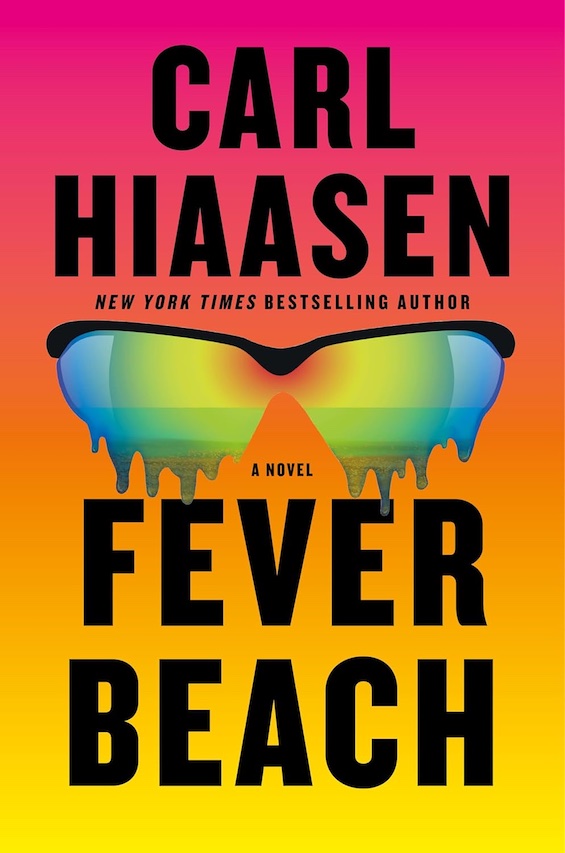
Fever Beach by Carl Hiaasen (2025) 561 pages ★★★★★— Carl Hiaasen has outdone himself with this sendup of Florida’s insanity
Most of Carl Hiaasen’s 16 previous adult novels have centered on the destruction of Florida’s natural beauty. He has skewered corrupt developers, crooked politicians, and rapacious billionaires as well as assorted low-life scumbags and con men. The man’s body of work opens a window on the dysfunction that has undermined the quality of life in Florida for half a century and more. And he continues the theme, albeit in the background, in his newest comic caper novel, Fever Beach. Here, though, his principal target is a gang of right-wing numbskulls who go to work to help reelect a sex-crazed, conspiracy-obsessed Republican Congressman. In the process, Florida as Hiaasen sees it continues to merit its reputation as the nuttiest state in America

The Lowland by Jhumpa Lahiri (2013) 340 pages ★★★★★— A haunting tale of love and loss spanning India and America
The Lowland reflects two sides of Anglo-American author Jhumpa Lahiri’s persona—her Bengali heritage (though she was born in the UK) and her upbringing in Rhode Island. The novel’s action is divided between the middle-class precincts of Kolkata (formerly Calcutta) and the academic world of Rhode Island. The plot revolves around two momentous incidents, one taking place in Kolkata in 1971, the other in Rhode Island twelve years later. The novel is a tale of two Bengali brothers, preternaturally close in their youth, whose passions take them in divergent directions, one as a marine biologist in the United States, the other as a Maoist revolutionary in rural India. The Lowland is a sad story of love and loss, but a hopeful one nonetheless. Lahiri never lets us get lost in despair, finding hope and possibility in birth, renewal, and forgiveness.

The Coyotes of Carthage by Steven Wright (2020) 311 pages ★★★★★— An eye-opening novel grounded in the real world of small-town politics
In simpler times, politics in small-town America was a straightforward contest between clashing personalities and the views they embodied—at least on the surface. But the professionalization of politics and the emergence of new communications technologies have added an ugly new dimension to the field. This novel, grounded in the no-holds-barred practice of politics in one small town, centers on a political consultant caught up in an evil game on behalf of a corrupt major corporation. The election campaign portrayed here is nothing like what they teach us in high school social studies classes.
For related reading
You’ll find other great reading at:
And you can always find the most popular of my 2,400 reviews, and the most recent ones, on the Home Page.


Enjoy and follow your site … can you recommend or review compelling thrillers or any novels that are funny, humorous and laugh out loud but at the same have a good plot and story line such as Richard North Patterson’s Gold Coast and his adventure novels wherein we share the hilarious thoughts of the protagonist and what he really would like to say vs what he is obliged to say? Phillip Kerr’s Bernie Gunther comes close … thanks and best wishes JZ
Thanks for writing. The best I can do in response to your request is to suggest my post about “funny novels.” Try searching for that on the home page.