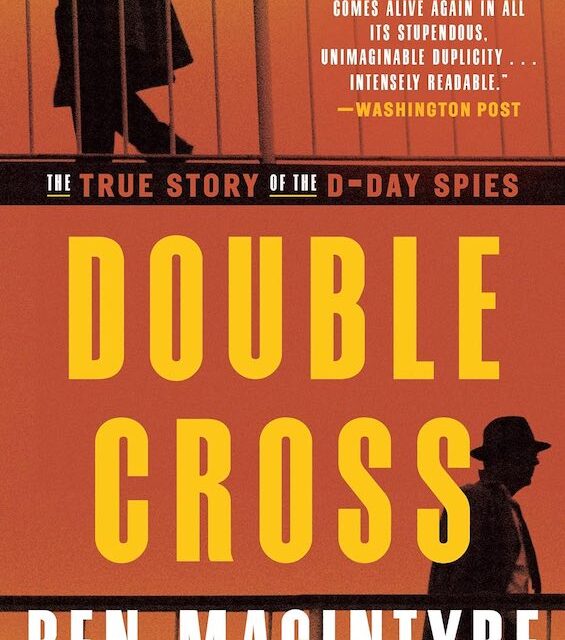
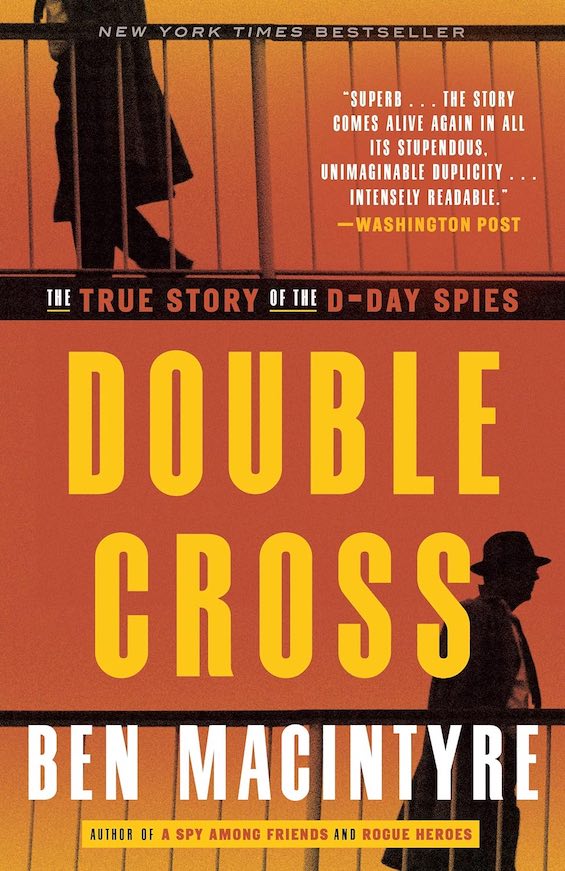
Americans’ views of the Second World War have been dominated by films, books, and television specials about the role that U.S. troops played in the fighting. Even today, more than three-quarters of a century after the war ended, we tend to believe that it was our ingenuity and industrial might and the sheer guts and persistence of American soldiers and sailors that defeated Nazi Germany. Thus, to borrow a phrase from the preceding Great War, we “made the world safe for democracy.” This is just one of a great many signs of our insularity and the widespread belief in the so-called exceptionalism of our nation. Ben MacIntyre explains in Double Cross: The True Story of the D-Day Spies.
The pivotal role of British Intelligence
However, serious historical studies have long since established the truth that Stalin’s Soviet Union carried a much larger burden than ours. It was the German defeat in the monumental Battles of Stalingrad and Kursk and Operation Bagration that determined the outcome of the European war. Those victories alone cost the Red Army more than three million lives. In the war as a whole, as many as 27 million Soviets died. (U.S. deaths totaled 418,500.) And research in more recent years, as hitherto secret archives have been opened to the public, has revealed the seminal role of the British Secret Intelligence Services. Both MI5 (counterespionage) and MI6 (foreign intelligence) played pivotal roles in the success of the U.S.-led Normandy Invasion on D-Day.
Double Cross: The True Story of the D-Day Spies by Ben MacIntyre (2012) 450 pages ★★★★☆
The women and men of Operation Double Cross
If you have even a cursory knowledge of World War II, you’re probably familiar with the names George Patton, Omar Bradley, and Dwight Eisenhower. It’s highly unlikely, however, that you’ve ever come across any mention of Elvira Concepción Josefina de la Fuentes Chaudoir, Roman Czerniawski, Lily Sergeyev, Dusko Popov, Juan Pujol Garcia, and Johnny Jebsen. In their own way, these six European double agents “turned” (recruited) by the British may have played roles as large as those of any American general in the success of the invasion that opened up the Western Front. They were the central actors in Operation Double Cross.
British intelligence, working through these six extraordinary individuals in the Double Cross System, managed to mislead the Germans about the date and place of the invasion. MacIntyre writes, it “was a military sucker punch. Senior German commanders were not only unprepared but positively relaxed.” Everyone in a key position on the Nazi side, including Hitler himself, had bought the elaborate deception that kept powerful German forces locked up elsewhere.
They expected Anglo-American invaders in Norway, the French Atlantic coast, and, most of all, in the Pas de Calais peninsula in Northern France. Hitler and his generals stubbornly believed the Normandy action was simply a diversion. As we all know, of course, the real invasion was a desperate and bloody battle nonetheless. It was anything but a certain victory for the Allies. Eisenhower and Montgomery, who led the invasion force, later acknowledged that if the Germans hadn’t been fooled, if they had reinforced their troops on the line in Normandy, the invasion might well have ended in a massacre of Allied troops.
“One of the oddest military units ever assembled”
As Ben MacIntyre writes in Double Cross, “the D-Day spies were, without question, one of the oddest military units ever assembled. They included a bisexual Peruvian playgirl [who was heir to a guano fortune], a tiny [and fanatically patriotic] Polish fighter pilot, a mercurial Frenchwoman [who loved her little dog Babs more than any person], a Serbian seducer, . . . a deeply eccentric Spaniard with a diploma in chicken farming,” and a Danish-German Anglophile whose sideline business of currency and commodity manipulation would have put Catch 22‘s Milo Minderbender to shame. What is most astonishing about the highly unlikely stories MacIntyre tells in this detail-filled account is that they’re all true.
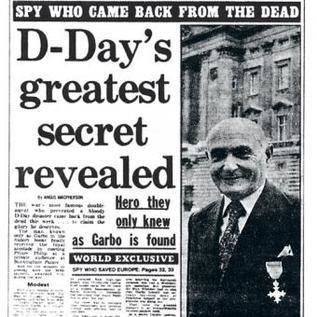
Operation Double Cross was vastly complex
Double Cross is MacIntyre’s third book about British intelligence during World War II. His previous books—Operation Mincemeat and Agent Zigzag—relate equally improbable exploits, which are nonetheless also completely true. The earlier books, both bestsellers, were fascinating to read, filled with all the tension of superior thrillers. In Double Cross, MacIntyre attempts to tell a vastly more complex tale, encompassing a veritable army of characters, both British and German, and a bewildering sequence of interconnected events. He comes up short. There’s simply too much going on for any but the most retentive reader to follow all six threads. I was nearly two-thirds of the way through the book before I could even keep all the spies straight, let alone the ever-changing cast of their handlers on both sides.
Although Double Cross is a little difficult to follow at times, it’s still a thoroughly enjoyable and often surprising read. You can be the life of any party for months, retelling the story of the British carrier pigeons who played a special role in Operation Double Cross, or the one about the Spanish chicken farmer working for MI5 who fabricated the identities of an army of sub-agents, fed the Abwehr with thousands of pages of entirely fictitious reports — and received a German Iron Cross for his courageous and resourceful efforts to defend the Fatherland.
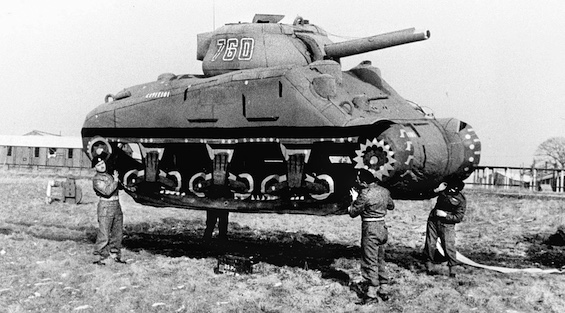
Double Cross was only one of numerous efforts to mislead the Germans
The Allies conducted several deception operations under the broader umbrella of Operation Bodyguard to mislead the Germans about D-Day. Double Cross was only one of many clever efforts. And they began nearly a year before the invasion.
Operation Fortitude was the most significant, split into two parts. Fortitude North aimed to convince the Germans that an invasion of Norway was planned, using fake radio traffic and diplomatic pressure on Sweden. Fortitude South was the centerpiece. It created a fictitious “First United States Army Group” (FUSAG) under General George S. Patton, stationed in southeast England, to convince the Germans the main invasion would target the Pas-de-Calais rather than Normandy. This involved inflatable tanks, fake equipment, scripted radio traffic, and double agents feeding false intelligence.
Other key operations included:
- Operation Titanic—dropping dummy parachutists and special forces teams away from the actual drop zones on D-Day night to simulate airborne landings and draw German reserves in the wrong direction.
- Operation Taxable and Operation Glimmer—using aircraft dropping chaff (Window) and small boats with radar reflectors to simulate large naval convoys heading toward the Pas-de-Calais and Boulogne on the night of the invasion.
- Operation Ironside—a deception suggesting an attack on Bordeaux in southwestern France.
- Operation Vendetta—a fake threat against the Mediterranean coast of southern France.
- Operation Zeppelin—broader Mediterranean deceptions suggesting threats to the Balkans and Greece.
- Operation Copperhead—the use of a Montgomery lookalike sent to Gibraltar and North Africa to suggest the invasion would come from the Mediterranean.
Remarkably, Fortitude South continued to work even after D-Day, convincing Hitler that Normandy was a feint and keeping the powerful Fifteenth Army pinned at Calais for weeks.
About the author

Ben MacIntyre is a columnist for the Times of London and the author of 16 nonfiction books, most of which are about World War II and espionage. Born to a privileged family in 1963 in Oxford, England, he earned a degree in history from St John’s College, Cambridge. MacIntyre is divorced. He has three children.
For related reading
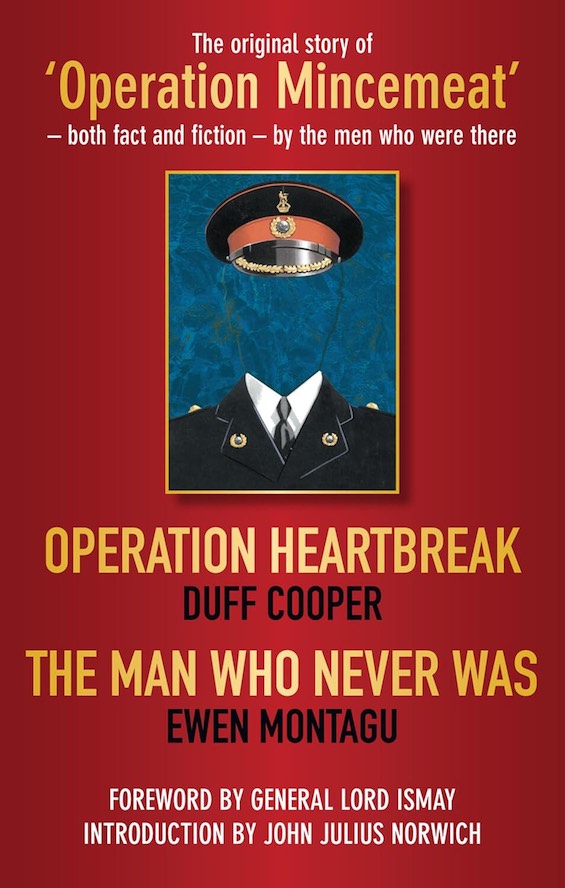
To examine different versions of another WWII operation to fool the Nazis, see Operation Heartbreak by Duff Cooper, 1st Viscount Norwich and The Man Who Never Was: The Original Story of “Operation Mincemeat”—Both Fact and Fiction—by the Men Who Were There by Ewen Montagu (Fact vs fiction in the story of an outrageous WWII deception).
This book is a runner-up to the 10 top WWII books about espionage.
I’ve reviewed the author’s A Spy Among Friends: Kim Philby and the Great Betrayal (Was Kim Philby the greatest spy ever?).
Books on closely related topics
‘ve also reviewed a number of books on closely related topics:
- Rogue Heroes: The History of the SAS, Britain’s Secret Special Forces Unit that Sabotaged the Nazis and Changed the Nature of War, by Ben MacIntyre—The story of the original special forces
- D-Day Girls: The Spies Who Armed the Resistance, Sabotaged the Nazis, and Helped Win World War II by Sarah Rose—The women who parachuted behind German lines and helped secure the Normandy landing
- Madame Fourcade’s Secret War: The Daring Young Woman Who Led France’s Largest Spy Network Against Hitler by Lynne Olson—The truth about the French Resistance, dug out of old records
- The Nightingale by Kristin Hannah—A deeply affecting novel of the French Resistance
- A Hero of France (Night Soldiers #16) by Alan Furst—Vive la Resistance!
- Agent Sonya: Moscow’s Most Daring Wartime Spy by Ben MacIntyre—The extraordinary Soviet spy who gave Stalin the bomb
- Operation Mincemeat: How a Dead Man and a Bizarre Plan Fooled the Nazis and Assured Allied Victory by Ben MacIntyre—How the Allies fooled the Nazis with a corpse
I’ve also reviewed The Ghost Army of World War II: How One Top-Secret Unit Deceived the Enemy with Inflatable Tanks, Sound Effects, and Other Audacious Fakery by Rick Beyer and Elizabeth Sayles (An entertaining account of deception in World War II).
You might also be interested in 10 top nonfiction books about World War II and The 10 best novels about World War II.
And you can always find the most popular of my 2,400 reviews, and the most recent ones, on the Home Page.