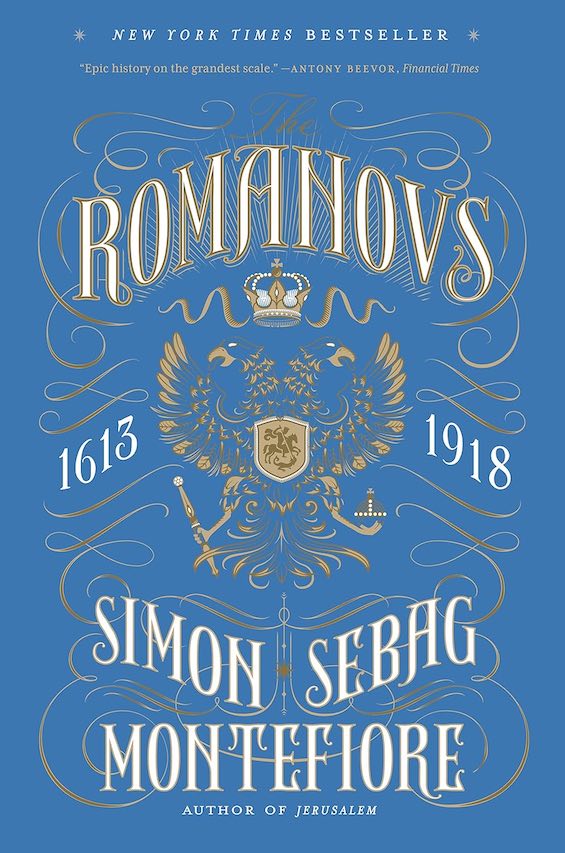
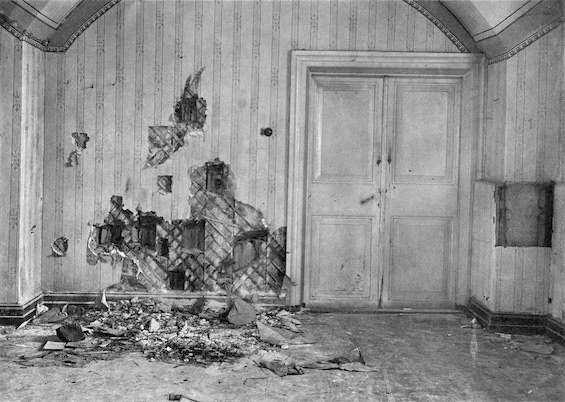
The Romanovs: 1613–1918 chronicles the 300-year rise and fall of the dynasty, detailing how 20 tsars and tsarinas transformed Russia into a massive empire. Ruthless autocracy, immense territorial expansion, and extreme personal power struggles characterized their reign. Historian Simon Sebag Montefiore highlights how immense, often brutal power wielded by fragile, personality-driven rulers dominated the empire’s history. The dynasty was born in chaos (the “Time of Troubles“) and ended in murder (the execution of the royal family and their retainers at Yekaterinburg). Montefiore tells their story through the lens of the rulers’ troubled and often violent lives.
We know of only one Romanov ruler among 20
For most of us in the West, the only Romanovs whose names we may recognize are those of the last ruling family, that of Tsar Nicholas II and his empress, Alexandra. Scores, perhaps hundreds, of books have been written about them, their enduring love affair, and their tragic death with their five children in 1918. And their story has been immortalized on film and television. Of course, we also know the name of Grigori Rasputin. (How could we not, given how dramatic it is?) But the Romanov family built what became the Russian Empire soon after it came to power—and their impact on the course of history was immense. If only the author had given us a clear sense of that!
The Romanovs: 1613-1918 by Simon Sebag Montefiore (2016) 754 pages ★★★☆☆
The principal takeaways
The major themes are these:
Autocracy tempered by strangulation
The Romanovs established a system of “autocracy tempered by strangulation,” where absolute power was maintained through violence, secret police, and immense, often brutal, expansion. Montefiore shows how the character of each tsar or tsarina—their paranoia, ambition, cruelty, or charm—directly shaped the fate of millions.
The two greats were not so great for their people
Peter the Great transformed Russia through modernization and ruthlessness, while Catherine the Great expanded the empire, both establishing the template for the powerful, often despotic ruler. Catherine murdered her husband to seize the throne, and Peter reigned through drunken orgies involving his closest friends and retainers. He murdered hundreds, including his eldest son’s torture and death, after accusing him of conspiracy.
Russia’s westernization was limited
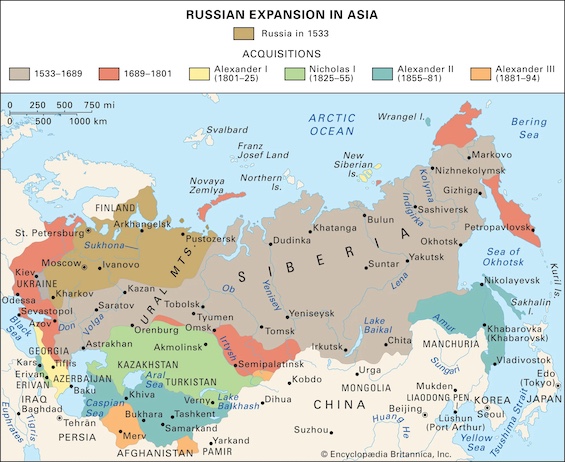
Starting with Peter the Great and continuing through Catherine the Great and beyond, successive rulers tried to modernize and Europeanize Russia. This created a persistent tension between reformers and traditionalists, between the cosmopolitan elite and the vast, largely unchanged peasant population—a tension that was never resolved. Ultimately, the dynasty claimed far more territory to the east than it did to the west.
A chaotic and violent family saga
The dynasty was a deeply personal, often chaotic family saga marked by incestuous power struggles, adultery, and the influence of favorites, such as Rasputin’s role in the final days. Most of those who ruled Russia were entirely self-involved and incompetent. They demonstrate the folly of monarchy.
Lagging behind the West
The Romanovs often lagged behind Europe, leading to crises (like the 1905 Revolution) that necessitated reforms, but they ultimately failed to adapt, resulting in their violent end in 1918. Even the reforming tsars, like Alexander I and Alexander II, may ultimately have done more harm than good.
Autocracy, corruption, and theocracy
Montefiore suggests that the patterns of rule—autocracy, corruption, and a symbiotic relationship between state and church—did not end with the dynasty but persisted, adapting into the Soviet and post-Soviet eras.
Capable women ruled at times
The dynasty relied on capable women, with rulers like Catherine the Great, Elizabeth, and Sophia (as regent) playing crucial roles in strengthening the empire’s power. Other royal wives dominated their husbands, usually to the detriment of the Russian people.
The book emphasizes that the dynasty was characterized by a “magnificent” yet “cruel” nature, shaping the very soul of the Russian state.
Assessing the book
Montefiore’s emphasis on the personal lives of Russia’s rulers was engaging at times. But as his story drags through the centuries, the sameness of their lives and loves quickly grew tedious. I found myself wanting the story to end. It lacked context and perspective. Montefiore offers little analysis, certainly nothing that might give me a sense of the dynasty’s impact on history. We know that was substantial. But all the author offers us is a picture of how some individual actions by the tsars and tsarinas affected events in the short term. For example, the country’s many wars quickly recede into the background.
For example, how does the Romanov dynasty compare with other, long-running royal families? Montefiore doesn’t tell us. The family’s 300-year reign was actually not one of history’s most long-lasting. That distinction goes to the Yamato Dynasty of Japan, which ruled for more than 1,500 years. Of course, the Romanovs were in power much later, and their impact on modern history was considerable. They helped determine the course of events both in Asia and in Europe, largely as the result of their expansionist policies. But Montefiore doesn’t give us perspective on that. In the end, I was disappointed by this book.
About the author
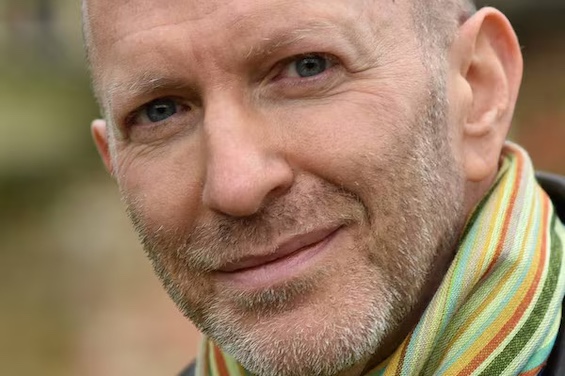
Simon Sebag Montefiore is a British historian, television presenter, and novelist. His father was the scion of a prominent and wealthy Jewish family, his mother the daughter of immigrants from Lithuania early in the 20th century. Montefiore’s books include eight works of nonfiction, five novels, and four children’s books. He was born in London in 1965 and educated at Cambridge University. Before the publication of his first book, Catherine the Great, in 2001, he worked as a banker, a foreign affairs journalist, and a war correspondent. He lives in London with his wife, a novelist, and their two children.
For related reading
You may also want to read Russka by Edward Rutherfurd (A journey through Russian history in fiction).
For the Romanovs’ latter-day successor, see Good books about Vladimir Putin, modern Russia and the Russian oligarchy.
You’ll find good reading at:
And you can always find the most popular of my 2,400 reviews, and the most recent ones, on the Home Page.