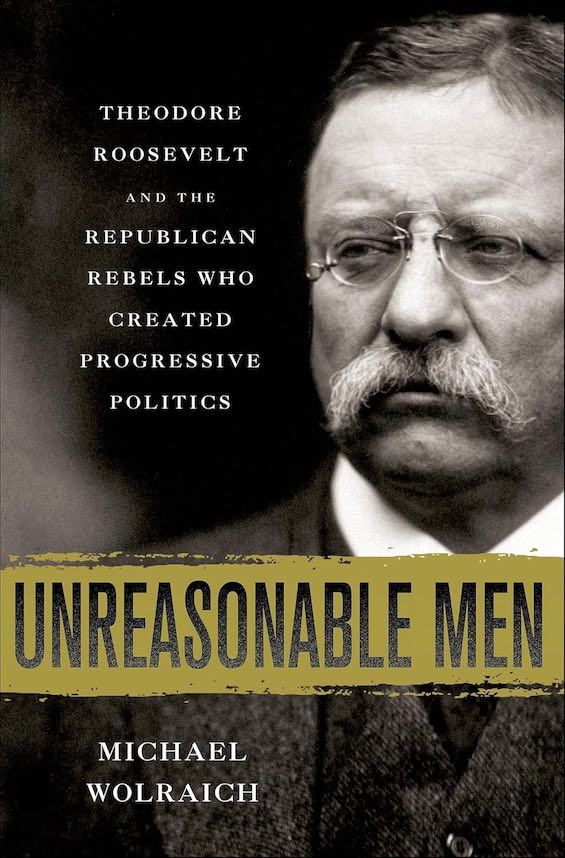
Any American youngster past the age of 12 has learned that around the turn of the 20th century our country’s politics took a sharp turn to the left with the advent of the Progressive Movement. And one man above all embodies that movement: Theodore Roosevelt. Of course, a species of investigative reporters called Muckrakers were also involved. But it was TR who led the way as a trustbuster. Except that this is a misleading picture of what happened. In fact, it was the “exposure journalists,” as the president termed them, and a crusading Wisconsin governor and United States Senator named Robert M. La Follette (1855-1925) who were the true leaders of the Progressives. Author Michael Wolraich makes this clear in his remarkable revisionist history of the Progressive reforms, Unreasonable Men.
He didn’t live up to his reputation
Teddy Roosevelt was flamboyant and upbeat. Reporters loved him. In our contemporary idiom, he had great PR. And his high-profile action to break up the Northern Securities railroad trust earned him his reputation as a trustbuster. But, despite the revelations of the Muckrakers about widespread abuses in countless other industries, he did little to bring about reform. Like so many chief executives who followed him, he depended on the support of Wall Street. And he was naturally a compromiser who was always willing to settle for a little progress while Senator La Follette and the journalists demanded far more.
In fact, even TR’s reputation for taking on the monopolies paled by comparison with his successor’s accomplishments. President William Howard Taft, whom he’d handpicked to follow him in the White House, filed 80 antitrust lawsuits in four years compared to Roosevelt’s 44 in seven-and-a-half. Taft acted to break up Standard Oil, American Tobacco, and US Steel, arguably the three biggest monopolies of the era.
Unreasonable Men: Theodore Roosevelt and the Republican Rebels Who Created Progressive Politics by Michael Wolraich (2014) 321 pages ★★★★★
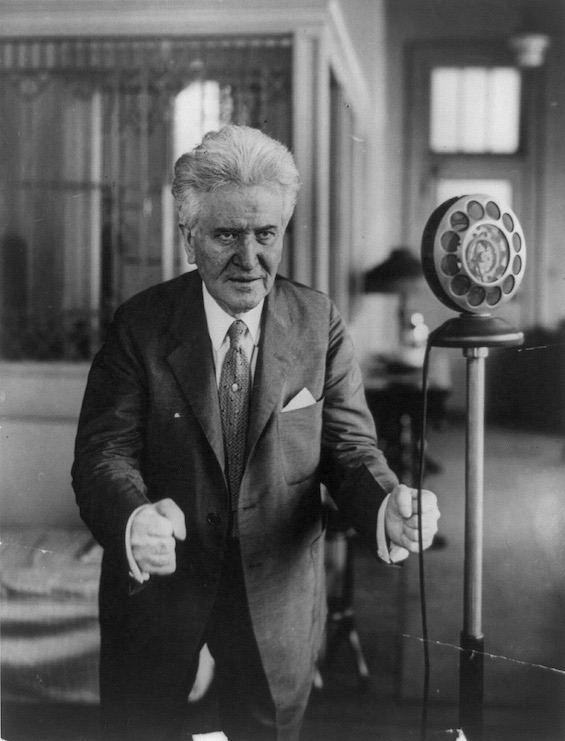
The most significant reforms of the era came from the US Senate
The leading issues of the day were the inflated and discriminatory rates charged by the railroads . . . the high tariffs created to favor industries who supported the party in power . . . the threats to the public’s health and safety by the food, meatpacking, and other industries . . . and the despoilation of public lands by encroaching industries such as mining and ranching. Most of the Republicans, and virtually all the Democrats, opposed reforms on these issues. And TR was almost always willing to compromise with them, settling for reforms that La Follette and the Muckrakers tended to think were merely cosmetic.
The true architects of the steps taken by the courts and the Congress were the men in Bob La Follette’s circle in the US Senate. Woolraich paints a convincing picture of these men, Republicans all, who mostly represented what today we call the Midwest. (The Democrats at that time were dominated by the racist and reactionary men of the South. The Democratic Party didn’t begin to shift leftward, and then only on some issues, until Woodrow Wilson won the White House in 1912.)
One conservative Senator accidentally initiated the biggest reforms of all
Ironically, Roosevelt’s chief partner among the reactionary wing of the Republican Party, Rhode Island Senator Nelson W. Aldrch (1841-1915), later unwittingly laid the foundation for two of the most significant reforms of the era: the direct election of US Senators and the creation of the Federal Reserve System. Roosevelt had been opposed to both measures before he, too, took a turn to the left, running as the Progressive “Bull Moose” candidate for President against Taft and Wilson in 1912.
All in all, the reforms adopted during the first two decades of the 20th century may have been far more significant than those of the New Deal two decades hence. And, perhaps even more important historically, the establishment of the Progressive Movement realigned politics from a regional clash between North and South into an ongoing struggle between progressives and conservatives that continues to this day.
About the author
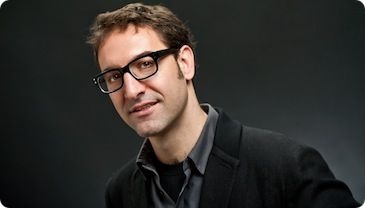
According to his author website, “Michael Wolraich is the critically-acclaimed author of [three nonfiction books.] His writing has [also] appeared in RollingStone, The Atlantic, The Daily Beast, TIME Magazine, New York Magazine, CNN.com, Reuters, and other publications. Wolraich grew up in Iowa and graduated from Williams College in Massachusetts before moving to New York City, where he has lived since 2000.”
Google Books adds that “Michael Wolraich is a former contributor to the popular blog Talking Points Memo Caf. In 2008, Wolraich founded dagblog.com, which offers a mix of political commentary and vigorous repartee.
For related reading
I’ve reviewed a number of other books, both fiction and nonfiction, about Theodore Roosevelt:
- The Perilous Adventures of the Cowboy King: A Novel of Teddy Roosevelt and His Times by Jerome Charyn (A stirring novel about the colorful first President Roosevelt)
- The Alienist by Caleb Carr (In a classic whydunit, The Alienist makes his debut)
- The Imperial Cruise: A Secret History of Empire and War by James Bradley (Teddy Roosevelt and the dark side of American foreign policy)
- Let the People Rule: Theodore Roosevelt and the Birth of the Presidential Primary by Geoffrey Cowan (Teddy Roosevelt: progressive, champion of primary elections, and a racist)
- Hot Time by W. H. Flint (Teddy Roosevelt at the NYPD during the 1896 election)
For links to great reading, see:
- Top 20 popular books for understanding American history
- 12 great biographies
- Top 10 nonfiction books about politics
And you can always find the most popular of my 2,400 reviews, and the most recent ones, on the Home Page.