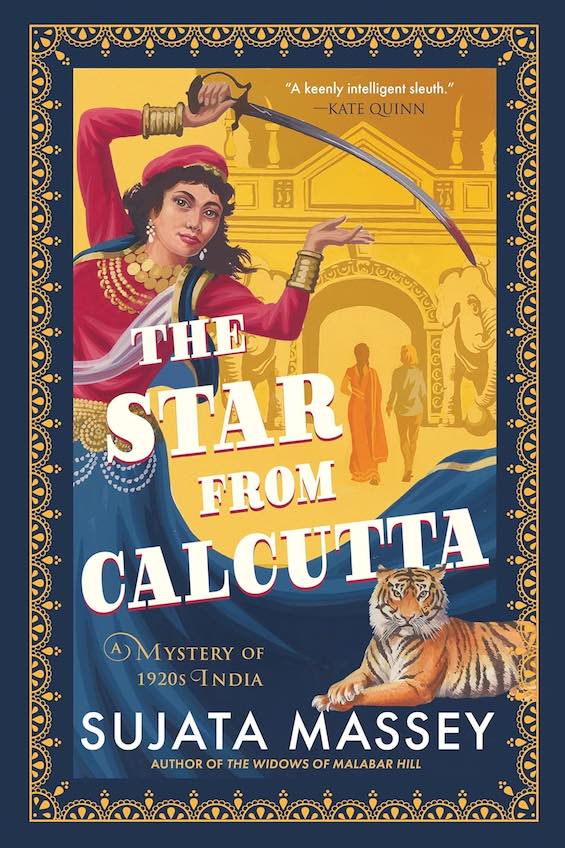
The American motion picture industry, which we know as “Hollywood,” began in the early 1910s when filmmakers migrated to California. By 1915, they had established a global cinema hub. But filmmaking grew early in India, too. The first Hndi-language feature film produced there, launching “Bollywood,” was in 1913. And that fledgling industry, which featured fiercely competing production companies, is the setting for Sujata Massey’s intriguing murder mystery novel, The Star from Calcutta. It’s the fifth in her winning historical mystery series set in 1920s Bombay. In this engaging story, the young attorney Perveen Mistry, Bombay’s first female lawyer, leads the investigation.
A big-name film star needs legal help
The year is 1922. Twenty-four-year-old Perveen Mistry, with a degree in the law from Oxford University, has joined her father, Jamshedji Mistry, the senior partner in their family law practice. They are visiting a prospective client, Champa Films. “We will meet with the owner, Subhas Ghoshal, and his wife,” Jamshedji tells her, “an actress from Calcutta. They’ve got a new film called Queen of Hearts coming out in a few weeks.” The wife, it turns out, is the big-name star, Rochana.
Rochana has quickly emerged as a leading light in Indian cinema. She stands out, because “most of the stars in India had international backgrounds. Jewish girls like Ruby Myers, now called Sulochana, and the Anglo-Indian Patience Cooper rode high on the top of the theater marquees.” But Rochana, and Champa Films, are threatened because her previous employer in Calcutta, “the infamous ABC, properly known as Abhijit Bipin Chatterjee,” is threatening legal action for an alleged breach of contract. He owns one of Champa’s leading competitors, a much larger company. But little do Perveen and Jamshedji suspect that what seems a simple case requiring them to negotiate a settlement will turn into a high-profile murder investigation.
The Star from Calcutta (Perveen Mistry #5) by Sujata Massey (2026) 413 pages ★★★★☆
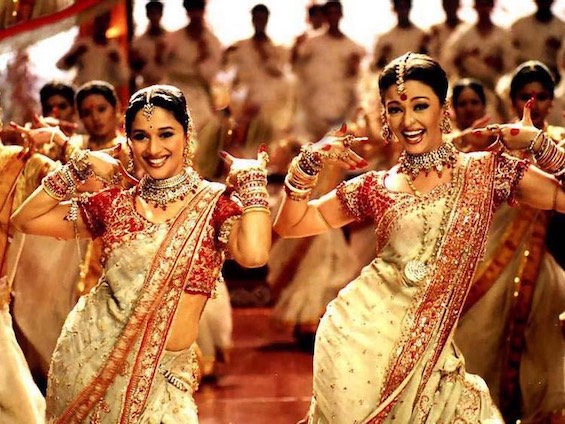
At a preview of the new film, the police censor is murdered
Rochana and Subhas invite the Mistrys to attend a private premiere of the new film. Perveen knows that her best friend Alice Hobson-Jones, the daughter of the British Raj governor, regards Rochana as her favorite actress. So she invites Alice to join them. But the evening turns disastrous when government film censor Joseph Morgan, a police sergeant, is found dead. To compound the challenge, Rochana vanishes. Did she murder Morgan? Or was it the cinematographer, who had loudly argued with him after the screening? Or did someone else take action to protect their job at Champa Films from a hostile censor? Perveen investigates. And, doing so, she uncovers a web of blackmail, deceit, and romantic affairs lurking beneath the glittering surface.
Massey’s tale offers a compelling portrait of life at the pinnacle of success in colonial India. And her story is suspenseful to a fault, defying any reader to anticipate the truth that lies behind the murder.

The historical setting
The roots of Indian cinema lie as far back in the past as those in the United States. Here, Thomas Edison’s rudimentary film camera reached the market only in 1893. The first copyrighted film shown in the US, Blacksmith Scene, appeared that same year. But around the globe, an Indian photographer made a film of scenes from a stage show he’d witnessed. It reached audiences just five years later, in 1898, under the title The Flower of Persia.
The first narrative feature film was the 70-minute The Story of the Kelly Gang (1906) about the famous bushranger Ned Kelly. It was produced in Australia. (Hollywood released its first full-length features only six years later.) But the first feature-length film screened in India was the silent film Raja Harishchandra (1913). Growth came quickly thereafter. “By the 1930s, the Indian film industry as a whole was producing over 200 films per year.”
Today, Mumbai is one of the world’s largest film production centers. Bollywood—the term that technically denotes Hindi-language films alone, not those in other Indian languages—comprised a dozen principal production companies that together released a total of 364 films in 2017. The Indian film industry as a whole produced 1,986 feature films. And that total climbed to more than 2,500 in 2025, the largest of any country.
About the author
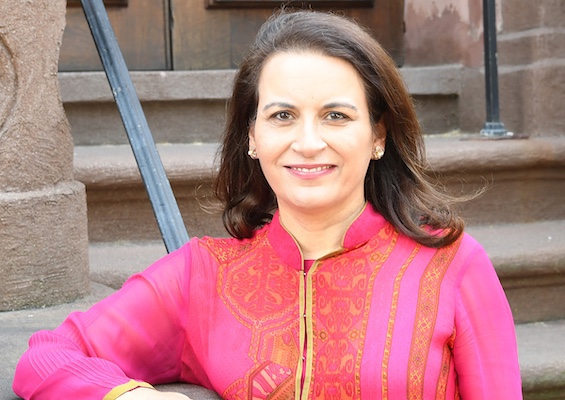
Born in Sussex, England, in 1964, Sujata Massey is the Anglo-American author of 16 mystery novels, including the five to date in the Perveen Mistry series. (She emigrated to the US with her family at the age of five.) Massey graduated from Johns Hopkins University with a degree in writing. After a career as a journalist in Baltimore and two years as an English teacher in Japan, Massey won the Agatha Award for Best First Novel for her debut in the genre in 1997.
For related reading
I’ve reviewed all four of the previous books in this series:
- The Widows of Malabar Hill – Perveen Mistry #1 (The first woman lawyer in Bombay solves a baffling mystery)
- The Satapur Moonstone – Perveen Mistry #2 (A murder mystery set in colonial India highlights the princely states)
- The Bombay Prince – Perveen Mistry #3 (Murder in Bombay during the Indian independence movement)
- The Mistress of Bhatia House – Perveen Mistry #4 (Fighting crime in Bombay a century ago)
For similar titles, see The best Indian detective novels.
You might also enjoy my posts:
- Good books about India, past and present
- Top 10 historical mysteries and thrillers
- Top 10 mystery and thriller series
- 30 outstanding detective series from around the world
And you can always find the most popular of my 2,400 reviews, and the most recent ones, on the Home Page.