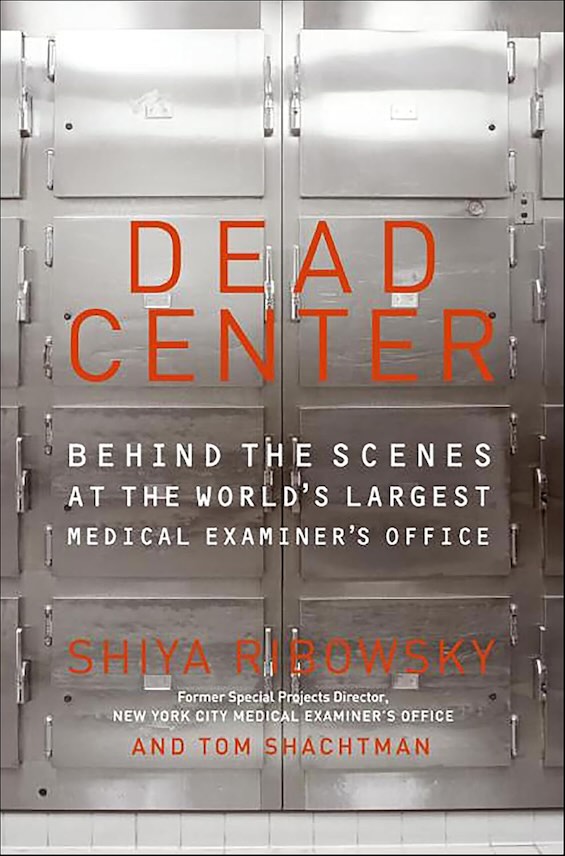
On the morning of September 11, 2001, Shiya Ribowsky walked to work. It was a beautiful day, and he was in no hurry. As director of identifications at New York City’s Office of the Chief Medical Examiner (OCME), he knew death keeps its own schedule. Then the first plane struck the North Tower. Within hours, it fell to him to organize what became the largest forensic investigation ever attempted: putting names to the 2,753 people who died at the World Trade Center. In Dead Center, written with the veteran author Tom Shachtman, Ribowsky tells that story. But he also tells how a young man raised in New York’s Orthodox Jewish community became one of the country’s most experienced death investigators. It’s a grim book in places, as you’d expect. It’s also an illuminating one.
Not the death investigator you see on TV
If your picture of forensic work comes from CSI or Law & Order, Ribowsky will set you straight. (Ironically, he later served as a forensics consultant to Law & Order.) He wasn’t a pathologist wielding a scalpel in the autopsy suite. Nor was he a detective. He was a medicolegal investigator, or MLI—a trained physician assistant who goes to the scene of an unexplained death, examines the body and its surroundings, and decides whether the case warrants an autopsy. Some 70,000 people die in New York City every year. More than a third of those deaths fall under the medical examiner’s jurisdiction. Over 15 years, Ribowsky personally investigated more than 8,000 of them.
Dead Center: Behind the Scenes at the World’s Largest Medical Examiner’s Office by Shiya Ribowsky and Tom Schachtman (2009) 272 pages ★★★★☆
From Bowery flophouses to upscale East Side apartments
The first half of the book follows him from one death scene to the next. He takes us into vermin-infested flophouses on the Bowery and elegant apartments on the Upper East Side. Some of the stories are gruesome. A few are darkly funny, such as the rookie cop who broke into an apartment, plunged straight into a badly decomposed body, and fled down the street trailing the evidence. Others are simply sad.
Along the way, Ribowsky explains why real investigations are slower, messier, and far less dependent on brilliant detectives than television suggests. And he makes a persuasive case that careful death investigation doesn’t merely solve crimes. It saves lives, by spotting public health threats and dangerous products before they claim more victims. I was also struck by his observation that many physicians fill out death certificates carelessly. Unless an autopsy backs it up, he suggests, a stated cause of death deserves a healthy dose of skepticism.
The impossible arithmetic of Ground Zero
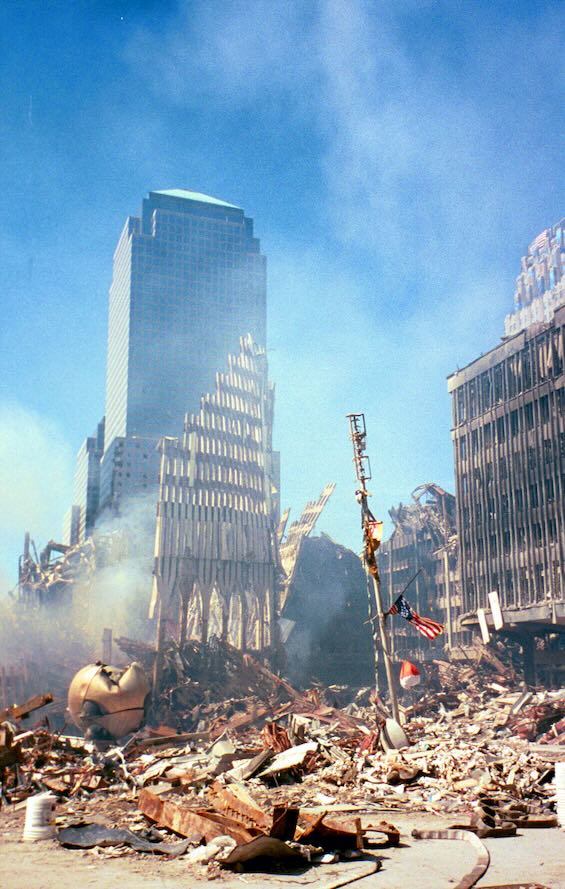
The second half of Dead Center is devoted to the aftermath of 9/11. And here the book becomes something more than a collection of morgue stories. Recovery crews eventually delivered nearly 20,000 human remains to the medical examiner. Very few were intact bodies. Most were fragments, many of them burned, crushed, or commingled. Ribowsky and his colleagues had to invent, almost overnight, a system to catalog every one of them, gather DNA samples and other information from thousands of grieving families, and match the two. They did it while the fires at the site were still burning.
Ribowsky is candid about the strains. Families of firefighters and police officers sometimes received different treatment than families of civilians, and resentments festered. Some remains carried identification that turned out to belong to someone else. And he reveals that the office identified the remains of four of the hijackers—though no death certificates were ever issued for them. Through it all, he writes, the families’ gratitude sustained a staff working punishing hours. The formal identification effort wound down in April 2005, shortly before Ribowsky completed this book.
The work goes on, a quarter-century later
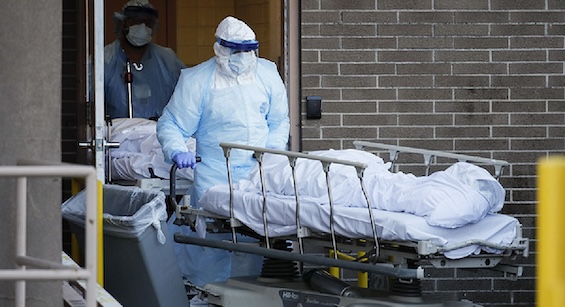
Yet the work never truly ended. As advances in DNA technology made it possible to extract usable genetic material from ever-smaller bone fragments, the OCME has continued to announce new identifications. Three more victims were named in August 2025, bringing the total to 1,653. Another followed in August 2026. Even so, roughly 1,100 of those who died at the Trade Center—about 40 percent—have never been identified. Their unclaimed remains rest in a repository deep beneath the 9/11 Memorial. Reading Ribowsky’s account today, it’s clear that the systems he and his colleagues improvised in the fall of 2001 laid the foundation for everything that has followed.
Where the book falls short
Not all of Dead Center works equally well. The 9/11 chapters sometimes read like an operations manual, heavy on databases and procedures and light on the human stories behind them. Ribowsky also has a habit of telling us he was moved or exhausted or elated without showing us why. And a handful of his anecdotes from the 1990s are told in language that hasn’t aged well. A sharper edit would have helped. But these are quibbles. Few people have seen what Ribowsky saw, and fewer still could explain it so clearly.
About the authors
Shiya Ribowsky spent 15 years at New York City’s Office of the Chief Medical Examiner, rising from medicolegal investigator to director of identifications and later director of special projects. A physician assistant by training, he has served as a forensics consultant to television crime dramas. He lives on Long Island.
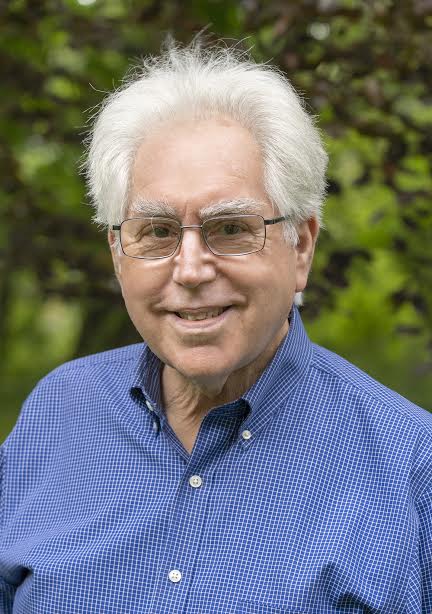
As his website notes, Tom Shachtman has written nearly three dozen books, including Rumspringa: To Be or Not to Be Amish and Absolute Zero and the Conquest of Cold. With former FBI agent Robert K. Ressler, who coined the term “serial killer,” he cowrote Whoever Fights Monsters. Earlier in his career, he made award-winning documentaries for CBS News and other networks. He has taught writing at New York University and Harvard Extension.
For related reading
For novelists who write a great deal about medical examiners and their work, see the books of Robin Cook and Tess Gerritsen. See, for example, Harvest by Tess Gerritsen (A classic medical thriller about organ transplants) and Spasm (Jack Stapleton and Laurie Montgomery #15) by Robin Cook (Forensic scientists investigate Russian biological warfare in America).
See also Two dozen excellent memoirs and Science explained in 10 excellent popular books.
And you can always find the most popular of my 2,500 reviews, and the most recent ones, on the Home Page.