Every self-respecting spy service equips agents with false credentials and dispatches them to conduct espionage illegally in other nations. But one country has been doing so for far longer and on a dramatically bigger scale than all the others. And the practice started more than a century ago when that country was still known as the Russian Empire.
From the start of the Russian Revolution
In 1920, in the early days of the Russian Revolution, spy chief Felix Dzerzhinsky established the original Soviet foreign intelligence agency. He installed Mikhail Trilisser (1883-1940) as commander of the unit, known as the INO. Decades later, after repeated reorganizations, the INO morphed into the First Chief Directorate of the KGB. Ultimately, it became modern Russia’s civilian foreign intelligence arm, the Foreign Intelligence Service (SVR). And in every iteration over the course of a century, the Russian government trained, equipped, and dispatched secret agents as undercover spies known as “illegals” into other countries, both adversaries and allies. Shaun Walker ably tells the story in The Illegals.
A heavy debt to a Soviet turncoat
Walker dug deeply into often newly available sources and consulted many retired spies. His research was exhaustive. But he owes a debt, freely acknowledged, to KGB archivist Vasily Mitrokhin (1922-2004). Mitrokhin’s astonishing story is told in the new book, The Spy in the Archive: How One Man Tried to Kill the KGB by Gordon Corera (2026). As Corera emphasizes, the voluminous archival files Mitrokhin turned over to MI6 revealed chapter and verse about the USSR’s extensive use of illegals. Many, if not all, the case studies Walker cites in his book came from details in Mitrokhin’s files.
The Illegals: Russia’s Most Audacious Spies and Their Century-Long Mission to Infiltrate the West by Shaun Walker (2025) 434 pages ★★★★★
Sweeping up the sleepers
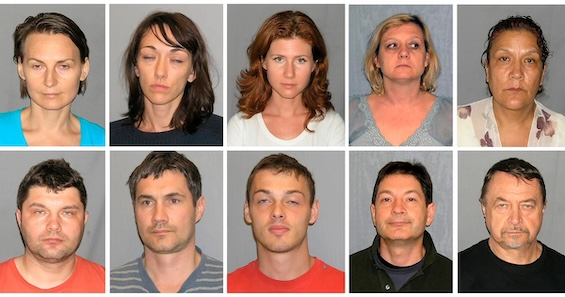
If you follow such things and have a long memory, you may recall the news in 2010 about the FBI’s arrest of ten deep-cover Russian “sleeper” agents in New York, New Jersey, and Massachusetts. The arrest followed a multi-year counterintelligence investigation called Operation Ghost Stories. Less than two weeks later, the ten spies flew back to Russia in exchange for four Russians convicted as undercover spies in the West. It was the largest spy swap since the end of the Cold War. Walker’s book relates the origins of Operation Ghost Stories and profiles in depth some of the ten spies.
Not so incidentally, one of the ten sleeper agents, “Anna Chapman,” was a model and socialite in New York City. The FBI found she circulated freely among people close to a CIA-backed think tank in Manhattan. Her real name was Anna Kushchenko. Her work seems to have proven valuable to the Russians. Most of the others failed to deliver any intelligence of significance.

Were the illegals worth the effort? Not really.
Early in the days of the Russian Revolution, when the Bolshevik regime was regarded as a pariah, Mikhail Trilisser’s “illegals” program provided the Politburo with a vital source of information about the West. Only a handful of countries, all of them bordering the USSR, opened diplomatic relations with the Bolsheviks. Lacking embassies abroad, there was no legitimate way to gather information about the regime’s adversaries. But as the years went by, there were fewer and fewer Russian emigres who spoke French, German, or English and could be suborned to go on such missions. The Illegals program faded as a useful source of intelligence. But World War II changed that.
During the conflict, especially after June 22, 1941, when Nazi Germany invaded the USSR, Soviet illegals proved invaluable. The intelligence provided by American and British Communist assets gave Stalin an edge in his ongoing negotiations with Roosevelt and Churchill. And much of the secret information they funneled to the Soviet Union came through illegals posted to the US or the UK. Because highly placed assets like the atomic spies couldn’t risk meeting with Russian embassy officials. But the value they delivered to the USSR marked the high point of the illegals program.
Some illegals were sleepers. Most were short-term.
The KGB (1954-91) widely used short-term illegals charged with sabotage or assassinations. And that practice was well worthwhile. But sleeper agents were another matter. For one thing, as Walker makes clear, the Soviet Union relied almost exclusively on home-grown, Russian men and women as sleepers. It took years to train them, especially in the language of their target country. And once in place these sleepers often proved incapable of carrying out their mission.
For example, some had advanced degrees from top Soviet universities. But their credentials were worthless in the US, Germany, or the UK. Usually, they had to work in menial or entry-level jobs that prevented them from approaching people in influential positions. Other sleepers, facing fewer obstacles, had to answer to ignorant and rigid Soviet handlers with no knowledge of the countries where their agents now worked. On balance, the program was a failure. But the rigidity of the Soviet system stood in the way of reform. And little changed after the dissolution of the KGB in 1991 and the establishment of the SVR. As Walker explains, few of the ten sleeper agents arrested in 2010 brought any meaningful intelligence to the attention of the Russian government. Its celebration of their efforts was hollow.
About the author
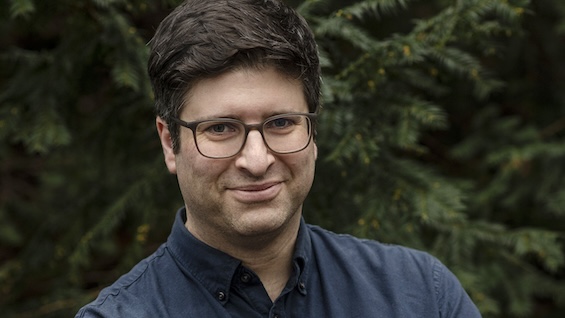
British journalist and author Shaun Walker has been writing for The Guardian since 2014. But his first visit to Russia was in 2000 as an 18-year-old English teacher. He studied Russian and Soviet history at Oxford University. He is the author of three nonfiction books about Russia.
For related reading
Check out Good nonfiction books about espionage.
You might also be interested in:
- The 15 best espionage novels
- Best books about the CIA
- The best spy novelists writing today
- 10 top WWII books about espionage
And you can always find the most popular of my 2,500 reviews, and the most recent ones, on the Home Page.