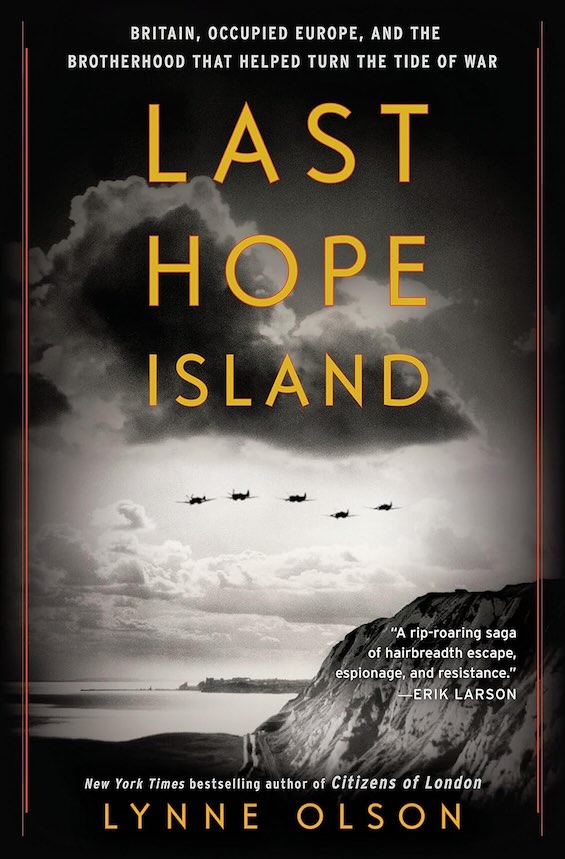
Thousands of books memorialize the story of World War II in Europe. Every aspect of the conflict has received its due, from the fighting itself, to the deprivations on the home front, to the role of intelligence and the personalities of the civilian and military leadership on both sides. But, at least for Americans, one image consistently comes to mind. Winston Churchill standing alone, leading his nation in lonely and seemingly suicidal opposition to the Nazi juggernaut. Except that that image is grossly misleading. In Last Hope Island, author Lynne Olson sets the record straight with a readable and compelling account of the often indispensable contributions that six of the nations of Occupied Europe made to the war effort even while lying under Hitler’s thumb.
A focus on six of the Occupied countries
From 1938 to 1941, Adolf Hitler’s armies occupied 11 European nations, from Austria to Yugoslavia. But to limit her account to manageable proportions, Olson includes just six of these countries. Czechoslovakia. Poland. Norway. Belgium. The Netherlands. And France. In each case, she follows the country’s leaders as they grapple with an existential question: stay, or flee? And several of those who opted to leave for Britain play major roles in the drama to follow. King Haakon VII of Norway. Queen Wilhelmina of the Netherlands. General Charles de Gaulle of France. And several men of the Polish pre-war leadership. Their stories all surface again and again in this book, along with those of lesser-known figures from throughout the Continent.
Last Hope Island: Britain, Occupied Europe, and the Brotherhood That Helped Turn the Tide of War by Lynne Olson (2017) 529 pages ★★★★★
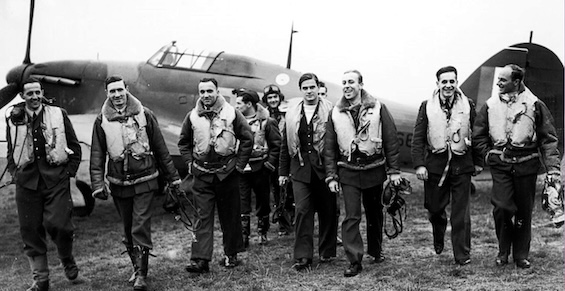
Strategic contributions to the war effort
The Occupied Nations made numerous critical contributions to the war effort. Consider just these three:
- “Without [the Poles’], the British might well have lost the Battle of Britain and the Battle of the Atlantic and might never have conquered the Germans’ fiendishly complex Enigma code—all essential factors in Britain’s survival.” It was Polish mathematicians, not Alan Turing’s team, who first broke the code. It was they who delivered exact replicas of the Enigma device to the West. And 145 Polish pilots fought in the Battle of Britain. The Poles’ “303 Squadron became the highest-scoring and most effective allied fighter unit of the battle.”
- With more than 1,200 “Norwegian merchant ships and crews at its disposal, Britain was able to keep open the crucial Atlantic lifeline—and eventually win the Battle of the Atlantic. In early 1941, a British official declared that the Norwegian merchant fleet was worth more to England ‘than an army of a million men.'” Otherwise, the British people would have starved and their homes gone cold in the winters.
- “It was the Poles who provided the lion’s share of British—and Allied—intelligence during the war, according to the deputy chief of American military intelligence, who argued in 1942 that ‘they have the best intelligence in the world. Its value for us is beyond compare.’ And the Allies’ best agent inside the Nazi leadership was Paul Thümmel, a Czech spy who supplied information about German military plans and troop movements that went directly to the Czech government-in-exile in London.
Major takeaways from the book
Britain didn’t fight alone
During World War II, Britain served as a refuge for tens of thousands of people from Occupied Europe. Not just leading figures in government and the state but also soldiers, sailors, and airmen as well as resistance fighters. Historians have tended to overlook their crucial contributions.
European intelligence was crucial
Polish cryptographers cracked the early Enigma and handed their work to Britain and France before the war, which made Bletchley Park possible. Polish, Czech, Belgian, and French underground networks supplied most of the raw intelligence the British used on the continent, including reports on the V-1 and V-2 programs.
The British often treated exiles badly
British arrogance and xenophobia cost lives. The most dramatic illustration is the incompetence of the Special Operations Executive’s misreading of its failures in the Netherlands. That led to the catastrophic “Englandspiel” disaster, in which the Germans ran captured Allied spies for years and used their radios to send misinformation.
Personalities shaped alliances
Queen Wilhelmina, King Haakon VII, and Polish Prime Minister Władysław Sikorski were wildly popular not just among their own people at home but among the British as well. Churchill and other governmental and military figures thus treated them well. That contrasted, for example, with Charles de Gaulle, whom most British officials detested for his arrogance and stubbornness.
Britain’s moral failure at war’s end
Even though Britain had been responsible for the uncontested occupation of Poland and Czechoslovakia by Germany, the two countries’ pleas for support against the Soviet Union fell on deaf ears. This was Britain’s second major moral failure of the war in Europe.
The seeds of European unity were planted
Wartime cooperation among the exiled governments in London helped give impetus to such postwar institutions as the Benelux Union and, eventually, the European Union itself as well as NATO.
About the author
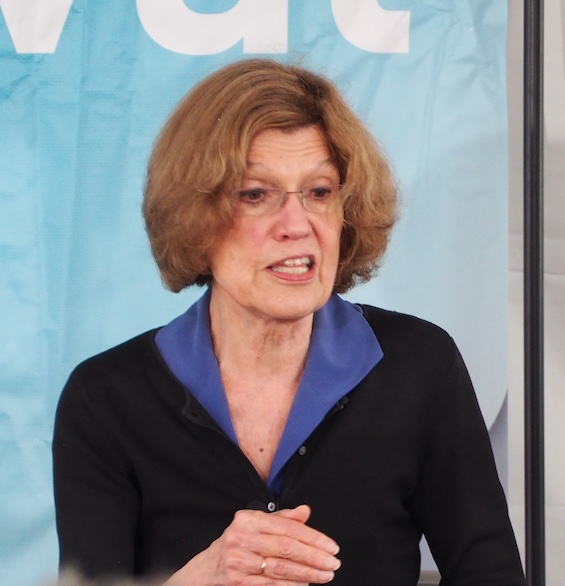
Lynne Olson has written 10 nonfiction books, most of them about World War II. Rather than survey the fighting, as do so many historians, she covers aspects of the war that are otherwise often overlooked. The focus on the exiled governments of occupied Europe in Last Hope Island is an ideal example.
Olson was born in Honolulu in 1949 and is a magna cum laude graduate of the University of Arizona School of Journalism. She has won critical praise for many of her books. She taught journalism in the past but has long since turned to full-time writing.
For related reading
I’ve also reviewed three other books by Lynne Olson:
- Troublesome Young Men: The Rebels Who Brought Churchill to Power and Helped Save England (How a team of rebel Tories brought Winston Churchill to power)
- Citizens of London: The Americans Who Stood with Britain in its Darkest, Finest Hour (The men behind the British-American partnership in WWII)
- Madame Fourcade’s Secret War: The Daring Young Woman Who Led France’s Largest Spy Network Against Hitler (The truth about the French Resistance, dug out of old records)
You’ll find other excellent books at:
- 20 top nonfiction books about World War II
- 10 top WWII books about espionage
- The 10 most consequential events of World War II
- Good books about the Holocaust
- The 10 best novels about World War II
And you can always find the most popular of my 2,500 reviews, and the most recent ones, on the Home Page.