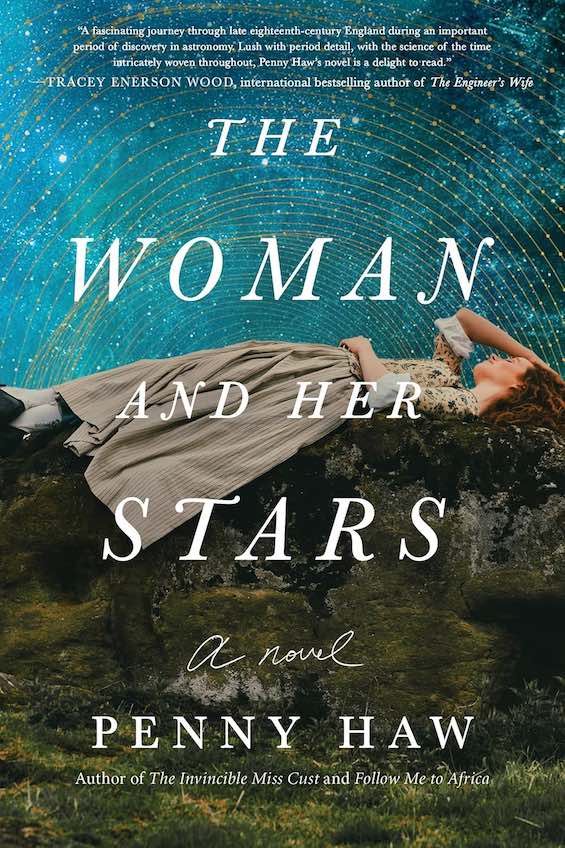
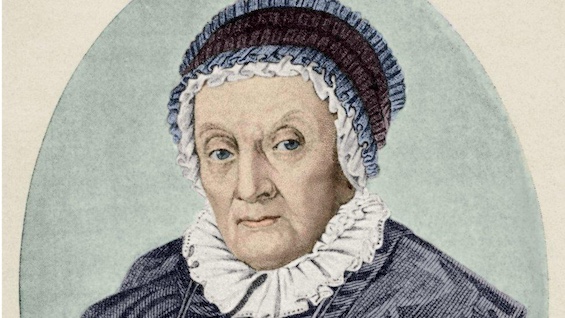
Women did not begin to gain any measure of equality with men until sometime in the 20th century. So it is always inspiring to read about women whose accomplishments were so outstanding that even under the most egregious pressure of misogyny they made their mark on history. One exceptional woman, who is little known today except in her field of specialization, was the German astronomer Caroline Herschel (1750-1848). South African journalist Penny Haw brings her unusual story to light in The Woman and Her Stars.
Overshadowed by her brother, but standing out nonetheless
Truth to tell, Caroline’s older brother, William Herschel (1738-1822), outshines her in the pantheon of pioneering astronomers. And it was as his long-suffering assistant that she finally gained a modicum of recognition for her own work. William excelled as Europe’s foremost manufacturer of telescopes. He was so well established in the field that King George III—yes, the same king who resisted American independence—named him as the King’s Astronomer in 1782. His achievements were substantial. He discovered the planet Uranus, the seventh from the sun and the first revealed since antiquity. He also discovered infrared radiation and conducted the first extensive deep space surveys. Herschel served as the first President of the Royal Astronomical Society.
Caroline’s work as an astronomer was far more modest. She spent any time available after assisting him to scan the skies with a smaller telescope he built for her. At William’s direction, she searched for comets, a rare phenomenon. She discovered several, including the periodic comet 35P/Herschel–Rigollet, which bears her name. But at a time when astronomy was in its infancy, this achievement was sufficient to bring her to the king’s attention. Reportedly at his queen’s urging, King George put her on salary in 1787, making her the first woman to receive a salary as a scientist and the first in England to become a government employee. She also became an (honorary) member of the Royal Astronomical Society and received recognition throughout Europe as an astronomer. All this, in an era when women were treated as chattel.
The Woman and Her Stars by Penny Haw (2026) 329 pages ★★★★☆
What happens in the novel
Rescued from a life of servitude by William, Caroline works hard to build a small, unobtrusive existence for herself. It’s one where she can go unnoticed and repay the debt she believes she owes him. When the king names William as the King’s Astronomer, they’re forced to move from the lively town of Bath to the quiet countryside near Windsor.
Taking up a position as William’s assistant, Caroline resolves to learn everything she can about astronomy. But the more she understands, the more she falls in love with her telescope. Soon, she discovers that she might be good at the science—great, even. She realizes that the stars could offer her the freedom she has always secretly wanted. Caroline becomes the first woman to discover a comet, and grapples with prejudice, self-doubt, and the constraints placed on women in science.
This is an awe-inspiring story set within the strictures of the Georgian era. It’s a hopeful journey of self-discovery, familial bonds, and passion. Haw’s novel is a tribute to a woman who claimed her own place in the night sky.
About the author
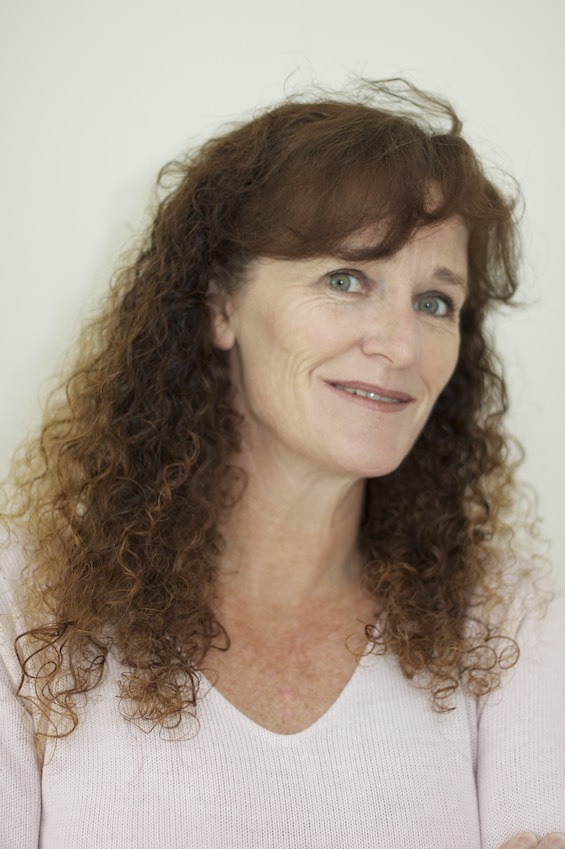
According to Google Books, “Penny Haw is a Cape Town-based freelance writer, journalist, and editor. For the past 12 years, she has written primarily for South Africa’s national daily newspaper, Business Day. Her work has also been published in other national magazines and newspapers.”
The author updates this information on her website: “I am a writer. Previously, of articles and columns for newspapers and magazines. I’ve written for Business Day, Sunday Times, Financial Mail, Sunday Independent, The Weekender and many others I’ve forgotten and you might not recognise.
“Now, I am the author of books featuring strong, interesting and independent women. My writing also illustrates my love for animals and the outdoors, and explores the interconnectedness of all living things.”
For related reading
You’ll find other great reading at:
- Books about extraordinary women
- 25 most enlightening historical novels
- 12 great biographies
- Science explained in 10 excellent popular books
And you can always find the most popular of my 2,400 reviews, and the most recent ones, on the Home Page.