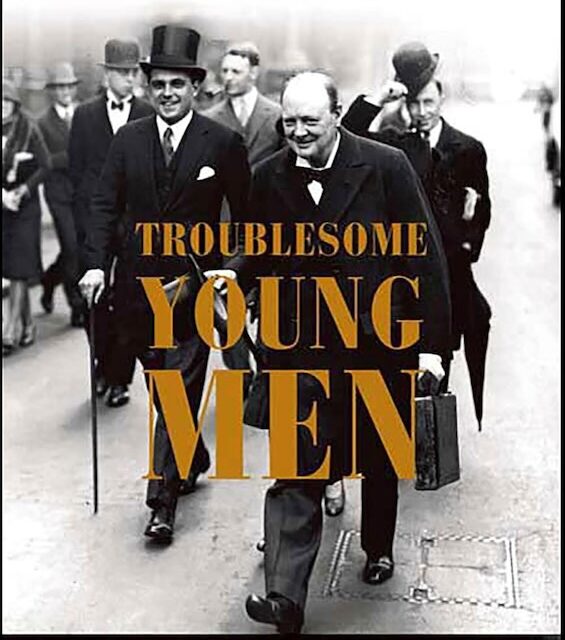
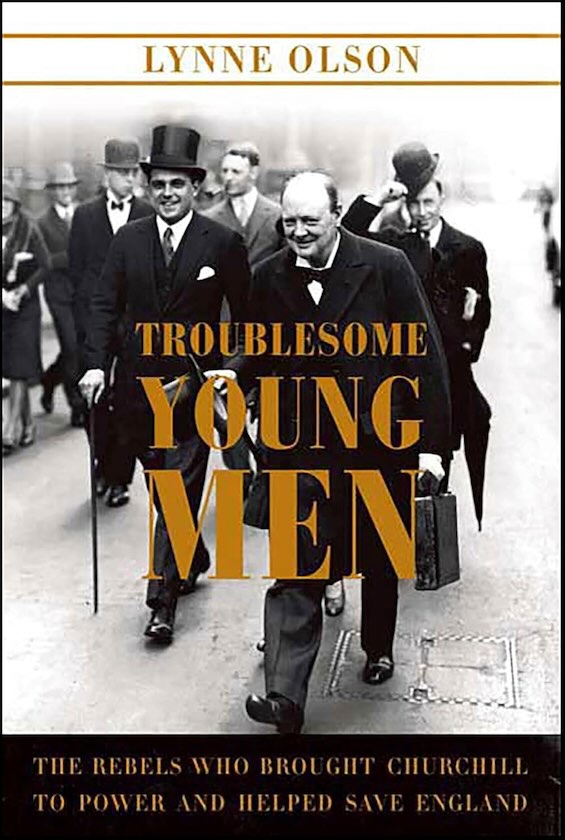
You may have the impression that Winston Churchill stood alone in warning England of the rising Nazi menace. Many histories of the period paint that picture. But it’s not accurate. In fact, a group of younger Conservative MPs were vocal opponents of the Tory Establishment’s policy of appeasement toward Mussolini and Hitler. And for much of the 1930s they spurned Churchill’s bid for leadership because of his reactionary policies on Empire and the economy. Still, in the long run, with Churchill the only credible wartime leader once the conflict was underway, they came together and helped engineer his ascent to 10 Downing Street. Historian Lynne Olson tells this little-appreciated story in Troublesome Young Men. It’s a fascinating account of the high-stakes divisions within the British government in the run-up to World War II. And it relates the true story of how Winston Churchill became Prime Minister.
Churchill didn’t lead the anti-appeasement forces
Popular histories rightfully lionize Churchill’s soaring oratory. His was a voice for the ages. But for extended periods during the run-up to the war and for months after its outbreak, that voice was virtually silent. Instead, it was a handful of the “troublesome young men” on the Tory back benches whose own remarks on the floor of the House of Commons helped bring Chamberlain’s government to its knees.
Courageous speeches by Ronald Cartland (1907-40), Leo Amery (1873-1955), and Harold Nicolson (1886-1968) sparked the growing sentiment that eventually toppled Chamberlain’s coterie of defeatists. They were among a shifting group of 30 or 40 youngish Tories whose growing disaffection with appeasement and its proponents who helped ease Winston Churchill into the Prime Minister’s office. And they did so at enormous cost politically and personally, facing accusations of betrayal and treason from Chambelain and the powerful men behind him.
Troublesome Young Men: The Rebels Who Brought Churchill to Power and Helped Save England by Lynne Olson (2008) 449 pages ★★★★★
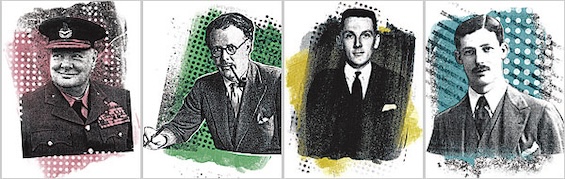
Opposing appeasement but often squabbling among themselves
Today, few except historians of the period or British readers well versed in their own history remember Cartland, Amery, or Nicolson. With three notable exceptions, nor are most of the other members of the anti-appeasement bloc in the House of Commons widely familiar today. And it’s important to note that they did not constitute a single, tightly organized entity. Instead, they formed a loosely allied group of about three dozen Tory MPs who defied their own party leadership. They were broadly divided into two main factions, which eventually merged into a single force during the May 1940 Norway Debate. Meanwhile, a few prominent senior politicians sympathized but largely observed from the sidelines.
1. The “Eden Group” (The Glamour Boys)
Anthony Eden (1897-1977) resigned as Foreign Secretary in February 1938 to protest Neville Chamberlain’s appeasement policy. He was, at the time, regarded as the heir apparent. And a circle of younger, reform-minded Tory backbenchers coalesced around him. They fully expected to follow him into the leadership, toppling Chamberlain. But Eden steadfastly refused to provide the necessary leadership.
Derisively labeled the “Glamour Boys” by Chamberlain’s forces in the House, they met secretly to coordinate their resistance. Key members included Harold Macmillan (1894-1986), who was one of the most fiercely independent and vocal critics, as well as diplomat and author Harold Nicolson, and the newly minted MP Ronald Cartland. Other prominent members of the Eden Group were Robert Boothby and Bobbety Cranborne, the future Lord Salisbury. All told, the group numbered 11 or so.
2. The “Amery Group” (The Watching Committee)
Meanwhile, a slightly older, more traditionalist faction of Tories grew deeply alarmed by Britain’s total lack of military preparedness. Led by Lord Salisbury (Bobbety Cranborne’s father), the group organized more formally as the war ground on into the “Phony War” period of 1939-40. Key members included senior statesman Leo Amery and Liberal MP Clement Davies, who played a key role in forcing a May 1940 vote of confidence that led to Chamberlain’s eventual resignation.
Other prominent anti-appeasers
Over the 1930s, three other independent figures went their own way in helping build the opposition to appeasement. Most of the “troublesome young men” originally kept their distance from them because they themselves favored reform at home and self-rule for India, both of which were anathema to the three. These were Winston Churchill, Duff Cooper (the only Cabinet minister to resign in direct protest of the Munich Agreement in 1938), and Admiral of the Fleet and MP Roger Keyes.
Although hindsight leads us to regard Churchill as the undisputed leader of the growing opposition to Neville Chamberlain, that was emphatically not the case. Churchill’s reputation among his peers was poor. They tended to regard him as impetuous and lacking in judgement. (His role in launching the catastrophic Gallipoli campaign in World War I was evidence enough for most.) Eventually, of course, he did become Prime Minister. But that was only because, in the end, there was simply no one else with the requisite experience in waging war.
About the author
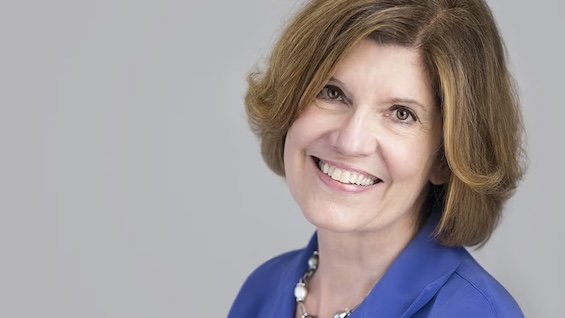
Lynne Olson is an American journalist and historian who has written 10 nonfiction books to date. Nearly all of them are about World War II or the years leading up to it. Olson was born in 1949 in Honolulu and educated at the University of Arizona. Before becoming a writer she worked for the Associated Press and the Baltimore Sun.
For related reading
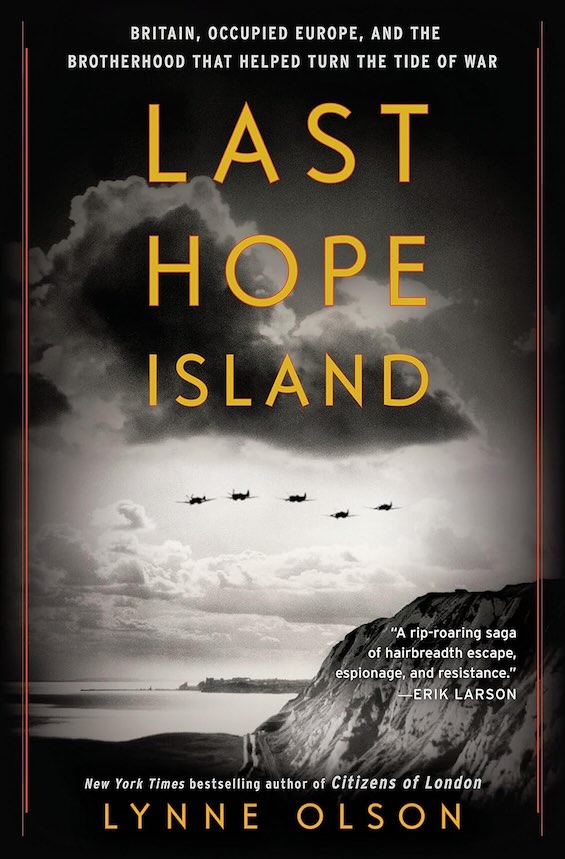
I’ve also reviewed two other excellent books by Lynne Olson:
- Citizens of London: The Americans Who Stood with Britain in its Darkest, Finest Hour (The men behind the British-American partnership in WWII)
- Madame Fourcade’s Secret War: The Daring Young Woman Who Led France’s Largest Spy Network Against Hitler (The truth about the French Resistance, dug out of old records)
You’ll find other excellent books at:
- Top 10 nonfiction books about politics
- 25 top nonfiction books about history
- 10 top nonfiction books about World War II
And you can always find the most popular of my 2,400 reviews, and the most recent ones, on the Home Page.