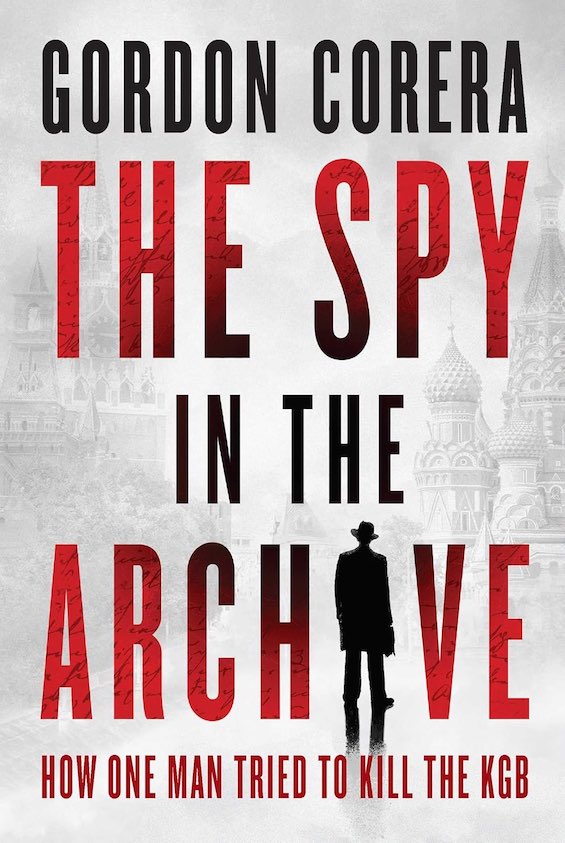
Since early in the 19th century, the men who rule Russia have relied on secret intelligence to preserve their hold on power. Tsar Nicholas I started it all in 1826. The Third Section, which he founded then, grew and morphed over the years, changing names and broadening its mission. But for most of us in the West today, we’re familiar only with the KGB, which operated from 1954 to 1991. During the long, tense years of the Cold War, the KGB was responsible for Russia’s internal security, foreign intelligence, counter-intelligence, and suppressing political opposition. And much of what we know about its operations is down to one man. Vasili Mitrokhin (1922-2004) carried with him suitcases full of information about the agency when he defected to the United Kingdom in 1992. British author Gordon Corera tells his little-remembered story in The Spy in the Archive.
A promising agent turned bitter failure
Earlier in life, Mitrokhin was a promising field agent posted to East Germany. But his bosses regarded him as a failure. They relegated him to what was literally the basement of the Lubyanka to help manage the voluminous archive of the First Chief Directorate. This was the elite unit responsible for foreign operations, intelligence gathering, and clandestine activities outside the USSR. Unlike the other librarians working there, Mitrokhin read the files. And what he learned of the agency’s role in the murder of millions of Soviet citizens eventually turned him bitter. After Nikita Khruschchev’s “Secret Speech” in 1956, he began copying the most revealing of those files. That was the treasure trove of KGB history he brought to the West.
The Spy in the Archive: How One Man Tried to Kill the KGB by Gordon Corera (2026) 336 pages ★★★★☆
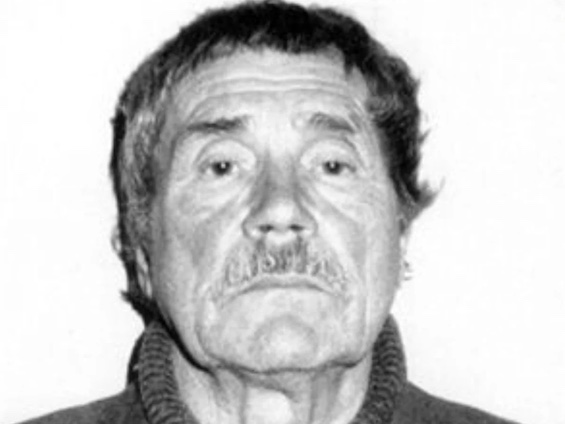
Mitrokhin’s unique gift to the West
Other defectors from the KGB and its military counterpart, the GRU, brought active, current information about their colleagues. Mitrokhin retired in 1985, so when he defected to Britain in 1992, his information was largely out of date. But it was history, much of it unknown outside the USSR. And, more importantly, it included the names and detailed information about hundreds of KGB officers and agents and their contacts throughout the world. Included among them were dozens of “sleeper agents,” a number of whom had served as Soviet moles in the British, American, French, German, Dutch, and other Western intelligence services. The information about them cleared up decades-long mysteries and led to the arrest or sidelining of hitherto undiscovered Russian operatives.
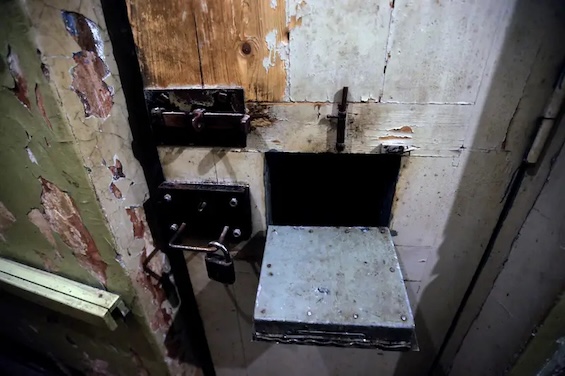
How Russia’s secret services evolved over the years
Reading books about Soviet and Russian secret intelligence can be confusing for American readers. It helps to understand how the names and functions of the country’s secret services have changed over the years. Hence, the summary that follows.
Tsar Nicholas I’s Third Section monitored political subversion during much of the 19th century. But Russian intelligence didn’t come into its own until his grandson, Alexander III, established the Okhrana in 1881. Anarchists and other revolutionaries were running rampant then. The Okhrana pioneered the use of agents provocateurs, infiltration, and an extensive card file on dissidents. But a liberal government dissolved it during the 1917 February Revolution.
Under the Soviet Union
Later in 1917, after the October Revolution, Vladimir Lenin set up the Cheka. To neutralize political opponents, the new agency (which employed many from the old Okhrana) spearheaded the “Red Terror.” It’s still widely viewed as the ideological predecessor to modern Russian intelligence officers, who refer to themselves as Chekists.
Over the decades, first Lenin, then Stalin, reorganized the agency multiple times. It bore different acronyms, including the GPU (1922-23), OGPU (1923-34), NKVD (1934-46), MVD (1946-54), and finally the KGB (1954-91).
The most notorious of the lot was the NKVD. Stalin used it to carry out his Great Purges (1936-38) and run the Gulag system. But the KGB, its successor, oversaw foreign intelligence, counterintelligence, border control, and the suppression of domestic dissent throughout the Cold War.
After the collapse of Communism
Following a failed 1991 coup against Mikhail Gorbachev, the KGB was dismantled. Yeltsin formed three specialized, independent agencies to maintain the legacy of Soviet intelligence:
- The FSB (Federal Security Service) is the primary domestic successor to the KGB. It handles counterintelligence, internal security, border control, and surveillance within the Russian Federation.
- The SVR (Foreign Intelligence Service) is the successor to the KGB’s First Chief Directorate (where Mitrokhin worked). The SVR is responsible for civilian espionage, intelligence gathering, and political operations outside of Russia.
- The GRU (Main Directorate of the General Staff) is Russia’s military intelligence agency. Tracing its roots back to 1918, the GRU is responsible for collecting human and technical military intelligence and has played a prominent role in modern unconventional and proxy warfare. The GRU and SVR compete fiercely, jockeying for Vladirmir Putin’s attention.
About the author
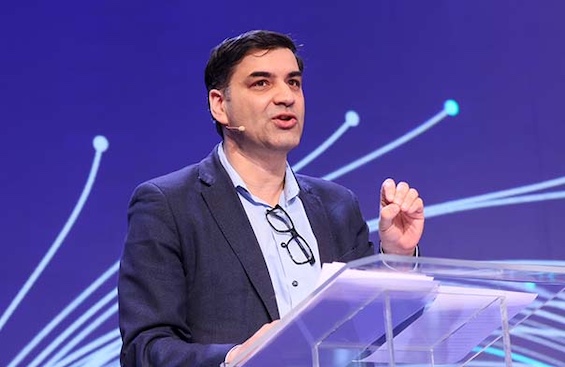
Gordon Corera, an author and journalist, was the BBC’s Security Correspondent and specialized in computer technology from 2004 to November 2024. He is the author of five nonfiction books on related subjects. Corera was born in London in 1974 to a father from the state of Tamil Nadu in southern India and a German mother. He studied Modern History at St Peter’s College at the University of Oxford, followed by graduate studies in US foreign policy at Harvard University.
For related reading
You’ll find other great reading at:
- Good nonfiction books about espionage
- The 15 best espionage novels
- Best books about the CIA
- The best spy novelists writing today
- 10 top WWII books about espionage
And you can always find the most popular of my 2,400 reviews, and the most recent ones, on the Home Page.