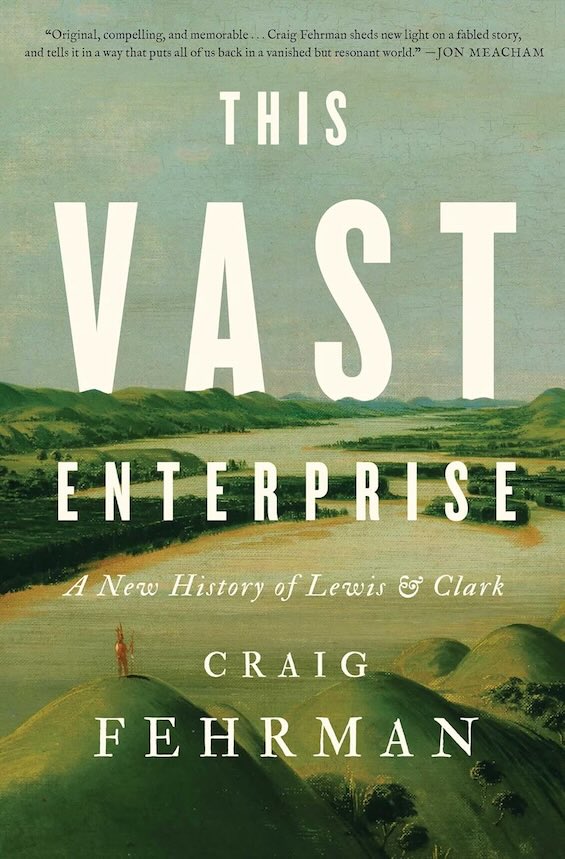
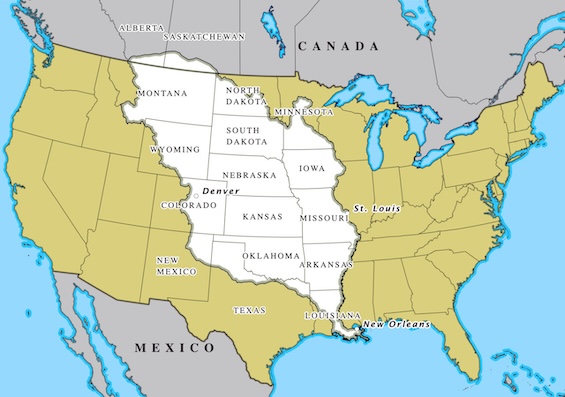
Historians usually credit President Theodore Roosevelt with launching the United States as an imperial power. But no president did more to establish the country as a power to be reckoned with than Thomas Jefferson. In 1803, he took advantage of the turmoil unleashed by Napoleon Bonaparte to buy more than 800,000 square miles of land west of the Mississippi River. The Louisiana Purchase doubled the size of the United States. It also put the European powers on notice that the fast-growing upstart nation in North America could threaten their colonies in the Americas. Historian Craig Fehrman deftly paints this picture as it unfolded during the three years of the Lewis and Clark Expedition that Jefferson launched to explore the new territory.
New perspective on the Lewis and Clark Expedition
For 30 years, the late historian Stephen Ambrose’s 1996 bestseller, Undaunted Courage, was the accepted authority on the expedition. It’s essentially a biography of Lewis, and a brilliant one. Fehrman’s This Vast Enterprise: A New History of Lewis and Clark takes an entirely different approach. In chapters that shift perspective from one member of the Corps of Discovery to another, he brings into the story not just Lewis and Clark themselves but several of the soldiers, trappers, and guides who accompanied them. The captive Native teenager, Sacagawea, comes to life as well, as do several of the Native chiefs they encountered. It’s an historical tour de force. And any history buff will find it hard to put down.
This Vast Enterprise: A New History of Lewis and Clark by Craig Fehrman (2026) 544 pages ★★★★★
A revisionist history
This Vast Enterprise is a revisionist history of the expedition. Its central argument is that the familiar story—as told largely by Lewis and Clark themselves—is incomplete and partly distorted. When the two men returned in 1806 after leading the Corps of Discovery across some 8000 miles of rapids, mountains, forests, and ravines, they exaggerated their role in the project. While there’s some truth in their claims, there’s distortion, too.
Fehrman began with the understanding that the expedition succeeded because others played significant roles as well as the two “captains.” (Lewis was, indeed, a US Army captain. Clark was a second lieutenant, although Lewis treated him as an equal.) To document the broader story, the author conducted five years of research. He visited more than 30 archives, interviewed more than 100 sources, and collected oral history passed down over centuries.
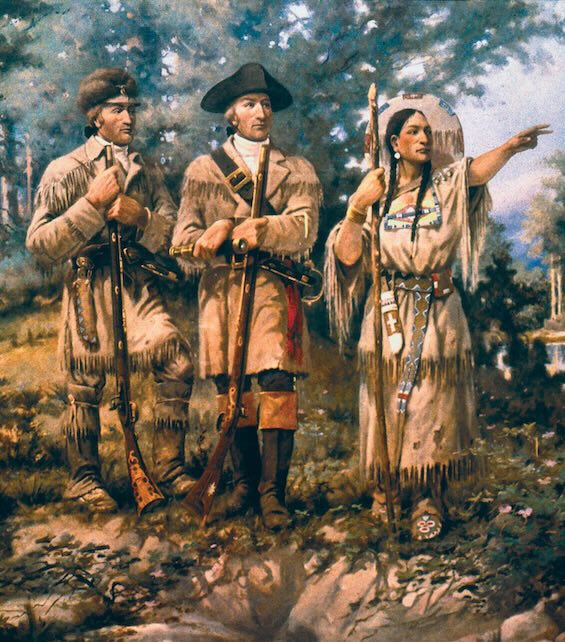
The result is an account that relates the experiences of a broad cast of characters. Alongside well-known figures like Sacagawea and York—the Black man Clark enslaved—we also meet John Ordway. A working-class soldier Lewis and Clark named as their First Sergeant, he fought grizzlies, helped tow the captains’ overloaded barge, and diplomatically managed the fractious group of squabbling soldiers who made up the Corps of Discovery. Even Jefferson himself comes to life, along with several Native American leaders.
This Vast Enterprise now joins Ambrose’s classic, Undaunted Courage, as an authoritative new treatment on the expedition.
“A fantastic achievement”
Reviewers have responded warmly to this book. The New York Times called it “a page-turner and a fantastic achievement.” The Wall Street Journal described it as “immensely engaging.” And the Boston Globe praised it as “vivid, character-based history.” In my opinion, it’s all those things.
About the author

Google Books notes that “Craig Fehrman, a journalist and historian, spent five years writing and researching This Vast Enterprise. His first book, Author in Chief, was described by Thomas Mallon in The Wall Street Journal as “one of the best books on the American presidency to appear in recent years.” Fehrman lives in Indiana with his wife and children.”
Fehrman adds on his author website that “I grew up near Dillsboro, Indiana, and graduated from the University of Southern Indiana in 2007. I spent six years in Connecticut, working on a PhD at Yale University that I never quite completed. In 2013, I moved back to Indiana with my wife, who works in publishing; we live in Bloomington with our two children. Sometimes, I teach sportswriting at Indiana University.”
For related reading
For links to great reading, see:
- Top 20 popular books for understanding American history
- 25 top nonfiction books about history
- 12 great biographies
- Top 10 nonfiction books about politics
- Gaining a global perspective on the world around us
And you can always find the most popular of my 2,400 reviews, and the most recent ones, on the Home Page.