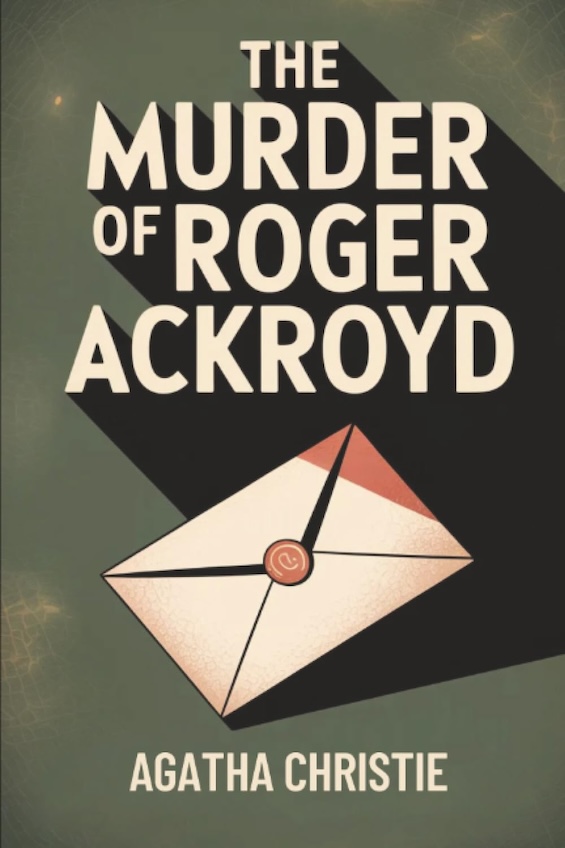
Agatha Christie died half a century ago, and her most celebrated works appeared in the 1920s and 1930s. Yet even today hundreds of thousands of readers, and possibly millions, participate in Agatha Christie fan clubs. But why? What can possibly cause so many people to cherish the books she wrote so long ago? After all, millions of mysteries and thrillers have been published in the years since her heyday. So, having never to the best of my memory ever before read one of her novels, I decided to take a crack at what most critics call her best effort. The Murder of Roger Ackroyd appeared in 1926. Critics then raved about it as brilliant and original, and I’m sure that was true, then. But how does it hold up, critical approval notwithstanding? Let’s find out.
No shortage of suspects
We find ourselves in a familiar scene (and, yes, it was familiar to readers even then). In an English village, King’s Abbot, “very much like any other village,” a wealthy widow, Mrs. Ferrars, commits suicide. Then, in short order, the second richest person in the village, Roger Ackroyd dies, too. Dr. James Sheppard, the village physician, arrives to examine the body. And, clearly enough, Ackroyd has been murdered. The silver instrument protruding from his neck makes that obvious. But who has done the deed? The local police detective, Inspector Raglan, has theories—many of them—but they’re all wrong. And there is no shortage of suspects.
The Murder of Roger Ackroyd (Hercule Poirot #4 of 38) by Agatha Christie (1926) 288 pages ★★★☆☆
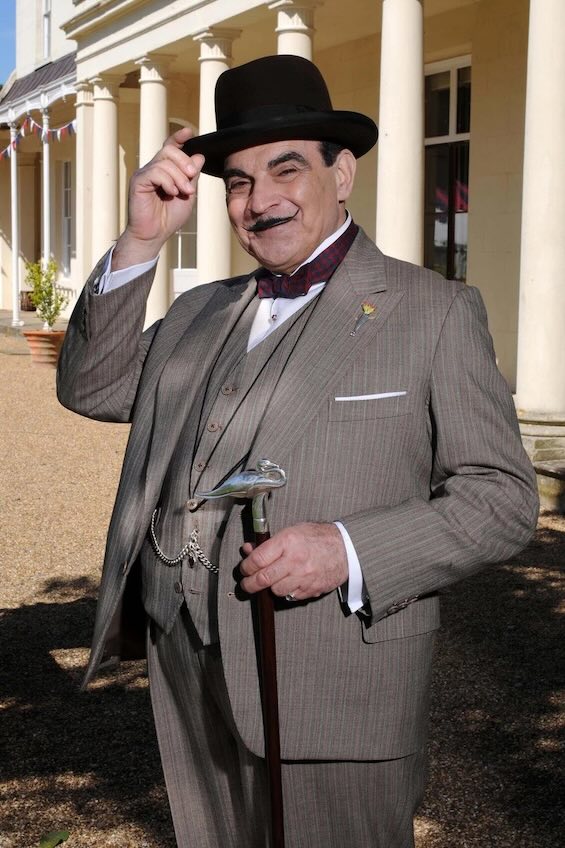
Who dunit?
The possibilities seem endless.
For starters, there is the victim’s family and immediate circle. The victim’s sister-in-law, Mrs. Cecil Ackroyd, who is worried about money. His niece, Flora Ackroyd, who is even more worried since old Roger was a skinflint. The big-game hunter Major Hector Blunt, Ackroyd’s friend and houseguest who’s just hanging around. And, most of all, Captain Ralph Paton, Ackroyd’s troubled stepson. Paton has heavy debts and conveniently goes missing. And that’s just the family.
Then there’s the household staff. Geoffrey Raymond, Roger Ackroyd’s imperturbable personal secretary. The butler, John Parker, who clearly fits the bill of the usual suspects. Elizabeth Russell, the housekeeper, who just looks suspicious. And Ursula Bourne, the parlor maid, who harbors a secret.
To this menagerie add a mysterious stranger who shows up near the Ackroyd estate the night of the murder.
Now, who could possibly untangle this skein of possibilities? The local police seem clueless. They insist on pinning the murder on Captain Paton, perhaps only because he’s disappeared. So somebody else needs to enter the scene. The narrator, Dr. Sheppard, has ideas of his own. And so does his busy-body sister, the town gossip, Caroline Sheppard.
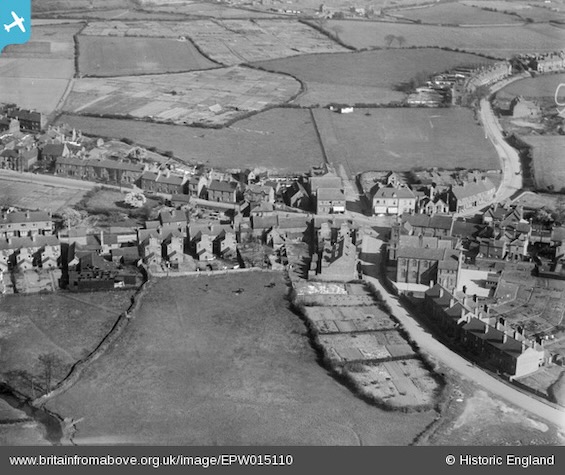
Who can solve this baffling mystery?
Should we be surprised that living right next door to the Sheppards is a secretive newcomer to King’s Abbot. Neighbors take him to be a retired hairdresser. He’s a diminutive, mustachioed foreigner they call Mr. Parrott. Who in time we will discover is—surprise!—none other than M. Hercule Poirot, a private detective, “the greatest the world has ever known.” And Poirot is, well, Poirot, as Christie’s readers had come to know him in three previous novels. “Me, I know everything. Remember that.” That’s Poirot.
As Poirot enters the case, he enlists the help of Dr. Sheppard to keep a written record of the investigation and to accompany him in interviews with suspects. He grills each and every one of the characters, turning up an increasing body of information that all points to Captain Paton as the culprit. But Poirot is not convinced. There are too many other factors that bear on the case.
- For one thing, someone had been blackmailing Mrs. Ferrars, the old woman who killed herself at the outset.
- The night of the murder Roger Ackroyd received a letter Mrs. Ferrars mailed the day of her suicide naming the blackmailer. But that letter has disappeared.
- Who is that mysterious stranger who was in the vicinity of the estate that evening?
- What is Ursula Bourne’s secret?
- Is there something in the butler’s past that might incriminate him?
- And why has Ralph Paton disappeared?
A relentlessly tiresome investigation
One after another, and sometimes more than once, Poirot interviews the suspects. It all seems to boil down to the precise time at which each of them has entered and exited Roger Ackroyd’s study, where he died. Again and again, Poirot and Sheppard pin down everyone in the house on this minute detail. And in the end, Poirot stages what later would become a cliché in murder mysteries, a gathering of all the suspects in a single room for a showdown.
The big reveal is, of course, a total surprise. Unless, like some readers (myself included), you suspected all along. But the path to that solution is, in a word, exhausting. It’s tedious to a fault. And it’s hard to understand why readers even a century ago might have marveled at Poirot’s method. His reticence about revealing his thoughts even to Dr. Sheppard, his collaborator, seems transparently misleading. And that represents what to me is the author’s endless resort of manipulation. And I, for one, do not like to be manipulated.
About the author
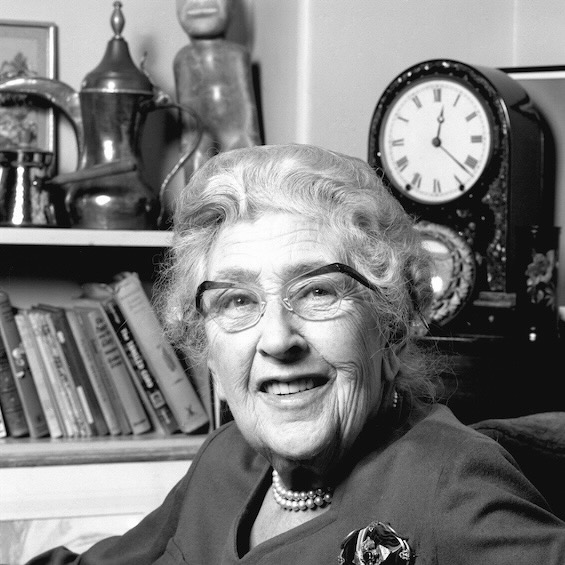
Dame Agatha Mary Clarissa Mallowan, Lady Mallowan (née Miller), is usually known by her first married name, Agatha Christie (1890-1976). She was, of course, an English author known for her 66 detective novels and 14 short-story collections. Most revolved around the fictional sleuths Hercule Poirot and Miss Marple. There were 38 books in the Poirot series, and most critics agree that the fourth of those novels, The Murder of Roger Ackroyd, was the best crime novel ever. Although, as I’ve noted above, I fail to understand why.
Dame Agatha was born in Devon, England in 1890. In keeping with the customs of the time, she had almost no formal schooling. She died in Oxfordshire in 1976 at the age of 85.
For related reading
I’ve read two novels about Agatha Christie’s notorious 11-day disappearance in 1926. Note: the first of the two is much better:
- The Mystery of Mrs. Christie by Marie Benedict (Where did Agatha Christie go when she disappeared?)
- The Christie Affair by Nina de Gramont (The abiding mystery of Agatha Christie’s disappearance)
You’ll find great reading at:
- 10 top novels about private detectives
- 20 excellent standalone mysteries and thrillers
- Top 20 suspenseful detective novels
And you can always find the most popular of my 2,400 reviews, and the most recent ones, on the Home Page.