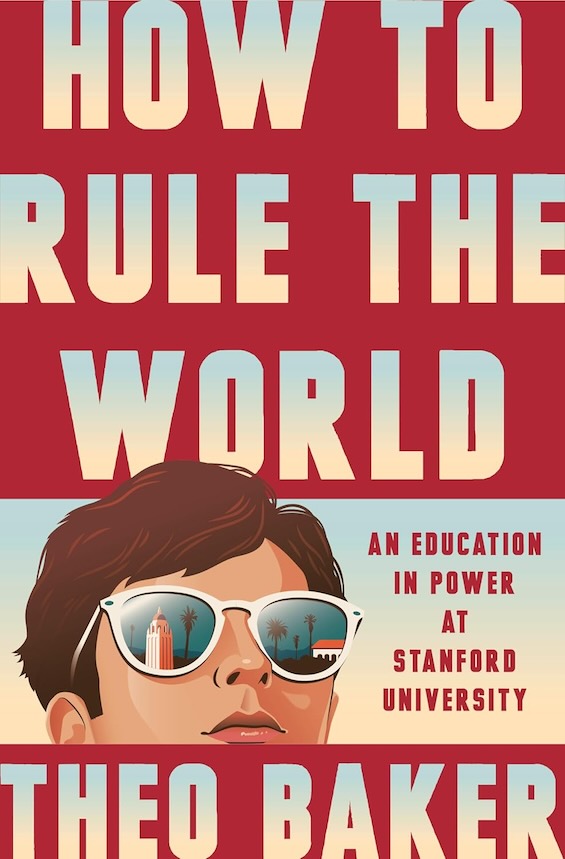
In 2022, a 17-year-old computer wizard named Theo Baker entered Stanford University. Besotted with idealism, he’d come to California believing that Stanford could enable him to make the world a better place. As a “hobby,” he volunteered for the Stanford Daily student newspaper. And over the ensuing months, as he explored the culture on campus, he wrote several investigative articles that exposed corruption and administrative overreach. Three of those articles broke made nationwide news. And he began a series of new pieces probing the ethical lapses of Stanford’s president in his career as one of the world’s most renowned neuroscientists. That series led to the president’s resignation and won him the most prestigious prize in journalism, the George Polk Award. He was 18 years old, the youngest winner ever. And Baker tells this story with refreshing candor and humility in How to Rule the World.
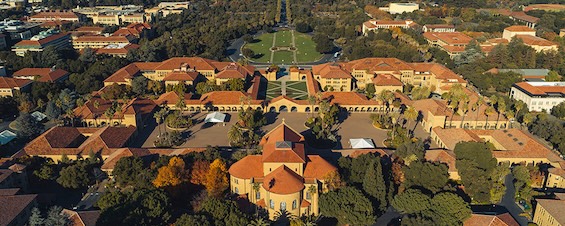
Stanford students and faculty built Silicon Valley
Stanford is, by all accounts, one of the world’s greatest universities. Rankings of the world’s top schools of higher learning include a shifting group of well-known institutions. Harvard. Oxford. MIT. Cambridge. Princeton. Imperial College London. Yale. UC Berkeley. CalTech. But one name appears in the top five on every list of top universities I found online. That’s Stanford, almost always rated number three. However, what those rankings may not take into account is the economic impact those institutions have had. And it seems likely that Stanford would emerge as number one by that criterion. Its seminal role in the creation and growth of Silicon Valley has added trillions to the world economy. Which is what drew Theo Baker to the campus—and is at the root of the widespread corruption he uncovered.
How to Rule the World: An Education in Power at Stanford University by Theo Baker (2026) 336 pages ★★★★★
The intersection of education, technology, and greed
Theo Baker’s memoir of his freshman year at Stanford records the collision of his idealism with the harsh reality he found in “the most commercialized university in the world.” He uses the story of Stanford President Marc Tessier-Lavigne’s misconduct and its exposure as a lens through which to examine the systemic issues he found. To my mind, the major takeaways from the book are as follows . . .
1. Stanford operates more like a corporation than a university
Stanford does not function primarily as an institution of higher learning and the search for scientific truth. Instead, it operates like a massive corporate business. With more administrators on its payroll than the number of undergraduates (18,000 versus 7,000), Stanford frequently compromises the integrity of its faculty and the welfare of its students to protect its institutional power, its reputation, and its multiple financial partnerships with Silicon Valley. Despite damning evidence of Tessier-Lavigne’s misdeeds as Baker revealed them to the world, the university dragged its feet for the better part of a year before forcing his resignation. And he walked away scot-free, obtaining massive funding for a biotech startup that may have made him a billionaire. (Baker estimates his net worth at $500 million. Other estimates I found online peg it at as low as $50 million and as high as $1.3 billion.)
2. A culture of corner-cutting and unrestrained greed
Baker paints a picture of a campus dominated by tech firms and venture capital. The campus serves as a feeder for fresh tech talent. Brilliant, tech-savvy teenagers are treated as valuable commodities. From the time of their arrival on campus, they gain access to immense wealth. Baker describes the multiple means by which Silicon Valley instills its ethos on campus. “Pre-idea” venture capital funding. Secret societies that link teenagers to successful alumni. And direct access to billionaires. Through these mechanisms, promising students learn how to “move fast and break things.” The result is that many of those tapped for recruitment cut corners and dismiss ethical safeguards as naive. And, predictably, some fall flat on their faces in the real world of business. Even worse, the permissive ethos spawns scandals such as those involving Elizabeth Holmes (Theranos) and Sam Bankman-Fried (FTX).
3. Institutional power vs. scientific truth
Much of Baker’s book chronicles his investigation into Marc Tessier-Lavigne’s research before he became Stanford’s president in 2016. What he found brings to light a deeply troubling dynamic. That when the search for scientific truth comes into conflict with the university’s institutional power, the system protects the powerful. Baker’s account reveals how Tessier-Lavigne’s peers and overseers not just at Stanford but at Rockefeller University, the biotech firm Genentech, and at the leading scientific journals ignored or minimized repeated allegations of misconduct in his research over two decades. And it becomes clear why this happens. The incorrect and sometimes fraudulent results of Tessier-Lavigne’s research were multi-million-dollar assets to both academia and the biotechnology sector.
The author was, after all, a teenager
It’s amusing to note that all this comes to light in a book written by a 21-year-old. Baker frames the book as a fierce defense of investigative journalism and the importance of student newspapers. He demonstrates how a fearless reporter could illuminate the misbehavior of billionaires, corporate boards, and elite administrators, serving as an indispensable check on entrenched power.. However, although demonstrably brilliant both in computer science and as a journalist, Theo Baker was a teenager when the events he relates took place. And he acts like it in many ways, pining after an absent girlfriend and succumbing to a life-threatening drug overdose at one point. Still, the book is truly a revelation. And if Theo Baker makes a career of investigative journalism, malefactors look out!
About the author
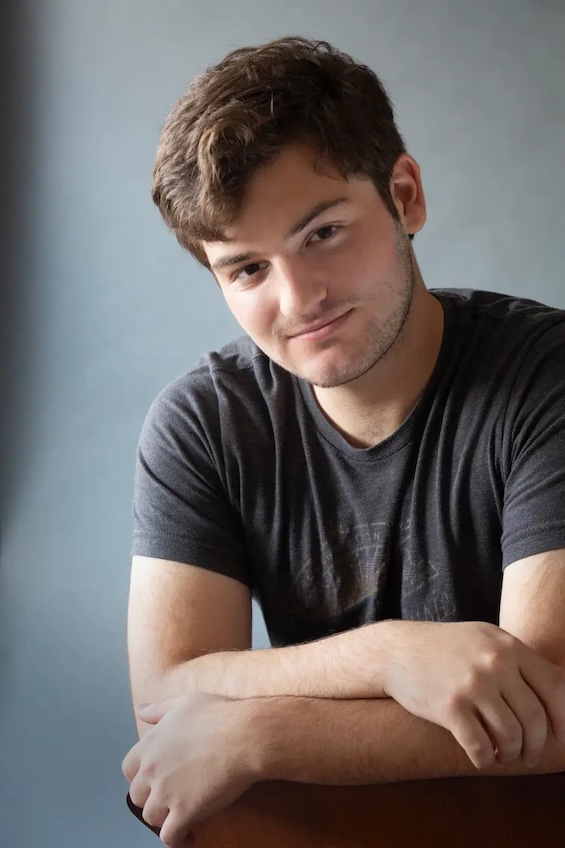
Theo Baker, who was born in 2004 or 2005, is a senior at Stanford University as I write. He is at most 22 years of age now. Yet four years ago, as a freshman who joined the Stanford Daily student newspaper as a “hobby,” he wrote an exposé that led to the resignation of Stanford’s president. And he won the prestigious George Polk award for the piece.
But Baker learned how to pursue his “hobby” before he set foot on campus. His father is the chief White House correspondent for the New York Times and his mother is a staff writer and columnist for the New Yorker. (The two met when they broke the Monica Lewinsky story. And she later cofounded Politico.) However, he was drawn to Stanford not for its journalistic opportunities but for its central role in the development of Silicon Valley. As the context makes clear in his book, he is also a brilliant computer programmer.
For related reading
You’ll find more great reading at:
- The 5 best books about Silicon Valley, especially the runner-up Uncanny Valley by Anna Wiener (An insightful Silicon Valley memoir)
- Two dozen excellent memoirs
- My 10 favorite books about business history
And you can always find the most popular of my 2,400 reviews, and the most recent ones, on the Home Page.