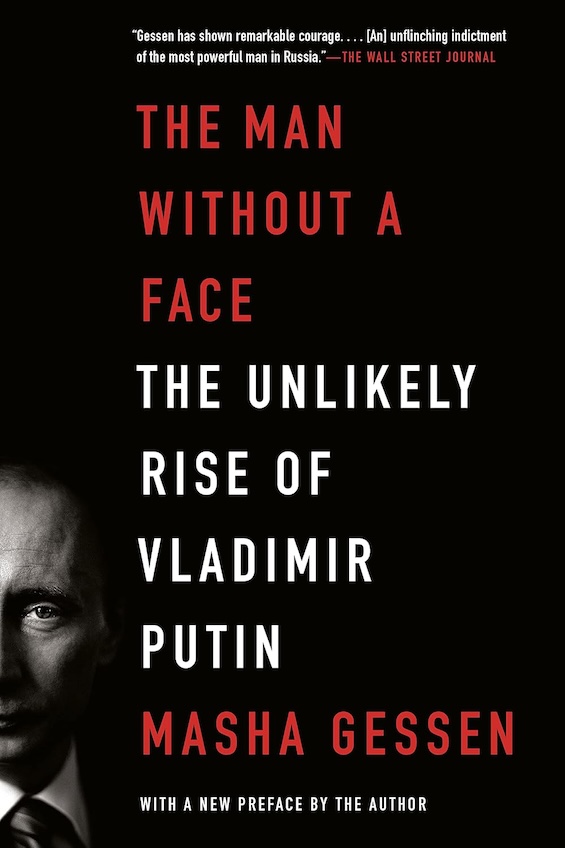
Every once in a while I’m shocked to learn anew that the American news media has missed the mark in its reporting of events around the world. Masha Gessen’s portrait of third-term Russian President Vladimir Putin, The Man Without a Face, is an excellent case in point. Now, a decade and a half after Gessen’s meticulous account of Putin’s dark history, we know just how much our view of the man has soured in the face of his invasion of Ukraine.
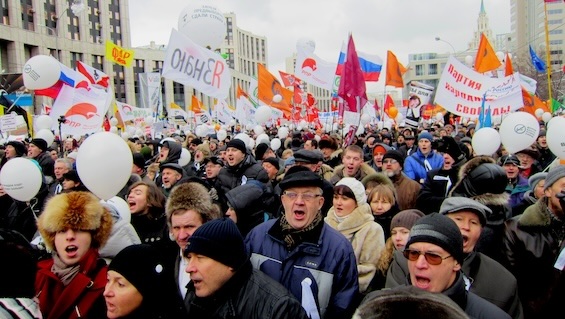
For example, in December 2011, the year before Gessen’s biography appeared, we learned about large demonstrations in Moscow protesting the obviously rigged outcome of the recent Russian elections. They’d awarded nearly 50 percent of the vote to the President’s party, United Russia. What I didn’t learn from the reports I read here in America then was that estimates of the crowd in Moscow ran as high as 150,000 and that “[p]rotests were held [the same day] in ninety-nine cities in Russia and in front of Russian consulates and embassies in more than forty cities around the world.”
Broad-based opposition to an emerging dictator
Reports in The New York Times and other U.S. news sources gave the impression that the events were the work of Russia’s tiny, long-beleaguered liberal minority and meant little. In fact, the demonstrations and marches were far more broad-based than the liberals had ever shown themselves to be capable of organizing. Masha Gessen tells the whole story in The Man Without a Face.
The Man Without a Face: The Unlikely Rise of Vladimir Putin by Masha Gessen (2012) 315 pages ★★★★☆
How Vladimir Putin literally locks out his opponents
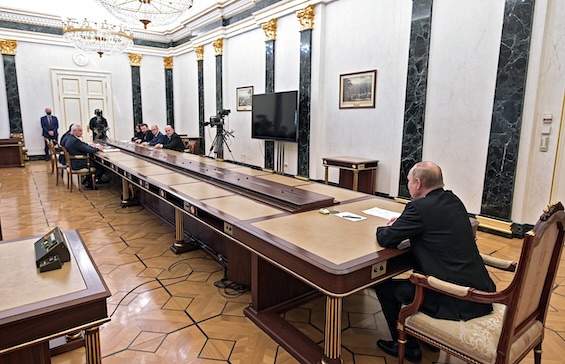
Or consider the experience of the brave souls who put themselves forward as candidates for President to replace Putin. It’s possible but unlikely that you came across something back then about Garry Kasparov. He was the world’s most famous Russian and the most celebrated chess player of all time when he announced he was running for President. Kasparov could easily have attracted crowds of thousands anywhere in the vast expanses of Russia. But everywhere he went he found the doors locked at the venues he’d arranged. He often found himself speaking to 50 or 100 people out-of-doors. Kasparov persisted for months nonetheless. Until it was made clear to him that he was risking his life by doing so. Gessen tells the whole story in The Man Without a Face.
Threats to opponents’ livelihood, and their lives
Roughly the same thing happened to Mikhail Prokhorov, the 6’8″ Russian billionaire who bought the New Jersey Nets (now the Brooklyn Nets) professional basketball team. When the regime asked him to be the front man for a moribund political party to give the appearance of democratic choice in the 2012 Presidential elections, Prokhorov took the assignment seriously. He mounted a vigorous campaign, fashioning an agenda for reform, traveling throughout the country, and speaking out boldly. Then the Kremlin informed him that if he continued to pursue the Presidency he would lose all his businesses, his freedom, and possibly his life. I’d been aware of Prokhorov’s abortive campaign. But I learned none of the rest of this from news reports in the United States. Gessen tells the whole story in The Man Without a Face.
How Vladimir Putin was selected
You might wonder, as I had, how the democratic path that Russia was on through most of the 1990s had veered so sharply, and so suddenly, rightward toward a brand of authoritarianism reminiscent of the tsars and the commissars. Gessen’s answer lies in the circumstances surrounding the selection of Vladimir Putin as Boris Yeltsin’s successor in 2000 by the circle of intimates known as “The Family” who surrounded the ailing Russian President.
After a decade in office, Yeltsin was gravely ill and acting erratically as a result (not because of heavy drinking, Gessen asserts). His popularity had plunged into the low single digits, and the Russian people were seeking “solace in nostalgia . . . not so much in Communist ideology but in a longing to regain Russia’s superpower status. By 1999, there was palpable aggression in the air, and this was a large part of the reason Yeltsin and the Family were rightly terrified.” They feared the rise of an ultra-right-wing nationalist who might destroy all that they had achieved in a decade and cast about for a like-minded standard-bearer as Yeltsin’s successor who could marshal popular support.
“Imagine you have a country and no one to run it”
“Imagine you have a country and no one to run it,” Gessen writes. “This was the predicament that Boris Yeltsin and his inner circle thought they faced in 1999.” In desperation, knowing virtually nothing of the man’s character, his work habits, or his political beliefs, they turned to a low-level former KGB operative who had recently been elevated to head the KGB’s successor, the FSB. Vladimir Putin, of course. They named him Premier, then Acting President when Yeltsin resigned. They brought in a team of image-makers and campaign specialists, mobilized the pro-democratic community, pulled together a sanitized biography in three weeks, and ran him for President. As The Guardian wrote in its review of this book, “[g]rey, ordinary and seemingly incorruptible, Putin is the man without a face, one to whom others can project whatever they want.”
Vladimir Putin suppresses his critics—by having them killed
Tragically, Putin’s true nature only became apparent in the months following his election in 2000. Somehow, his self-description as a “thug”—a claim he made on many occasions—had been overlooked. And the thugocracy he built during his first two terms as Russia’s President came as a total surprise to nearly everyone except the very few who knew him well.
- Investigative journalists who turned up evidence of corruption or worse were simply murdered one after another, their killers never arrested.
- While a senseless war in Chechnya went on year after year after year, attacks by Chechen terrorists were brutally put down by the Russian military. Hundreds of civilian hostages lost their lives—even, in one case, while the terrorists were engaged in negotiations with the police.
- Business tycoons who refused to support the regime were imprisoned on trumped-up charges and ownership of their businesses transferred to Putin and his cronies.
Putin himself built up a personal fortune rumored to be as high as $40 billion. That estimate might be exaggerated, but the total is certainly somewhere in the tens of billions. Putin built himself a palace on the Black Sea at a cost of more than $1 billion.
About the author
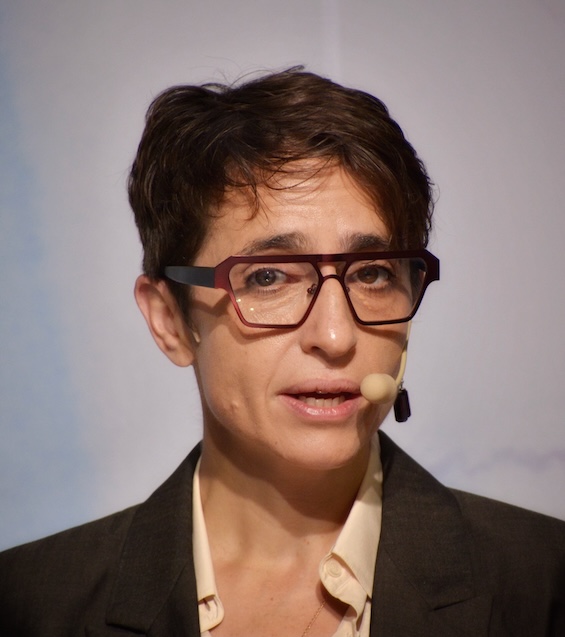
Masha Gessen (now M. Gessen) is nonbinary and trans and uses they/them pronouns. They are married and have three children.
On Russia and things Russian, they know whereof they write. The Man Without a Face is one of their 13 books, most of them written in English. Born in Moscow, their family moved to the United States in 1981 when they were a teenager. As an adult, they moved back to Moscow. There they held a series of increasingly high-profile jobs in journalism and led gay rights demonstrations. Their career had barely begun when the Soviet Union collapsed in 1991. Later, after a career increasingly in opposition to the Russian government, they moved back to New York. The Man Without a Face is a personal book, and opinionated, but it represents a lifetime of work side-by-side with many of the individuals whose actions they describe. Gessen worked for years as a staff writer for the New Yorker and more recently as an opinion columnist for the New York Times.
For related reading
Gessen also wrote a later book that casts light on Putin’s role in Russian history: The Future Is History: How Totalitarianism Reclaimed Russia by Masha Gessen (The road to autocracy in Putin’s Russia).
Click here for more Good books about Vladimir Putin. But especially see Putin by Philip Short (A revealing new biography of Vladimir Putin), which presents a much more balanced (and more deeply researched) account of the Russian President’s life.
Like to read good biography? Check out 10 great biographies.
If you enjoy reading nonfiction in general, you might also enjoy Science explained in 10 excellent popular books or Top 10 nonfiction books about politics.
And you can always find the most popular of my 2,500 reviews, and the most recent ones, on the Home Page.