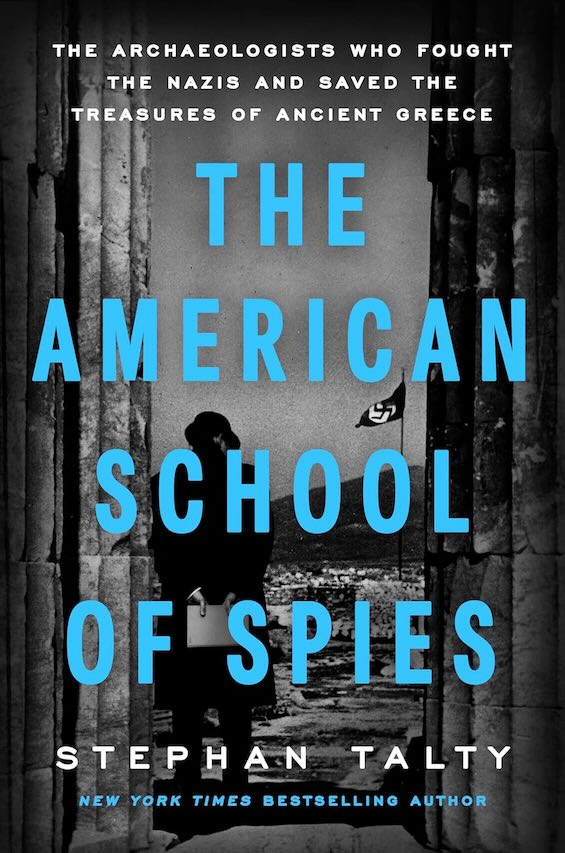
Most of what appears in print today about the OSS in World War II dwells on the heroic men and women it infiltrated into France to sabotage the Nazis or in the China-Burma-India theater. Of course, “Wild Bill” Donovan’s brief as head of the Office of Strategic Services was much broader than that. The agency worked in dozens of countries across Europe, North Africa, and Asia. And one of the most consequential was its unique campaign to help protect the treasures of Ancient Greece and undermine Germany’s invading army there. Author Stephan Talty tells the fascinating story in The American School of Spies.
Nazi thieves and buried ancient relics
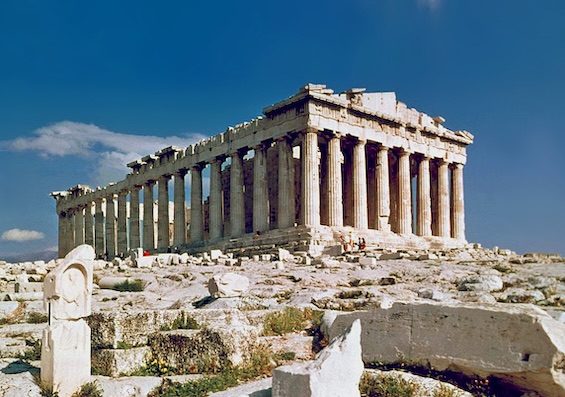
After an ineffectual Italian campaign in Albania and northern Greece early in the war, the Wehrmacht invaded Greece in April 1941. Archaeologists and art historians around the world trembled as Nazi soldiers camped out in the world-renowned monuments of Ancient Greece and began looting anything they could carry back to Germany. But the treasures of the country’s major museums remained out of reach of the thieves.
Anticipating the invasion, Greek archaeologists had hidden tens of thousands of relics, including some of the most famous statues of the country’s Golden Age. The artifacts lay under the floors of the museums, in ancient caves and bank vaults, and even underneath the city of Athens itself. A standoff ensued, as German commanders demanded in vain the display of the treasures. Hitler’s delusion that his “Aryan” forebears had founded Ancient Greece came to naught. Unsatisfied, his acolytes began digging up artifacts from new sites. And, of course, they found “evidence” that proved the connection. But they hadn’t reckoned on the ferocity of Greek resistance. Or the resourcefulness of the spies the OSS slipped into the country.
The American School of Spies: The Archaeologists Who Fought the Nazis and Saved the Treasures of Ancient Greece by Stephan Talty (2026) 319 pages ★★★★☆
The OSS, the Greek Desk, and the American School of Spies
Donovan’s effort begfan with an extensive campaign of intelligence-gathering from its base in Cairo starting in 1942. Then there was intensive training in the United States. Only then did the OSS begin infiltrating spies and saboteurs into Greece late in 1943. Its efforts reached their peak the following year in the run-up to the Normandy Invasion. But those efforts were unlike anything else the agency had undertaken elsewhere in the world. Because the Nazis weren’t just taking over territory. They were threatening to destroy some of the world’s most iconic historical monuments and artifacts. And those treasures were central not just to Greek identity but to Western civilization everywhere.
To meet the unique circumstances presented by the Nazi invasion of Greece, “Wild Bill” Donovan turned to a young Princeton-trained archaeologist named Rodney Young (1907-74). He charged the young man with pulling together a team of Greek American spies fluent in the language who could blend into the population. None were trained commandos. They were academics, classicists, and other specialists. They formed “the Greek Desk.” These scholars weaponized exactly what made them ordinary: fluency in the Greek language, its geography, mythology, and history. And their operation in Cairo became known as the American School of Spies.
Two heroic Greek American brothers and a female numismatist
Rodney organized his recruits in two separate teams. One was dedicated to intelligence-gathering and to assisting local people in protecting the nation’s ancient treasures. The other worked with the powerful Greek resistance (the andartes) and carried out sabotage. Its work came to a head late in the war as the Normandy Invasion neared and the Wehrmacht began shipping troops away from Greece to fight the Allies in France. Each of the two teams was captained by one of the two Doundalakis brothers, Helias (1923-2016) and his older brother George (1921-2007). The two, plus Rodney himself and a brilliant numismatist (a coin specialist) named Dorothy Cox (1892-1977). In fact, it was she who organized the Greek Desk in Cairo and vetted and recruited many of its operatives. These four are the principal figures in Talty’s long-ignored story.
About the author
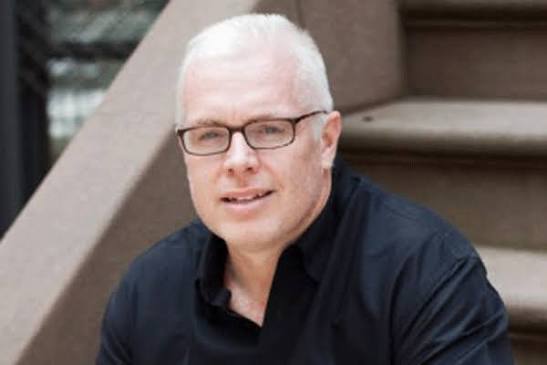
Stephan Talty (1964-) has written 16 books. Among them are both novels and nonfiction, as well as two screenplays, one of them for the film Captain Phillips. He is an Irish American journalist and author better known for his detective fiction.
For related reading
You’ll find other great reading at 10 top WWII books about espionage and:
- The 15 best espionage novels
- Good nonfiction books about espionage
- Best books about the CIA
- The best spy novelists writing today
And you can always find the most popular of my 2,400 reviews, and the most recent ones, on the Home Page.