


If you’ve been reading my reviews for very long, you’re aware that the World War II era holds special fascination for me. This might have something to do with the fact that I was born then—in fact, about six months before the USA entered the war. Or maybe it’s just because it all preceded the disillusionment that set in once the war had ended, when the boundaries between good and evil no longer seemed so clear. In any case, after reading hundreds of books about the period, I can’t resist offering my list of the 20 top nonfiction books about WW2.
Insight about the most significant event in history
In addition to the many World War II novels I’ve read and reviewed here, both mysteries and trade fiction, I’ve read a great many nonfiction books about the years leading up to and during the war. Here I’m listing 20 of the best I’ve come across in recent years. They cover everything from economic policy in the Depression and the rise of Nazi Germany to the role of business and the conduct of the war itself. All together, they provide a significant dose of insight about what later historians might well conclude was the most significant event in the history of the world.
As is blindingly obvious, this is by no means a comprehensive bibliography. No doubt hundreds of thousands of books have been written about the WW2 era. The 20 top books simply represent where my taste and my instincts have taken me in recent years. I’ve arranged these books in alphabetical order by the authors’ last names. Each is linked to my review.
This post was updated on July 10, 2026
20 TOP NONFICTION BOOKS ABOUT WW2

American Heritage History of World War II by Steven E. Ambrose and C. L. Sulzberger (1966, 1997) 640 pages ★★★★★—The best short history of World War II
Thousands of books have been written about World War II—Amazon shows more than 70,000 titles about “history’s greatest catastrophe.” Among them are general histories from the likes of the Smithsonian Institution, the New York Times, and unnumbered others. Although I can’t claim to have read them all, or even more than a handful, the very best short history of World War II that I’ve come across is the product of three eminent authors writing for the American Heritage magazine: Stephen E. Ambrose, C. L. Sulzberger, and David McCullough. You’re unlikely to find a better introduction to the grand sweep, the intensity, and the human reality of the Second World War. Read the review.
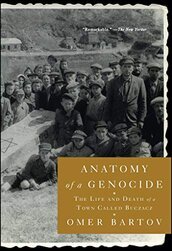
Anatomy of a Genocide: The Life and Death of a Town Called Buczacz by Omer Bartov (2018) 417 pages ★★★★★—The Holocaust under the microscope
Historian Omer Bartov demonstrates how very complicated the Holocaust was. By tracing the history of antisemitism in a single Polish-Ukrainian town from the sixteenth century to the present, and detailing day by day how the Holocaust unfolded there, he brings to light the many nuances lost in historical portraits painted with a broader brush. The book is a masterful effort that should stand for decades if not centuries as one of the most insightful accounts of that shameful episode in what is so casually called civilization. Read the review.
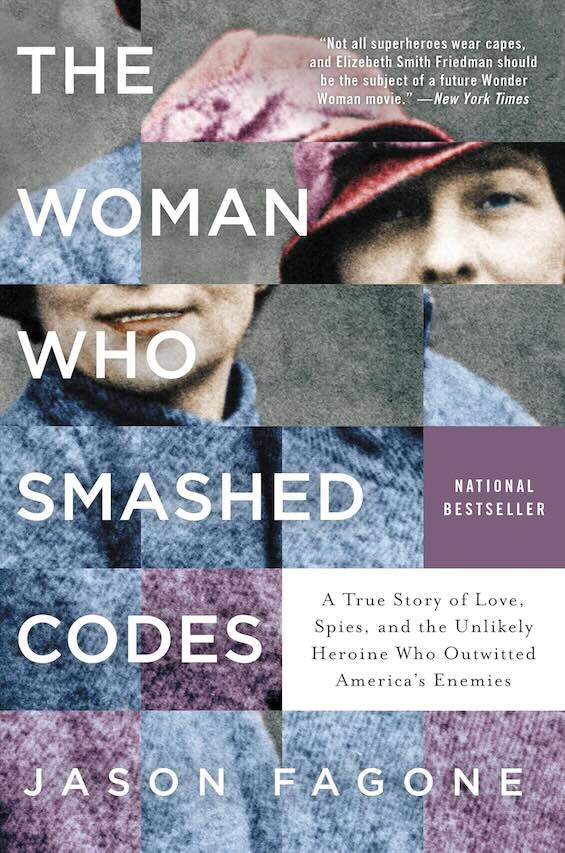
The Woman Who Smashed Codes: A True Story of Love, Spies, and the Unlikely Heroine Who Outwitted America’s Enemies by Jason Fagone (2017) 464 pages ★★★★★—The woman codebreaker who caught gangsters and Nazi spies
Working with recently declassified files from the World War II era as well as long-ignored archival records and contemporary press reports and interviews, journalist Jason Fagone has brought to light at last the astonishing story of Elizebeth Smith Friedman and her husband, William Friedman. The Friedmans may well have been the most important 20th-century American codebreakers, and quite possibly the best and most successful in the world. Read the review.
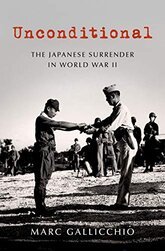
Unconditional: The Japanese Surrender in World War II by Marc Gallicchio (2020) 282 pages ★★★★☆—Backstory to the unconditional Japanese surrender in WWII
Three-quarters of a century after the end of World War II, FDR’s policy to demand unconditional surrender from Germany and Japan may seem simply logical. After all, in an era of total war, the only guarantee that either nation wouldn’t sufficiently recover to attack again was total Allied control over their system of government following the end of hostilities. That seemed assured in the case of Germany, which ended the war in rubble and ashes and divided between East and West. But unconditional surrender was a far more complex question with respect to Imperial Japan. For US President Harry Truman to pursue the policy to the end in 1945 involved a complex calculus weighing a host of mutually contradictory military, political, diplomatic, and economic factors. Villanova University historian Marc Gallicchio adroitly untangles them in Unconditional: The Japanese Surrender in World War II. Read the review.
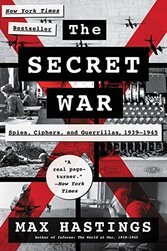
The Secret War: Spies, Ciphers, and Guerrillas, 1939-1945 by Max Hastings (2016) 645 pages ★★★★★—A revisionist history of intelligence in World War II
The eminent British historian Max Hastings undercuts the many popular treatments of espionage during World War II with a sober revisionist survey. In his well-informed view, practically nothing either side did in the realm of intelligence had any meaningful impact on the war. The only exceptions, in his view, were the successful efforts by all the major combatants to crack their enemies’ secret codes. Unlike most of other books about the subject, Hastings examines not just the British and American intelligence efforts but those of Russia, Germany, and Japan as well. This is must reading for anyone who wants to understand how espionage really works (or, more often, doesn’t). Read the review.
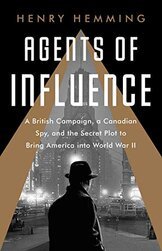
Agents of Influence: A British Campaign, a Canadian Spy, and the Secret Plot to Bring America into World War II by Henry Hemming (2019) 401 pages ★★★★★—British interference in American politics in WWII
In The Splendid and the Vile, a moving and revealing account of Winston Churchill’s leadership during the Blitz, Erik Larson makes much of the Prime Minister’s dogged campaign to persuade Franklin Roosevelt to drag the United States into the defense of Britain. Historians concur that Churchill’s influence on the President played a major role in bringing about American intervention in the European war. But few observers and analysts remark about another factor that may well have been more decisive: British interference in American politics in 1940 and ’41 that helped shift public opinion from isolationism to engagement. Because FDR had perfected to a fine art the practice of “leading from behind.” And that’s central to the story so ably told by Henry Hemming in Agents of Influence. Read the review.
Freedom’s Forge: How American Business Produced Victory in World War II by Arthur Herman (2012) 433 pages ★★★★★—When America was united in common purpose
The US became known as the “arsenal of democracy” because the American business community mobilized on a hitherto unattainable scale to produce hundreds of thousands of airplanes, ships, tanks, trucks, and other war materiel. Arthur Herman’s study of the topic focuses on the efforts of two remarkable industrialists who were among the most prominent figures in the effort: General Motors CEO William Knudsen and shipbuilder Henry J. Kaiser. Read the review.
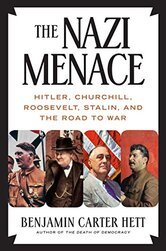
The Nazi Menace: Hitler, Churchill, Roosevelt, Stalin, and the Road to War by Benjamin Carter Hett (2020) 402 pages ★★★★★—How the Western democracies stumbled into war with Nazi Germany
The events of the years 1937 through 1941 appear fixed in time. It seems foreordained that Britain, France, the USA, and the USSR would have gone to war with Nazi Germany under any circumstances. But that was assuredly not the case, as historian Benjamin Carter Hett makes abundantly clear in his illuminating portrayal of the period, The Nazi Menace. In fact, confusion reigned throughout those years, with the major players stumbling through thickets of uncertainty about one another’s intentions. The forces lined up only haphazardly into the now-familiar split between Allies and Axis. And the alliances in the war that ensued shocked and surprised many of those whose actions had made it inevitable. Read the review.
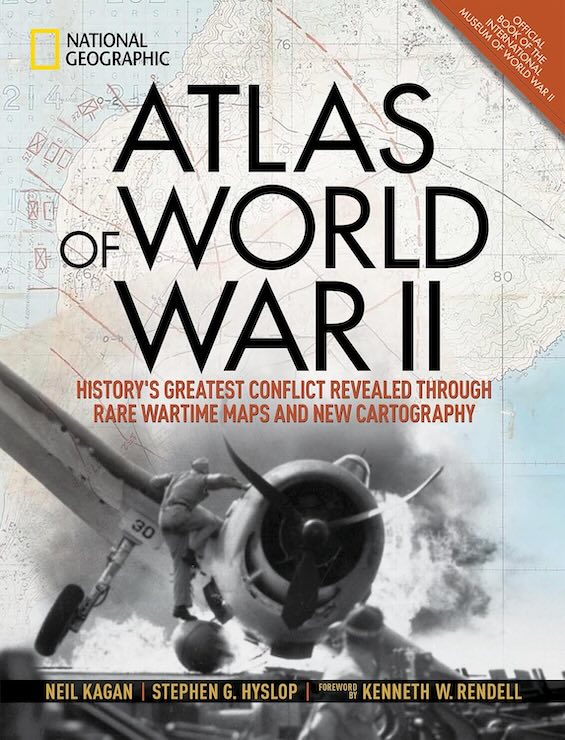
Atlas of World War II: History’s Greatest Conflict Revealed Through Rare Wartime Maps and New Cartography by Neil Kagan and Stephen G. Hyslop (2018) 255 pages ★★★★★—A superb World War II atlas from an American perspective
This remarkable atlas combines contemporaneous and new maps with sometimes startling photographs and lucid prose to convey an accurate picture of the grand sweep of the war. Photos dramatize the human drama. Maps portray a general’s-eye view of the action. And terse narrative carries the story forward. Combined, they offer an indispensable tool for anyone who seeks to understand the single event of the twentieth century that has done the most to shape the world we know today. Read the review.
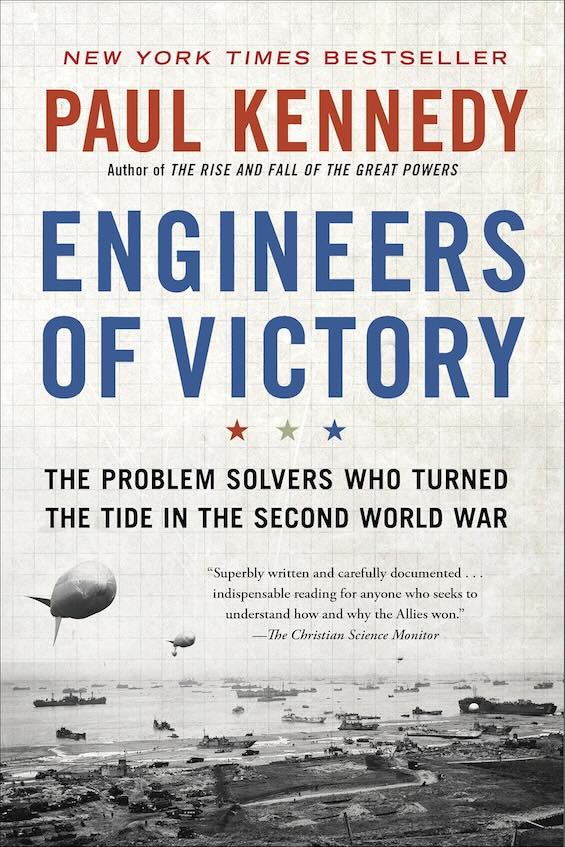
Engineers of Victory: The Problem-Solvers Who Turned the Tide in the Second World War by Paul Kennedy (2013) 464 pages ★★★★★—The problem-solvers who won World War II
The noted historian Paul Kennedy brings to light the often-ignored contributions of the scientists and enlisted soldiers who helped turn the tide in the Allies’ favor in World War II. Their inventions and innovations in the conduct of war may have played as large a role in the ultimate victory as those of the generals and admirals whose names are most closely associated with the war effort. Surely, when millions of men and women served in the Allies’ armed services, the efforts of a handful of individuals can’t possibly be viewed as carrying the brunt of the load. Read the review.
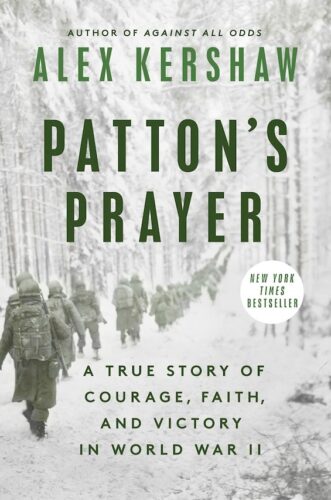
Patton’s Prayer: A True Story of Courage, Faith, and Victory in World War II by Alex Kershaw (2024) 362 pages ★★★★★—The amazing story of how George S. Patton won the Battle of the Bulge
Famous generals proliferate in American history. After all, ours is a story of conquest and almost unceasing warfare from the earliest days of European settlement on the North American continent well into the 21st century. The names of George Washington, Ulysses S. Grant, John J. Pershing, Douglas MacArthur, and Dwight Eisenhower dominate critical events in our history. But few, if any, conjure up the awe and respect General George S. Patton commands even eight decades after he fought his greatest battle. Now, in Patton’s Prayer, a new Patton biography, British historian and journalist Alex Kershaw tells the jaw-dropping story of Patton’s leadership in what history knows as the Battle of the Bulge. It was Hitler’s last gasp, probably doomed to failure even before it started. But it required superhuman effort by the man often identified as America’s most aggressive and winningest general. Read the review.
The Splendid and the Vile: A Saga of Churchill, Family, and Defiance During the Blitz by Erik Larson (2020) 546 pages ★★★★★—An intimate view of Winston Churchill in WW2
At the age of sixty-five, Winston Churchill achieved his lifelong dream, becoming Prime Minister of the United Kingdom on May 10, 1940. Less than a year into World War II, Britain was on the brink of defeat. Yet somehow the aging Prime Minister—an alcoholic with a reputation for questionable judgment—mobilized the British people despite what so many were convinced was a hopeless fight against the Nazi juggernaut. Both King George VI and some of Churchill’s colleagues in the Cabinet were skeptical that he was up to the job. Regardless, through sheer force of will and an unparalleled gift for stirring rhetoric, Churchill led his nation virtually alone in the world for eighteen months before the United States finally entered the war. That’s the story Erik Larson tells, and tells so well, in The Splendid and the Vile. Read the review.

The Ministry of Ungentlemanly Warfare: How Churchill’s Secret Warriors Set Europe Ablaze and Gave Birth to Modern Black Ops (World War Two #1 of 4) by Damien Lewis (2015) 419 pages ★★★★★—The story of the world’s first Special Forces
Military historians point to Britain’s Special Air Service (SAS) as the first modern Special Forces. Formed in Egypt in 1941 by David Stirling as a paratroop unit, the SAS later spawned the Special Boat Service (SBS) for maritime operations. Both organizations sometimes traded personnel with the Commandos and the Special Operations Executive, formed at Winston Churchill’s behest in 1940 to “set Europe ablaze.” All four of these organizations launched bold, small-scale operations behind enemy lines. They were responsible for many of the most spectacular and heroic clashes with the Nazis celebrated in novels, films, and on TV. Popular historian Damien Lewis brings them to life in The Ministry of Ungentlemanly Warfare. Read the review.
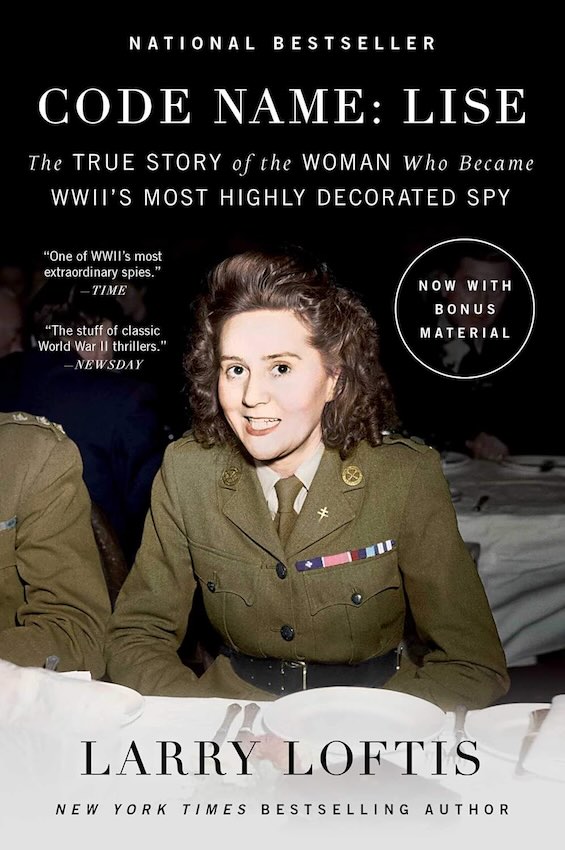
Code Name: Lise: The True Story of the Woman Who Became World War II’s Most Highly Decorated Spy by Larry Loftis (2019) 385 pages ★★★★★—The woman who was World War II’s most highly decorated spy
She was the most decorated spy in World War II of either gender. Her name was Odette Sansom (later Odette Hallowes). From 1942 to 1945, she served as an officer of Britain’s Special Operations Executive. From November 1942 to April 1943, she worked in southern France as a courier for an SOE network that delivered arms, money, and supplies to the French Resistance.
Betrayed by the witless leader of a French network operating in the same area, she was arrested along with her leader and lover, Captain Peter Churchill. She spent the rest of the war in prison, first in France and later at the notorious Ravensbrück concentration camp for women. And when it was all over, she emerged as the war’s most highly decorated spy. Yet these bare-bones facts convey not a hint of the woman’s almost superhuman courage, the subject of Larry Loftis‘s excellent portrait, Code Name: Lise. Read the review.
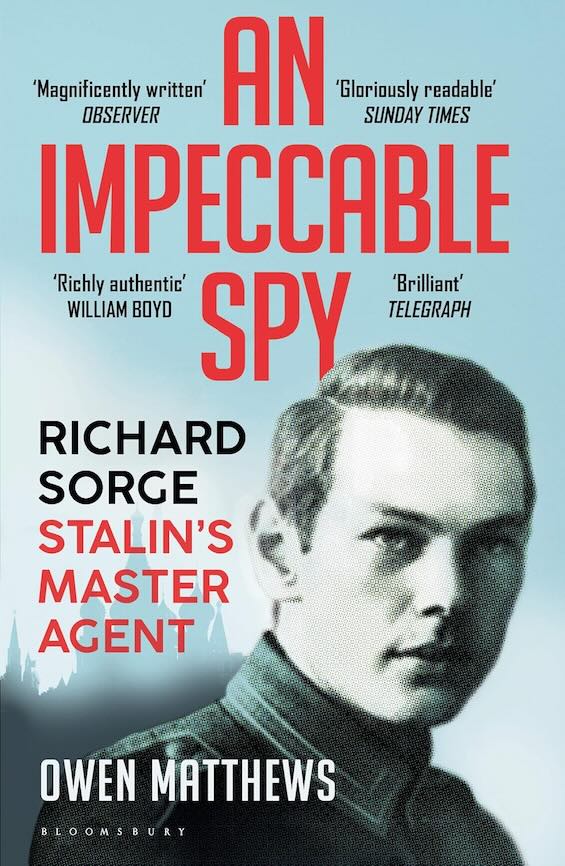
An Impeccable Spy: Richard Sorge, Stalin’s Master Agent by Owen Matthews (2019) 448 pages ★★★★★—The greatest spy of the twentieth century?
Richard Sorge was an active Communist who began spying for the Comintern immediately after World War I and, later, for Soviet military intelligence (today the GRU). Nonetheless, he managed to join the Nazi Party and eventually become a close personal friend and part-time employee of the German ambassador to Tokyo. Through his access to top-secret Nazi communications, he was able to advise his handlers in Moscow of Germany’s intention to invade the Soviet Union. Meanwhile, he was also running agents who were embedded at the very top of the Japanese government and was equally able to monitor Japan’s on-and-off-again plans to invade Siberia. Read the review.
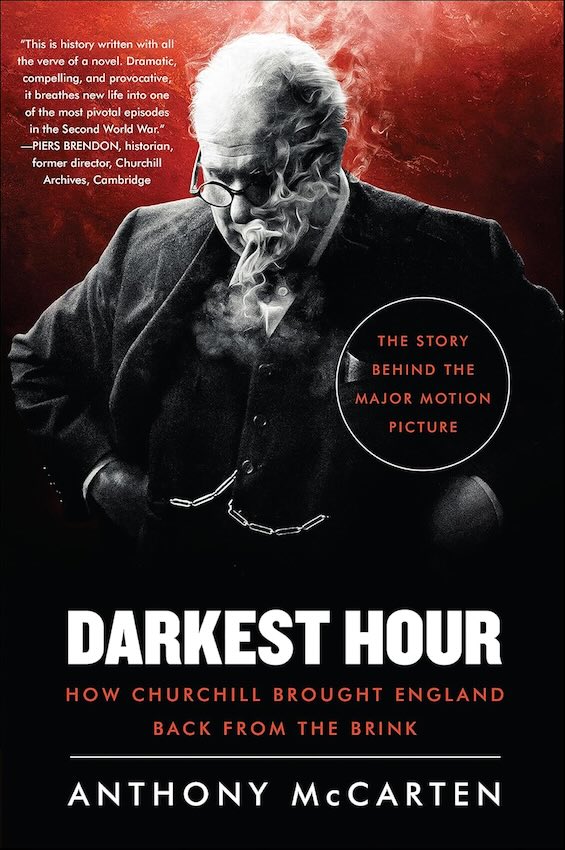
Darkest Hour: How Churchill Brought England Back from the Brink by Anthony McCarten (2017) 217 pages ★★★★★—New insight into Prime Minister Winston Churchill
Most accounts of World War II convey the impression that Britain speedily turned to Winston Churchill as Prime Minister once Hitler’s stormtroopers proved the folly of Neville Chamberlain’s appeasement policy. Through his indomitable will and soaring rhetoric, Churchill then rallied the people of Britain and led them brilliantly through the darkest early days of the war—and on, eventually, to victory. There is truth in that. But a closer examination muddies the picture. In fact, viewing the events of those early days with a microscope, it’s hard to avoid concluding that the impression many share is highly misleading. In Darkest Hour, Anthony McCarten follows the men in the leadership of the British government day by day and at times hour by hour during the fateful month of May 1940. The result is a picture that is both more equivocal and more credible. Read the review.
Forgotten Ally: China’s World War II, 1937-1945 by Rana Mitter (2013) 480 pages ★★★★☆—A gripping history of China in World War II
Read just about any popular history of World War II, and you’ll find any number of references to the Allies as the Big Three of Britain, the US, and the Soviet Union. What’s missing is recognition that China bore nearly as high a price as the USSR, with an estimated fourteen to twenty million dead compared to fewer than half a million for the UK and the US. (The Soviet Union lost as many as twenty-four million dead.) On that basis alone, Oxford University historian Rana Mitter is justified in titling his revisionist history of China in World War II Forgotten Ally. But, as he explains at length, recognition of China’s contribution to the war effort is overdue on a far broader basis than that. Read the review.
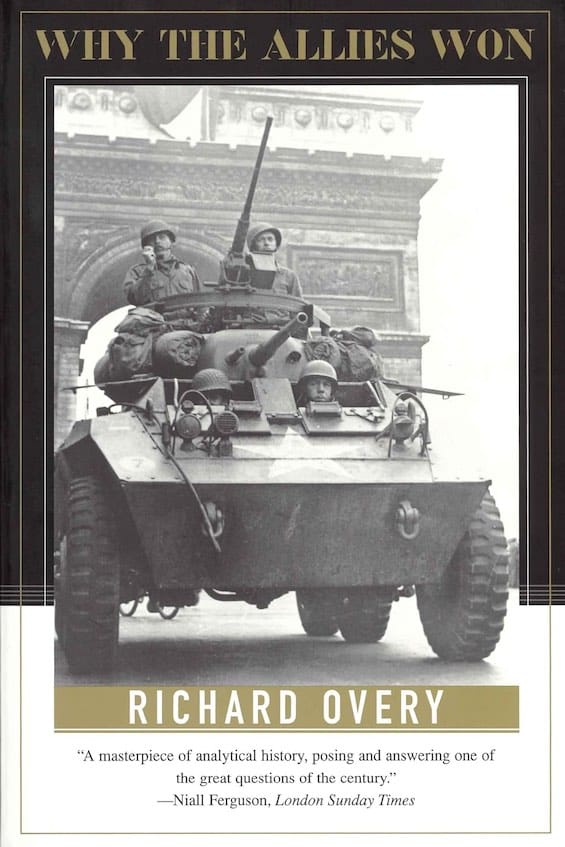
Why the Allies Won by Richard Overy (1995) 406 pages ★★★★★—A British historian asks why the Allies won World War II—and reaches surprising conclusions
Brace yourself. Much of what you believe about why the Allies won World War II may not be true. British historian Richard Overy challenges the received wisdom in his eye-opening revisionist interpretation of the six-year ordeal, titled simply Why the Allies Won. For most historians, that question makes little sense. The accepted understanding among them is that two reasons stand out. First, Britain, the United States, and the Soviet Union collectively mustered manpower and resources far in excess of Axis capabilities. And, second, the Nazis made the tragic error of entering into a two-front war confronting both the West and the USSR. But Overy drills down into the history of the period, arguing the reality was not so simple. He raises penetrating questions about both assumptions in this extraordinary book. It’s one of the most revealing accounts of the war I’ve ever encountered. Read the review.
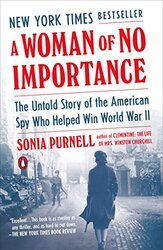
A Woman of No Importance: The Untold Story of the American Spy Who Helped Win World War II by Sonia Purnell 2019) 368 pages ★★★★★—The WWII American woman spy who kept the French Resistance alive
Popular fiction abounds with superheroes. But it’s not often at all that you’ll come across a true-to-life story of a person who comes even close to the sort of over-the-top heroism that so many popular writers favor. However, the story of WWII American woman spy Virginia Hall (1906-82) fits that bill. In A Woman of No Importance, Sonia Purnell relates the woman’s experience in World War II in compelling and often jaw-dropping detail. It’s the best study I’ve ever read about the British Special Operations Executive (SOE), the American Office of Strategic Services (OSS), and the French Resistance. I found it nearly impossible to put the book down. Read the review.
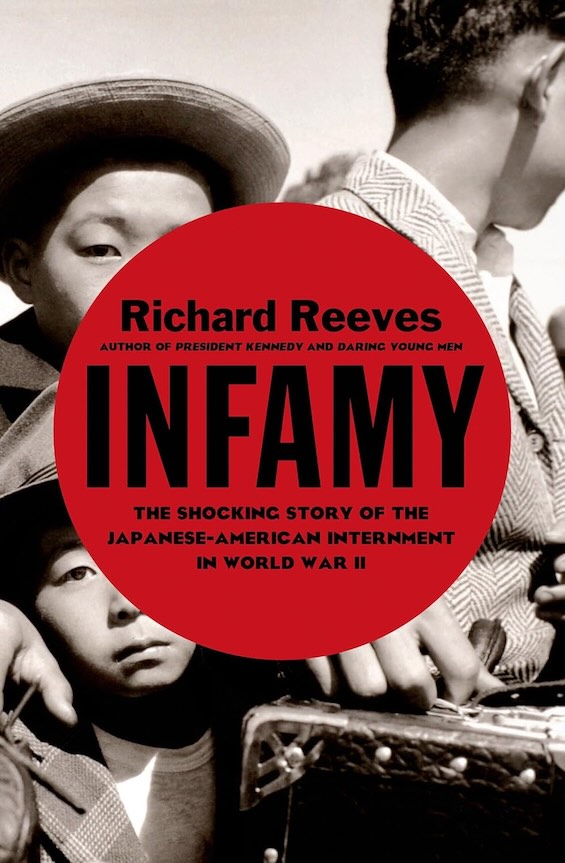
Infamy: The Shocking Story of the Japanese-American Internment in World War II by Richard Reeves (2015) 368 pages ★★★★★—The shameful story of Japanese-American Internment in WWII
No one who lives in California today and has made even the most cursory effort to understand the state’s history can be unaware that the US government under Franklin Roosevelt herded Japanese-Americans into concentration camps during most of World War II. Included were not just recent immigrants but families whose roots lay two generations in the past. What is less well known about this shameful episode in our country’s history are the roles played by such revered figures as future US Supreme Court Chief Justice Earl Warren and leading members of Roosevelt’s Administration. Read the review.
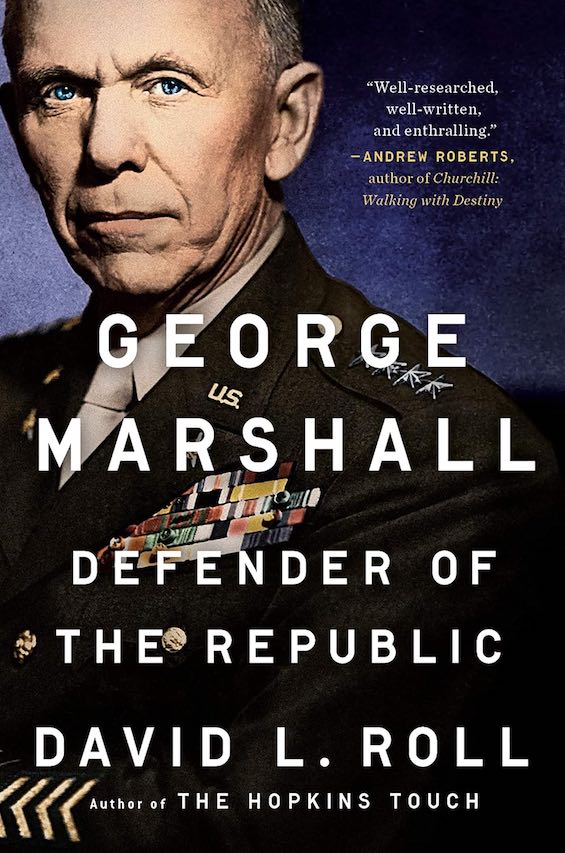
George Marshall: Defender of the Republic by David L. Roll (2019) 712 pages ★★★★★—He guided the allies in World War II and fathered the Marshall Plan
For 50 years, from the First World War to the Second, and from the recovery of Europe to the Korean War, George Marshall left an indelible imprint on American history. Read the review.
Gaining perspective on World War II
For the United States, World War II lasted less than four years (December 1941 to September 1945). But for much of the rest of the world the war was a much more protracted affair. In Europe, its formal beginning was September 1, 1939, when Hitler’s forces invaded Poland. However, preparations for the conflict had been underway for several years on both sides. Meanwhile, in China, the war officially began July 17, 1937. But it makes more sense to date the beginning to the Japanese invasion of Manchuria in 1931.
The numbers of war dead in countries such as the USSR (24 million or more), China (15 to 20 million), Poland (6 million), and Germany (7 million) represented a far greater proportion of their population than American, British, and French fatalities, none of which exceeded half a million. Yet we Americans continue to think of that war in terms of its impact on France, England, and the US. Despite this contrast, nearly all the books listed above focus squarely on the role of French, British, and Americans in the war. For those of us who are French, British, or American, it’s understandable. But we would do well to recognize that World War II was truly a global affair.
For related reading
You might also be interested in:
- 10 top WWII books about espionage
- 20 top nonfiction books about history
- 15 good books about the Holocaust
- The 10 best novels about World War II
And you can always find all the latest books I’ve read and reviewed on the Home Page.




Hi Mal, Leigh Plews, Melbourne, Australia. I am a retiree.
I am highly impressed by your article “7 common misconceptions about World War II.” It’s brilliant.
In Australia, over the last twenty years or so, uncritical jingoism regarding our contribution to both World Wars has increased enormously.
On a different topic, of which I know very little about, I have often been amazed at the seeming tenacity of the Vietnamese.
Cheers
Leigh
Thanks, Leigh. It’s always great to learn people actually read the stuff I write!